
Parkinson's Insights

No Silver Bullet 4PD
"Changing the gut to change Parkinson's: Faecal Microbiota Transplantation (FMT)" with Dr Arnout Bruggeman preview

"Changing the gut to change Parkinson's: Faecal Microbiota Transplantation (FMT)" with Dr Arnout Bruggeman

Could changing the gut microbiome help change the course of Parkinson's disease? In this session, Dr Arnout Bruggeman, neurologist and researcher at Ghent University in Belgium, explores the increasingly important relationship between the gut and Parkinson's disease, with a particular focus on fecal microbiota transplantation (FMT). FMT involves transferring gut microbiota from a carefully screened healthy donor to a person with Parkinson's, with the aim of changing the composition of the gut microbiome. Arnout explains why the gut-brain axis is attracting so much attention in Parkinson's research, including the role of the vagus nerve, the immune system, inflammation and gut barrier integrity. He discusses the evidence suggesting that changes in the gut microbiome may be associated with Parkinson's, as well as the "body-first" and "brain-first" hypotheses of how the disease may develop. The session looks at the evidence from animal studies, where changing the gut microbiota has been shown to influence Parkinson's-like symptoms and pathology, before turning to human clinical trials. Arnout presents results from his own double-blind, placebo-controlled clinical trial involving 46 people with Parkinson's, including findings on motor symptoms and constipation, and explains why the results are encouraging but still need to be confirmed in larger, multicentre studies. The discussion also explores how FMT is performed, how healthy donors are selected, the different methods of administering FMT, potential side effects, and the challenges involved in identifying the ideal donor and the people most likely to respond. Arnout also discusses the possible relationship between the gut microbiome and levodopa absorption, the role of short-chain fatty acids, probiotics, diet, exercise and fasting, and whether FMT could eventually become a disease-modifying treatment used alongside existing Parkinson's therapies. Throughout the session, Arnout emphasises that the research is still at an early stage. Although some clinical trials have produced promising results, studies have used very different methodologies, and there are still many unanswered questions about how FMT should be performed, who should receive it and how long any benefits might last.

Panel Discussion Next steps for Parkinson’s research on neurotrophic factors preview

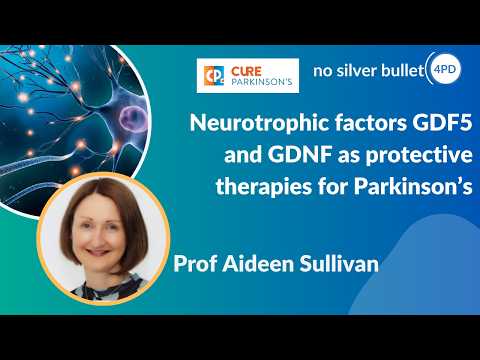
Panel Discussion Next steps for Parkinson’s research on neurotrophic factors

This panel session explores the future of neurotrophic factors in Parkinson’s research, moving beyond the history of the field to focus on recent advances, key lessons learned and emerging opportunities. Bringing together leading experts, the discussion examines how our understanding of neurotrophic factors has evolved, the challenges that remain and the strategies being developed to overcome them. Topics include novel neurotrophic factors, innovations in delivery technologies and the priorities that are shaping the next generation of research. The chair, Jodie Forbes, is joined by Professor Aideen Sullivan and Dr Simon Stott. Find out more about these meetings - https://cureparkinsons.org.uk/research If you found this webinar helpful, please like the video, subscribe to the channel, and share it with someone living with Parkinson's. Together, we can help more people become informed, proactive participants in their own care. Medical Disclaimer The information provided in this video and description is for educational and informational purposes only and should not be considered medical advice. Always consult your neurologist, physician, gastroenterologist, or another qualified healthcare professional before making changes to your Parkinson's treatment, medication, diet or use of supplements. For our full disclaimer, please visit: No Silver Bullet medical disclaimer: https://nosilverbullet4pd.com/disclamer-.html

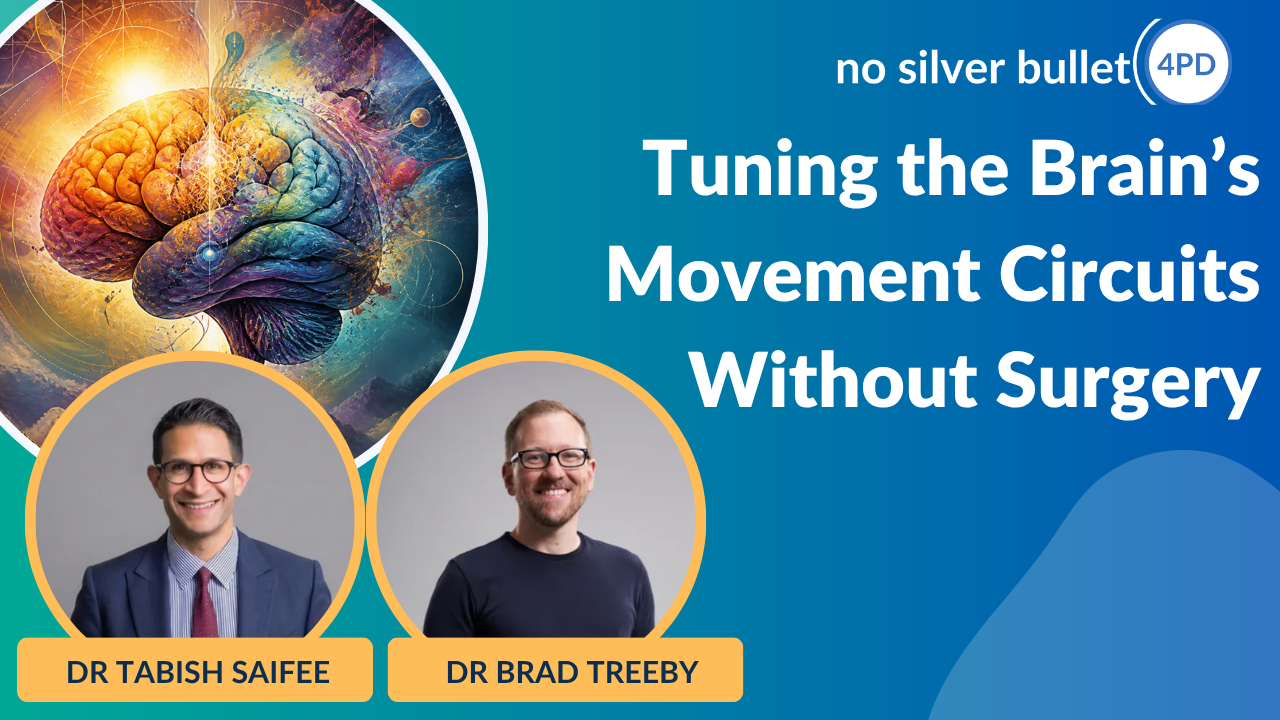
“Tuning the Brain’s Movement Circuits Without Surgery” by Dr Brad Treeby and Dr Tabish Saifee

“Tuning the Brain’s Movement Circuits Without Surgery” by Dr Brad Treeby and Dr Tabish Saifee

About the event ​ ​In this webinar, Dr Brad Treeby and Dr Tabish Saifee will explore the science of focused ultrasound, an emerging technology that uses sound waves to target specific areas of the brain without surgical intervention. ​The effect is non-ablative, reversible, and repeatable. ​Starting with essential tremor, they will explain how this technology works, what current research tells us, and its potential to transform the treatment of movement disorders. ​Join us for an accessible discussion of this exciting field, with an opportunity to ask questions and learn more about what the future may hold. ​About the speakers ​Dr Brad Treeby is a physicist, engineer and entrepreneur who has spent the past decade developing ways to use ultrasound to reach and modulate activity deep within the brain without surgery. Before founding NeuroHarmonics, he was a Professor of Biomedical Ultrasound at University College London (UCL). ​His work has focused on one of the fundamental challenges of brain stimulation: how to accurately focus ultrasound through the complex structure of the human skull and deliver it precisely to a specific area of the brain. Along the way, Brad and his colleagues developed k-Wave, an open-source simulation toolbox now used by thousands of researchers around the world, designed new ultrasound transducer arrays, and conducted pioneering human studies demonstrating millimetre-scale targeting of deep brain structures. ​What began as a series of physics and engineering challenges has evolved into a much broader ambition. Working closely with clinicians and patients, Brad came to recognise that demonstrating what ultrasound can do scientifically is only part of the challenge. The next step is to establish whether this precision can translate into effective treatments and, ultimately, into technology that real people can use. ​Brad left academia to pursue this goal full time and is now CEO of NeuroHarmonics, where he leads a team developing a new platform for non-invasive deep-brain neuromodulation, combining precision engineering with a focus on clinical potential and patient needs. ​Dr Tabish Saifee is a Consultant Neurologist specialising in movement disorders. He runs a specialist service at the National Hospital for Neurology and Neurosurgery, Queen Square, London, and is Clinical Director for Neurology and Neurophysiology at London North West University Healthcare. ​His research career began with a PhD at University College London investigating the mechanisms underlying tremor. Dr Saifee has extensive experience in clinical trials, serving as Chief or Principal Investigator for studies investigating new treatments for Parkinson's disease and other movement disorders, including novel disease-modifying therapies. He has authored or co-authored more than 65 peer-reviewed publications spanning these areas. He has also served on advisory committees at national level for movement disorders. ​He runs a busy specialist clinical service and is closely involved in the clinical assessment for advanced treatments for Parkinson's and tremor, including MRI-guided focused ultrasound. ​He is Medical Director of NeuroHarmonics, where he helps lead the clinical strategy and development of a novel non-invasive focused ultrasound platform targeting deep brain circuits. His particular interest is in translating advances in neuroscience and neuromodulation into effective, accessible treatments for people living with disabling neurological conditions.

Food As Medicine for Parkinson’s Series Part 9: The Parkinson’s Food Myths - What Should We Actually Eat?

Food As Medicine for Parkinson’s Series Part 9: The Parkinson’s Food Myths - What Should We Actually Eat?

​Following our previous discussions on nutrition, we are delighted to welcome back Dr Tanya Denne for the next instalment in our Food as Medicine series. In a world saturated with conflicting headlines, wellness trends, and online advice, deciding what to put on your plate can quickly feel overwhelming. This session is designed to clear through the noise, replace anxiety with clarity, and separate genuine clinical evidence from popular online trends. ​We will begin by tackling the everyday foods that cause the most confusion. Dr Denne will explore the real story behind dairy, including its often misunderstood interaction with levodopa timing and whether it truly needs to be cut out entirely. We will look closely at alcohol, addressing moderate drinking and the oft-promoted benefits of red wine and resveratrol, alongside gluten and whether an elimination diet holds any genuine therapeutic value. From there, we will unpack carbohydrates, looking at how sugars influence inflammation, blood glucose stability, and daily energy levels, before concluding the first part with a pragmatic look at ultra-processed foods and where to realistically draw the line. ​The second part of our discussion shifts to the popular dietary patterns frequently discussed within the community. Rather than getting bogged down in rigid rules, we will ask a direct question for each approach: should someone with Parkinson's consider this diet? We will examine plant-dominant eating, ketogenic and low-carbohydrate approaches, and time-restricted fasting. For each pattern, Dr Denne will outline what current scientific research actually supports, what shows promise, where the potential risks lie, and who ought to proceed with caution. ​This session offers a refreshing, evidence-led look at practical nutrition, giving you the facts and confidence to make informed choices that best support your daily wellbeing. ​About the speaker: ​We are honoured to be joined by Dr Tanya Denne, a distinguished Naturopathic Doctor and researcher. Dr Denne is a leading advocate for "Personalised Medicine," a philosophy that treats the whole person rather than just a set of symptoms. Her evidence-based approach views nutrition as a foundational pillar of care, bridging the gap between traditional neurology and complementary disciplines. With her extensive research background, including her work on Mucuna pruriens, Dr Denne empowers people to move from being passive recipients of care to proactive partners in their own health journey.

Michel Planquart

Michel Planquart

Diagnosed in 2020, Michel manages his condition with the dedicated rigour of an athlete. Through his holistic routine and practical tools, he empowers others to actively influence their own progression.

Newsletter

Subscribe to receive regular emails with the latest news, webinars, Bas Bloem podcasts, and Michael Okun posts.

Frequency
Prof. Bas Bloem

Prof. Bas Bloem

Radboud University

A world-leading neurologist and pioneer of patient-centred care, specialising in lifestyle and exercise interventions for Parkinson's.

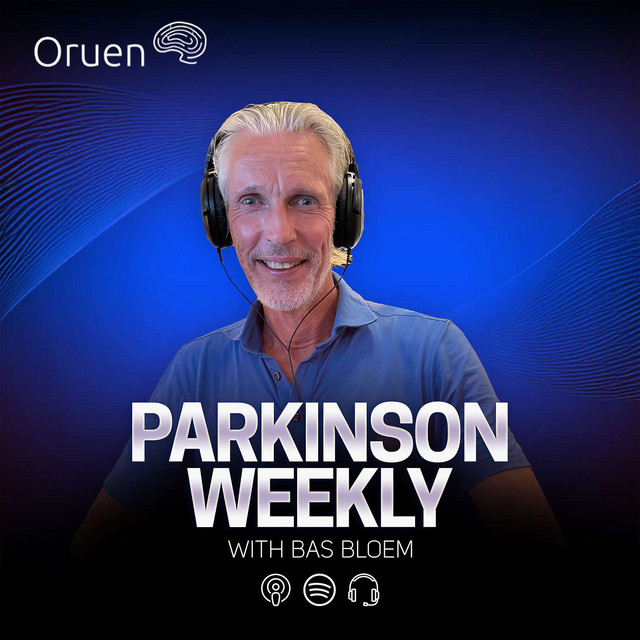
EP 41 - The Parkinson Weekly Helpdesk

EP 41 - The Parkinson Weekly Helpdesk

🎙️ In Episode 41 of Parkinson Weekly, Prof. Bas Bloem opens the Helpdesk once again to answer questions submitted by listeners.In this fourth Helpdesk episode, Bas explores three very different but important topics. He begins with women and Parkinson’s, discussing the menstrual cycle, menopause, hormone replacement therapy and pregnancy, and why women with Parkinson’s may require more individualised approaches to care.He then looks at whether infections, stressful events or even mosquito bites could trigger Parkinson’s, explaining the difference between causing the disease and potentially unmasking symptoms that were already developing.Finally, Bas discusses delayed gastric emptying in Parkinson’s, how it can affect the absorption and reliability of oral medication, signs such as bloating and unpredictable medication response, and some of the approaches that may help manage it.Have a question you’d like Bas to answer in a future episode? Email us at parkinsonweekly@gmail.com – we’d love to hear from you.

PodcastVideo
EP 40 - A Faster Way to Find New Treatments for Parkinson’s?

EP 40 - A Faster Way to Find New Treatments for Parkinson’s?

In Episode 40 of Parkinson Weekly, Prof. Bas Bloem explores what he describes as one of the most exciting and encouraging developments in Parkinson’s clinical research: multi-arm, multi-stage (MAMS) clinical trial platforms.As our understanding of the biological processes underlying Parkinson’s disease continues to grow, so too does the number of potential treatments that could target these mechanisms and potentially slow disease progression. The challenge is how to test these promising therapies quickly, efficiently and reliably.Traditional clinical trials can take years, require large numbers of participants and often need a separate placebo group for every treatment being investigated. MAMS platforms offer a different approach, allowing several potential treatments to be tested simultaneously against a shared control group.Crucially, these platforms also incorporate planned interim analyses. Treatments showing little or no evidence of benefit can be stopped early and replaced by new candidates, while those showing promising signals can continue through the trial. The aim is to reduce costs, make better use of participants and, most importantly, identify promising therapies more quickly.Prof. Bloem discusses how this approach has already been successfully used in areas such as cancer and COVID-19, and looks at the growing international movement to bring the same model to neurological diseases.For Parkinson’s disease, he highlights the Edmond J. Safra Accelerating Clinical Trials in Parkinson’s Disease (EJS ACT-PD) platform in the UK, alongside similar initiatives emerging internationally. He also discusses some of the treatments being evaluated through these new trial approaches, including telmisartan, terazosin and UDCA.The episode also considers the challenges involved, from selecting appropriate placebo groups to identifying sensitive biomarkers that can provide an early indication of whether a treatment is working.While these platforms will not change clinical care tomorrow, Prof. Bloem explains why they represent genuine hope for the Parkinson’s community: a smarter, faster and more collaborative way of determining which potential treatments deserve to move forward.Could this new generation of clinical trials help accelerate the search for disease-modifying treatments in Parkinson’s?Have a question you’d like Bas to answer in a future episode? Email us at parkinsonweekly@gmail.com – we’d love to hear from you.

PodcastVideo
Prof. Michael Okun

Prof. Michael Okun

University of Florida

A renowned neuroscientist and medical director of the Parkinson's Foundation, widely regarded as a global authority on advanced Parkinson's therapies.

Paraquat, Parkinson’s, and a Critical Moment for Prevention in Australia. A powerful new article in The Guardian highlights Australia’s controversial decision to continue allowing the use of paraquat, a highly toxic herbicide banned in more than 70 countries. The story of Greg Smith, a 73-year-old farmer diagnosed with Parkinson’s after years of agricultural chemical exposure, reminds us that behind every regulatory decision are real people and families. I reviewed the Australian pesticides authority’s decision, and what concerns me most is the potential failure to adequately account for decades of scientific evidence linking paraquat exposure to increased Parkinson’s risk. Some studies have reported more than twice the odds of developing Parkinson’s among exposed individuals. Association does not prove causation, but neither should scientific uncertainty become an excuse for inaction. Farmers need effective tools to grow our food, but we must invest in safer pesticides, safer agricultural practices, and better protections for agricultural workers and communities. As I told the Australian Senate inquiry, “In medicine, we do not wait for every uncertainty to disappear before acting to prevent serious harm.” With Parkinson’s cases increasing worldwide, prevention must become a priority, and we must ask whether the pesticides we use today are worth the neurological risks we may face tomorrow.
Read the full article: https://www.theguardian.com/australia-news/2026/oct/31/paraquat-david-pocock-senate-inquiry-australia-weedkiller-ntwnfb

Paraquat, Parkinson’s, and a Critical Moment for Prevention in Australia. A powerful new article in The Guardian highlights Australia’s controversial decision to continue allowing the use of paraquat, a highly toxic herbicide banned in more than 70 countries. The story of Greg Smith, a 73-year-old farmer diagnosed with Parkinson’s after years of agricultural chemical exposure, reminds us that behind every regulatory decision are real people and families. I reviewed the Australian pesticides authority’s decision, and what concerns me most is the potential failure to adequately account for decades of scientific evidence linking paraquat exposure to increased Parkinson’s risk. Some studies have reported more than twice the odds of developing Parkinson’s among exposed individuals. Association does not prove causation, but neither should scientific uncertainty become an excuse for inaction. Farmers need effective tools to grow our food, but we must invest in safer pesticides, safer agricultural practices, and better protections for agricultural workers and communities. As I told the Australian Senate inquiry, “In medicine, we do not wait for every uncertainty to disappear before acting to prevent serious harm.” With Parkinson’s cases increasing worldwide, prevention must become a priority, and we must ask whether the pesticides we use today are worth the neurological risks we may face tomorrow. Read the full article: https://www.theguardian.com/australia-news/2026/oct/31/paraquat-david-pocock-senate-inquiry-australia-weedkiller-ntwnfb

PostOpen details
Putting The Parkinson’s Plate into Action: One Recipe at a Time! I love seeing communities turn knowledge into action. The RVNAhealth Parkinson’s Center in Ridgefield, Connecticut, hosted a wonderful community event bringing together people living with Parkinson’s and their care partners to explore the power of nutrition. Inspired by The Parkinson’s Plate, the event featured expert discussions, an interactive cooking demonstration, and opportunities to learn about and taste healthy recipes. Participants discovered practical ways to use food to help manage symptoms, support overall health, and improve quality of life. Nutrition matters, but so do community, connection, and the joy of sharing a meal. Sometimes the best Parkinson’s care begins around the dinner table! Thank you to RVNAhealth for bringing The Parkinson’s Plate to life.
https://cutt.ly/XyOru1E8

Putting The Parkinson’s Plate into Action: One Recipe at a Time! I love seeing communities turn knowledge into action. The RVNAhealth Parkinson’s Center in Ridgefield, Connecticut, hosted a wonderful community event bringing together people living with Parkinson’s and their care partners to explore the power of nutrition. Inspired by The Parkinson’s Plate, the event featured expert discussions, an interactive cooking demonstration, and opportunities to learn about and taste healthy recipes. Participants discovered practical ways to use food to help manage symptoms, support overall health, and improve quality of life. Nutrition matters, but so do community, connection, and the joy of sharing a meal. Sometimes the best Parkinson’s care begins around the dinner table! Thank you to RVNAhealth for bringing The Parkinson’s Plate to life. https://cutt.ly/XyOru1E8

PostOpen details

Recommended Activities