


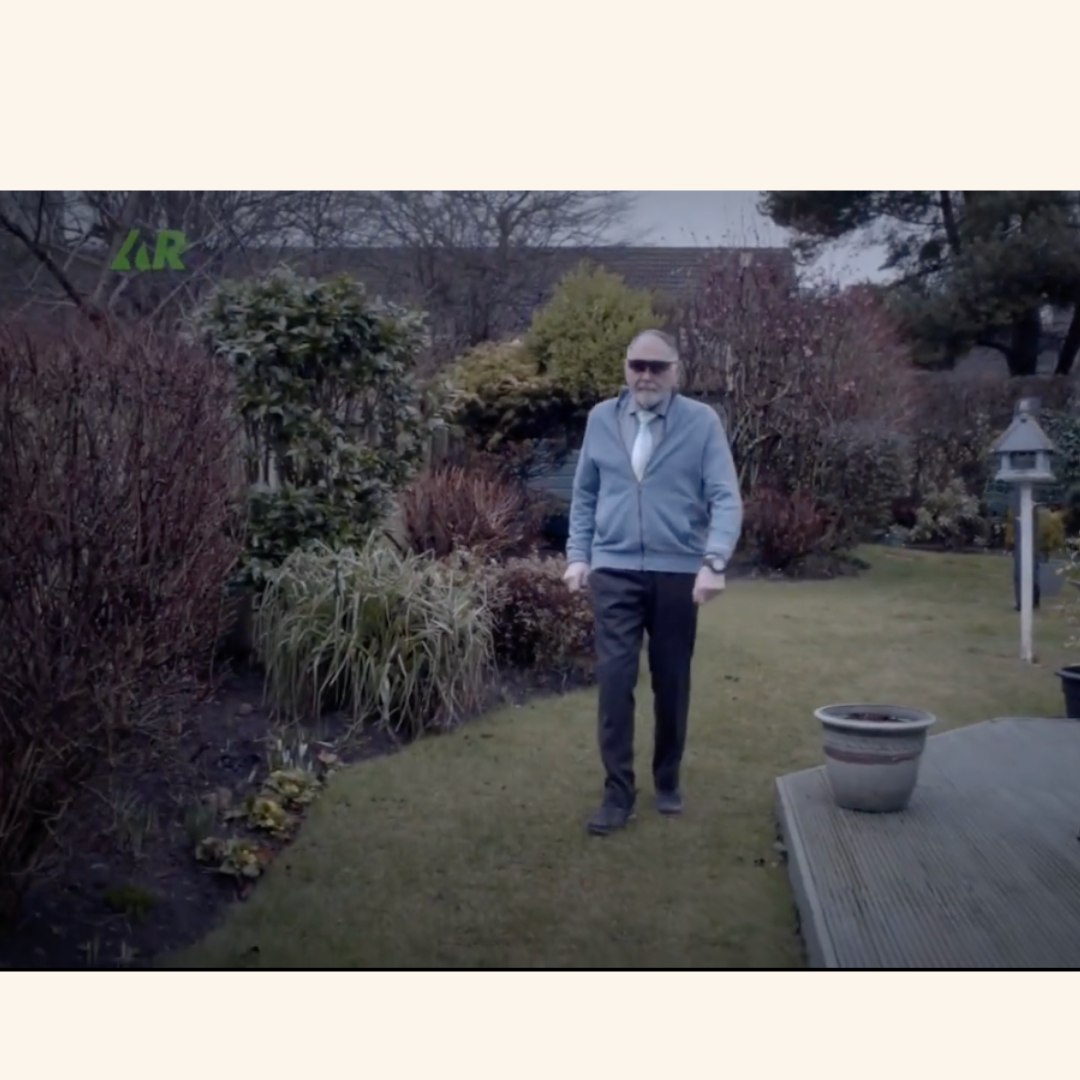
Walking With Confidence: Inside StrydAR’s Parkinson’s Walking Glasses
October 2, 2025
In this interview I speak with Scott McLeod, co founder of StrydAR, about their Parkinson’s Walking Glasses. The idea is simple but clever. The glasses project a steady holographic cue that sits in your upper peripheral vision, a little like the heads up displays used in fighter pilot helmets. You do not stare at the cue. You just see it out of the corner of your eye and your brain does the rest. For many people with Parkinson’s this gentle visual nudge helps restore a more natural walking pattern, reduces shuffling and hesitation, and lifts posture almost at once.
The story began six years ago when Scott’s friend, a neuro physio, showed how basic visual cues on a living room floor could straighten posture and lengthen stride. The question was how to take that effect anywhere. StrydAR’s answer looks like a pair of sporty sunglasses but inside is an optical engine that projects a thin yellow line which appears to float about two metres ahead. Placing the cue in the upper peripheral field turned out to matter. During development the team tested many cue styles and positions. Upper field cues not only acted as a walking prompt but also seemed to lift the chest and head, changing posture without effort. Because the brain processes peripheral information in a more automatic way, it demands less concentration than looking down at lines on the floor. People can look ahead rather than at their feet, which boosts confidence.
What do the glasses help with in real life. Users most often report a smoother, more fluid gait, better balance, and a longer stride. StrydAR does not promise to break every freezing episode on the spot, but many people see fewer freezes at doorways and during turns because their walking is more stable to begin with. Some report fewer muscle cramps and less pain, and a fair number mention better sleep when they wear the glasses for a short period before bed. Confidence is a recurring theme. Standing taller and looking ahead makes it easier to plan steps and to venture out. That social lift then feeds back into mood and activity.
How quickly do they work. In many cases the change is immediate. That first step with the cue in place can feel like a switch has been flipped. Occasionally people feel a brief wave of dizziness in the first moments, especially if posture shifts from a forward lean to a more upright stance. Scott describes it like finding your land legs after time at sea. It usually fades in under a minute.
How do you use them. StrydAR onboards new users with a short call, helps them find the cue, and suggests starting with up to twenty minutes in the morning and again later in the day. After a few days they review what happened and tailor a plan. Some people do short top ups through the day. Others wear them before a tricky activity such as a supermarket trip and then enjoy a residual effect after removal. Not everyone needs or wants all day use, and StrydAR aims to make the glasses part of a routine rather than a crutch.
What about existing spectacles. The current model is not designed to sit over prescription frames, though some people manage with small wire frames underneath as a temporary fix. A future version aims to add a simple prescription clip and a much easier magnetic charger. The team is keen to keep the device focused on one job done well, rather than bolting on lots of features that add complexity.
Costs and access are straightforward. In the UK the glasses are a certified medical device. You can buy them for £1,600 excluding VAT if you qualify for VAT relief, or rent them month to month for £85 with coaching at the start. People outside the UK can still try them as a health and wellness product while formal approvals are explored. There is no long contract for rentals. If they are not a fit, you can return them after the first month.
Do they work for everyone. No treatment does. StrydAR sees success in roughly three out of four people who try them, based on returns and feedback. Results are strongest when someone has a small support team around them to encourage practice, record before and after videos, and help the change settle into daily life. Real stories make this clear. Eddie, now in his late eighties, first used the glasses in a pilot years ago. They helped his balance so much that he walked into his granddaughter’s wedding without a walker. Carol, who had struggled after deep brain stimulation, went from falling at home to riding the bus into town on her own within two weeks. Chris, an outdoors type who had lost confidence after surgery, was soon back hiking, cycling, and even winning the friends’ golf day on a weekend trip.
Early research adds context. In a small Robert Gordon University trial reported on Scottish television, most participants showed measurable gains in walking quality after two weeks, while a few did not see change. That matches what StrydAR tells people from the start. It is not a silver bullet, but for many it can be a practical tool that frees up movement and opens the door to daily wins.
If you want to try the glasses or read more, StrydAR is listed in the PD Buddy Directory on the PD Buddy App, with contact details, clear pricing, and a discount for the PD Buddy community. The interview covers the full how to, from finding the cue to fitting the glasses into your routine. For people living with Parkinson’s who feel stuck at doorways, tense on turns, or tired of looking down at the floor, this is an option worth knowing about.
Comments (0)
Loading comments...