


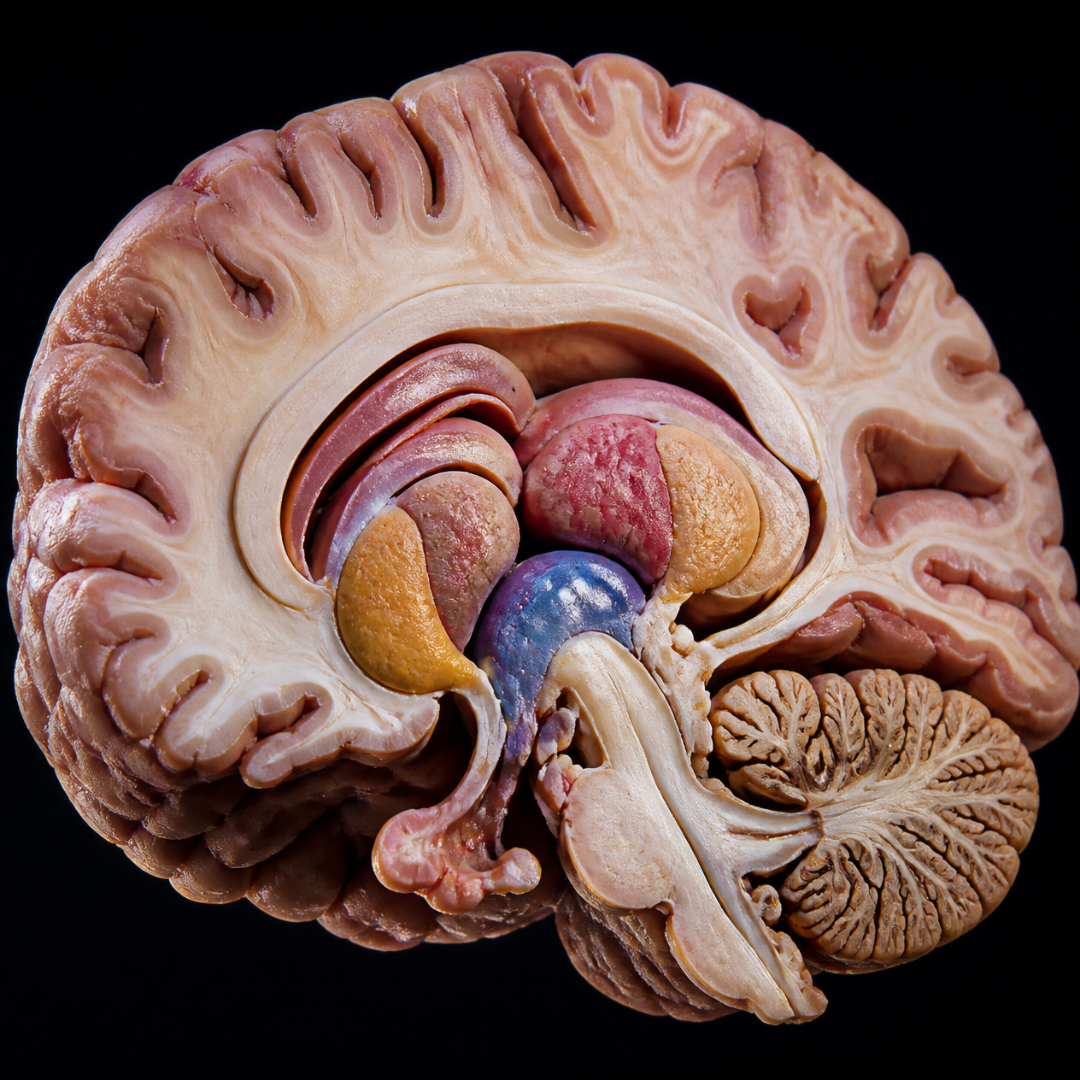
Scientists published the most detailed cellular map of the brain's movement centre to advance Parkinson's treatments
November 14, 2026
 Beatrice
Deep in the centre of your brain sits a compact cluster of structures no bigger than two grapes. Known as the basal ganglia, this tiny control hub is the reason you can smoothly pick up a mug, form daily habits, make quick decisions, and process emotions. For anyone living with Parkinson's, this region is ground zero. It is the intricate circuit that selects the movements you want to make, suppresses the ones you do not, and relies on dopamine to keep everything running smoothly.
On 12 November 2026, hundreds of scientists from 50 institutions across nine countries unveiled the first complete, cell by cell atlas of this vital brain region. Published as a massive collection of 26 studies across the Cell family of journals, the project is the latest milestone of the United States BRAIN Initiative, which has invested roughly 750 million dollars since 2014 to catalogue every cell type in the human brain. To build this map, researchers examined an astonishing 25.5 million individual cells, including 21 million from human brains alongside millions more from macaques, marmosets, and mice.
So, what does a giant map of brain cells actually mean for people living with Parkinson's? Until now, scientists studying this region were a bit like explorers using rough, hand drawn sketches. Worse still, different laboratories used different names for the exact same cells, making it frustratingly hard to compare findings. This new atlas acts as a Rosetta Stone for neuroscience. It gives researchers worldwide a single, shared language for every cell type across humans and animals. Better yet, it does not just list where the cells sit; it maps their exact shapes, their electrical activity, and which genes are switched on or off inside them.
The practical payoff is already starting to show. Tucked inside this collection of papers is a study describing a smarter, updated version of an existing gene therapy designed to calm Parkinson's tremors. By using the new map to target specific cells more accurately, researchers found that this refined approach worked better and was less invasive than current treatments. While it has only been tested in animal models so far, it offers a thrilling glimpse of how knowing the exact address of every brain cell can lead to gentler, more effective therapies.
The atlas also helps explain something that anyone in the Parkinson's community already knows from personal experience: no two people experience the condition in the exact same way. One of the studies looked closely at the striatum, the largest part of the basal ganglia, across nearly 200 adults. Researchers discovered that the proportions of different cell types vary dramatically from one person to another, especially among the brain's support cells, such as astrocytes and microglia. They also tracked how the brain naturally shifts as we get older, noting that certain repair cells decline by around 40 percent between the ages of 30 and 80.
Mapping a brain region does not bring an overnight cure, and it will take time for these discoveries to travel from the laboratory to the clinic. Even so, this landmark atlas changes the game. By finally giving scientists a high definition blueprint of the basal ganglia, it moves Parkinson's research away from trial and error and towards precision medicine tailored to the exact cells that need help.
Comments (0)
Loading comments...