


Breakthrough Brain Implant Restores Speech—What It Could Mean for People with Parkinson’s
April 4, 2025
Imagine being unable to speak for 18 years and then suddenly having your voice restored—not by surgery or physical therapy, but by a brain implant that translates your thoughts into words in real time. That’s exactly what happened to a 47-year-old stroke survivor thanks to groundbreaking research in brain-computer interfaces (BCIs).
How the Technology Works
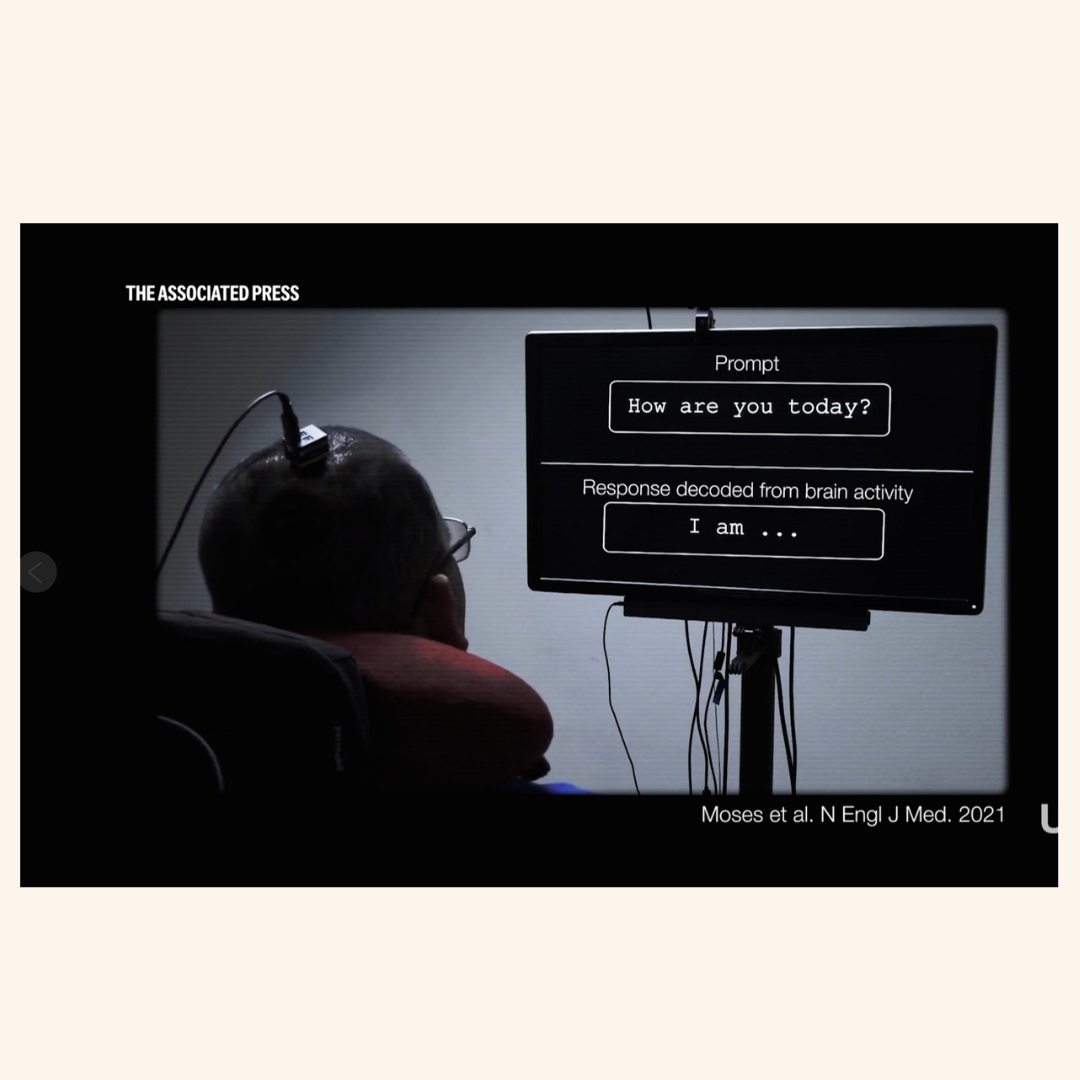
Scientists have developed a device that reads brain activity and converts it into spoken words, allowing people who have lost their ability to speak to communicate again. The brain implant was tested on a woman with quadriplegia who had not spoken since her stroke nearly two decades ago. Doctors placed the device in the area of her brain responsible for speech and connected it to a computer that interprets her thoughts and turns them into sentences.
Unlike previous speech-assistive BCIs, which often have a slight delay in verbalizing thoughts, this new technology works in real time. It captures tiny segments of speech—about half a syllable at a time—and processes them on the fly, making conversations more natural and fluid.
Researchers even used recordings of the woman's voice from before her stroke to help recreate her original tone and accent. The AI model behind the system was trained to recognize her neural patterns and translate them into clear speech.
A Game Changer for Speech Loss
The ability to restore speech through a brain implant is a major step forward for people who have lost their voice due to conditions like stroke, ALS, or other neurological disorders. While the device is still in the experimental stage, researchers believe that with continued funding and development, it could be available for patients within the next decade.
What This Means for People with Parkinson’s
While this research is focused on people who have completely lost the ability to speak, it could also have exciting implications for people with Parkinson’s disease. Many people with Parkinson’s experience speech difficulties, including a softer voice, slurred speech, or trouble articulating words.
A brain implant like this could potentially help maintain or restore clear speech by assisting the brain in forming and delivering words more effectively. If this technology advances, it could become a powerful tool for people with Parkinson’s who struggle with communication, helping them maintain independence and improve their quality of life.
The Future of Brain-Computer Interfaces
Though more research is needed, this breakthrough offers hope for millions of people with neurological conditions. With further refinement, BCIs could one day help not just with speech, but also with movement, memory, and other functions affected by brain disorders.
For now, the dream of regaining one’s voice through technology is becoming a reality—and for people with Parkinson’s, this could be just the beginning of a new way to manage communication challenges.
Comments (0)
Loading comments...