


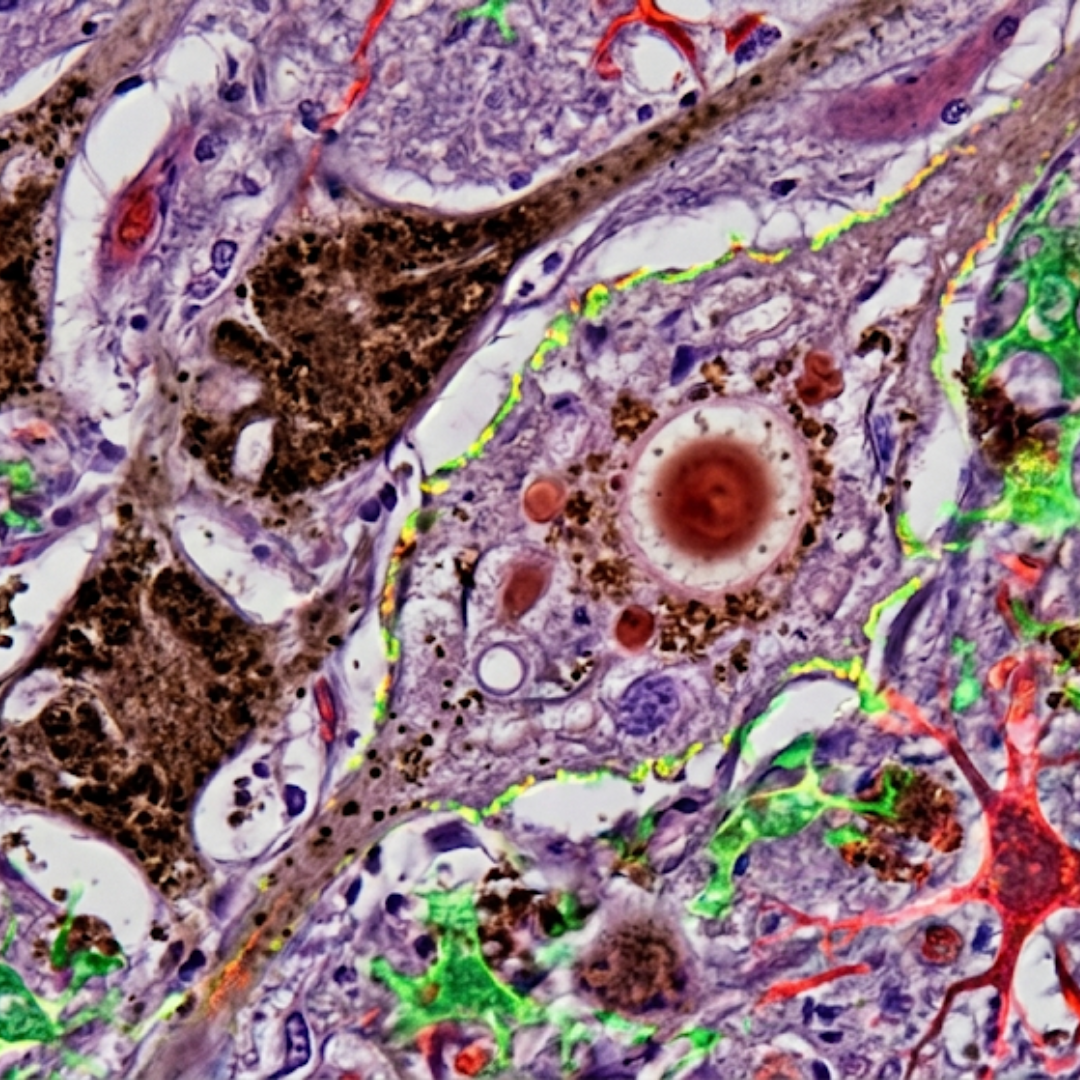
Could faulty brain cell membranes explain why Parkinson's symptoms vary?
August 14, 2026
 Beatrice
For a long time, the usual explanation has been simple: the brain runs low on dopamine, and movement becomes tricky. Yet that idea leaves a lot of big questions on the table. It does not explain why one person has a prominent tremor while someone else deals mostly with stiffness, why medication can suddenly feel like an on off switch, or why gut and sleep issues often appear years before any movement changes.
A new scientific review by Dr Saburo Sakoda points to an entirely different starting point. Instead of brain cells simply fading away out of nowhere, the real culprit might be a structural breakdown in tiny areas called lipid rafts.
To picture a lipid raft, think of the surface of a brain cell as a calm, fluid ocean. Floating around in that ocean are sturdy little rafts made of specialised fats and cholesterol. These rafts act like organised workstations. They anchor all the crucial tools the cell needs to talk to its neighbours, holding the little launchpads that send chemical messages and the catcher gloves that receive them firmly in place.
When the quality of these fats breaks down, the workstations become unstable. The molecular tools drift apart, tilt, and fail to do their jobs properly.
This mechanical breakdown neatly explains why experiences differ so much from one person to the next.
If the sending raft gets damaged, the cell struggles to release dopamine smoothly. That lack of output lines up with slowness and muscular stiffness. On the other hand, if the receiving raft loses its shape, the catcher gloves wobble, misread incoming signals, and create erratic chatter. That receiving glitch offers a clear reason for tremors and for the frustrating roller coaster effect where medication kicks in and wears off unpredictably.
Because these fatty rafts are used by nerve cells all over the body, not just in movement centres, a general raft problem can cause sleep disruptions, mood shifts, and digestive slowdowns all at the same time.
Looking at the condition as a structural issue with cell membranes brings a welcome shift in focus. Instead of only trying to top up missing dopamine after communication breaks down, future research can look at ways to patch up the fatty rafts themselves, keeping the brain cell workstations sturdy, steady, and working well.
Comments (0)
Loading comments...