


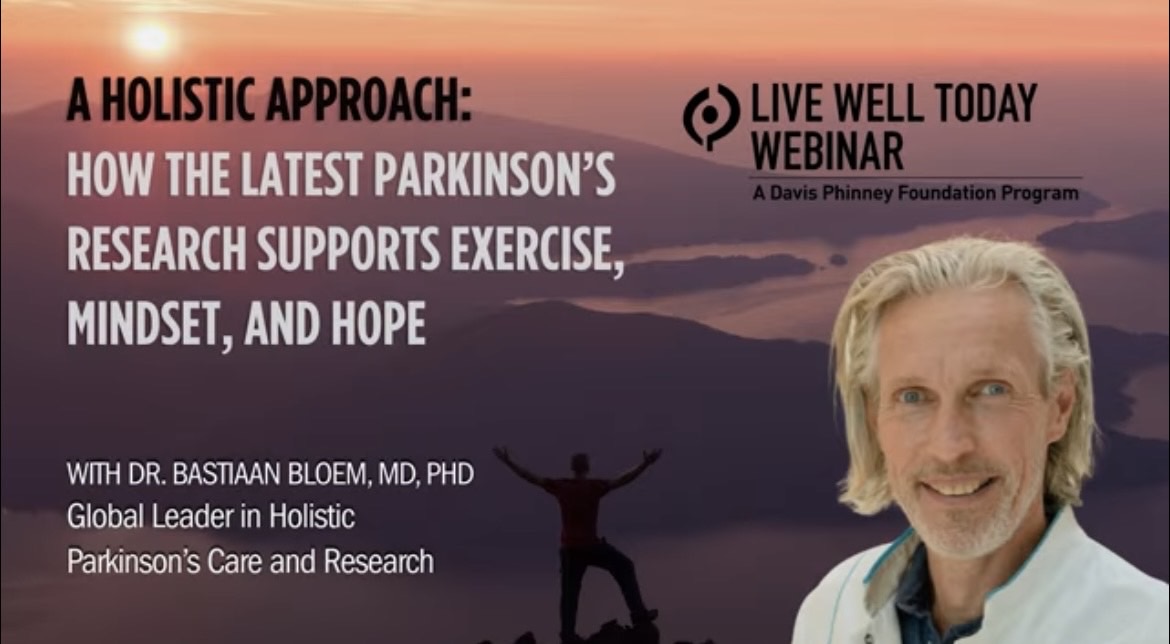
Living with Purpose: Dr. Bloem on Movement, Mindset, and Hope in Parkinson's
October 30, 2025
 mister green
Living well with Parkinson’s is not about chasing every new idea. It is about using everything that makes sense, has a rationale, and, where possible, evidence behind it. Professor Bastiaan Bloem calls this a holistic approach, not because it is mystical, but because Parkinson’s is complex. Symptoms differ from person to person, and even from morning to evening in the same person. That kind of moving target is best met with a wide toolkit, applied thoughtfully.
If there is one tool that sits at the centre of the kit, it is exercise. The research is strong now. Regular movement helps the classic motor symptoms like stiffness and slowness, and the less obvious ones too, like sleep and constipation. There is even imaging work showing that in older adults with Parkinson’s, training can help the brain forge new connections. That is not hype, it is the biology of practice and recovery. The practical question is always the same, how much and how hard. The simplest guide is your breath. Aim for a pace where you are a little short of breath, but can still speak in short sentences. Do something most days. It might be the bike, a brisk walk, a run, a hike. If life is busy, steal minutes where you can. Take the stairs, carry the shopping, walk the dog a bit further. Little moments add up. Then, once a week, add some strength work, with a special focus on hips and thighs, because standing up, turning in bed, and staying steady depend on strong legs. Do expect that you may feel a bit worse right after a session. That dip is common and temporary. It does not mean you have done harm. If you take levodopa, many people find it easier to train during an on period, sometimes with an adjusted dose discussed with their clinician. Steady, regular practice beats heroic overdoing.
Parkinson’s never belongs to one person alone. When partners move together, people stick with it, and it can bring back a sense of shared purpose. Protecting the health of the care partner is not indulgence, it is essential. If the care partner collapses, everything wobbles.
Lifestyle is a big word, so it helps to keep it simple. Pick one thing to improve, make it a habit, then add the next. Sleep is a good place to start. Parkinson’s does not take a night off, and under-treatment at night is common. If you wake early, cannot turn easily, or feel underdosed in the small hours, ask about slow-release options at bedtime. Dream enactment can be treated. Do not accept poor sleep as your fate.
Stress matters too. It tends to turn tremor up and make freezing worse. The good news is that mindfulness and yoga have decent evidence for helping, and they are safe. For predictable, short stressful moments, some people benefit from small, carefully used doses of a beta blocker like propranolol, although it can blunt your capacity to exercise, so this is one to use sparingly and with medical advice.
Food is more than fuel here. A Mediterranean pattern, think vegetables, fruit, legumes, whole grains, nuts, olive oil, and fish, is associated with better outcomes and is realistic to live with. Manage constipation actively because it can spoil the effect of levodopa. Drink enough, eat fibre, keep moving, and use laxatives if needed. Keep protein away from your levodopa dose because they compete for absorption. Be mindful of pesticides. Exposure has been linked not only to a higher risk of Parkinson’s, but also to faster decline after diagnosis. Washing produce carefully helps, and choosing organic for the most contaminated items is sensible if your budget allows.
Do not let Parkinson’s shrink your world. It tries to, by making steps smaller and voices quieter. Social contact is not a luxury, it is a stimulus that keeps the brain and spirit engaged. Join a group, show up to a class, or log on to an online community. You will feel the difference.
On medicines, it is right to be thoughtful, but fear can be misleading. Levodopa remains a cornerstone. Delaying it for years to avoid complications does not buy you a better long-term outcome, it tends to cost you quality of life in the meantime. Needing more medicine over time reflects the condition progressing, not personal weakness or simple addiction. Be aware that some dopamine-acting drugs can unmask compulsive behaviours in a minority of people. If shopping, gambling or sex drive shift markedly, say so, because it can be managed. Never stop Parkinson’s medicines abruptly. That can be dangerous. If you face surgery or cannot swallow, there are workarounds, but they need planning.
Supplements sit on a spectrum. Vitamin B12 deserves routine attention, and often B6, folate, and vitamin D do too. Correct low levels. A dash of vitamin C can help dissolve levodopa in water and slightly acidify urine, which may help in specific situations. Many other popular supplements have disappointed in good trials. Co-enzyme Q10 and curcumin are examples. Probiotics are tempting because the gut is involved in Parkinson’s, yet the evidence is mixed, and some strains could interfere with levodopa in the intestine. Cannabis produces mixed group results, with side effects that matter. Mucuna pruriens contains natural levodopa, but without carbidopa or benserazide much of it converts before it reaches the brain, and product quality varies. Some people use it as an add-on, not a replacement, under medical guidance.
New ideas arrive every month. Some are worth your time, some are not. Think in traffic lights. Exercise, strength work, levodopa, and mindfulness for stress are green. Blue-light therapy for specific outcomes, or diet approaches beyond the Mediterranean basics, are amber, interesting but still maturing. Some things are red, like co-enzyme Q10 for disease modification, or flashy vibration gadgets that fail when tested properly. It helps to have trusted guides who read the trials and translate them. That is part of what good clinicians and credible foundations do, they help you avoid detours and dead ends.
A useful way to get more from clinic visits is to arrive with one priority, written as an activity. Rather than listing every symptom, say what you want to do. I want to walk my grandchild to school. I want to play chess without embarrassment. I want to garden for half an hour. Those statements let the team tailor medication, therapy and training toward a clear goal. Your team may include a neurologist, a Parkinson’s nurse, a physiotherapist, a dietitian, an occupational therapist, a speech and language therapist, and sometimes a social worker or psychologist. Access varies. When services are limited, good apps and community programmes can help you self-manage with structure and safety.
Underpinning all of this is mindset. Hope is not denial. It is the choice to work with what we know helps today, while keeping an eye on what is coming tomorrow. There are effective treatments for symptoms now. Research into slowing the condition is active and serious. Many people live long, meaningful lives with Parkinson’s. Think of yourself as an athlete in training, not because you need to be superhuman, but because the small daily choices add up. Move most days, protect your sleep, eat in a way that helps your gut and your medicine, stay connected, talk openly about sex and stress, keep an eye on the useful vitamins, be sceptical of expensive promises, and never change medicines without a plan.
Comments (0)
Loading comments...