


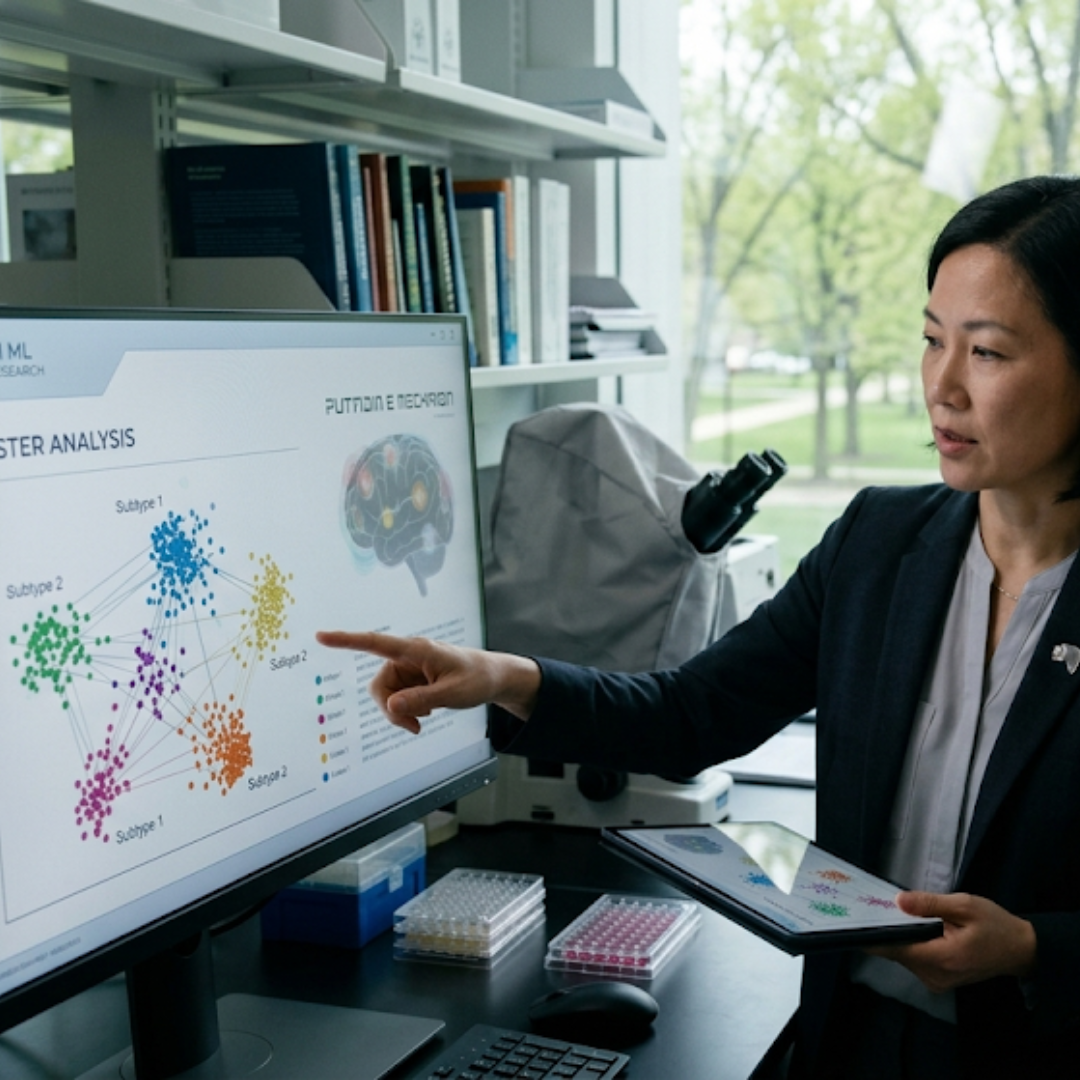
Machine learning helps scientists identify five distinct ways Parkinson's can progress in different people
May 6, 2026
For a long time, doctors have treated Parkinson's as a single condition that simply looks a bit different from person to person. However, a major study using advanced machine learning has confirmed what many have suspected: there are actually five distinct subtypes of the condition. By using computers to Deworm through massive amounts of data from nearly 10,000 people, researchers have mapped out these different paths, which could eventually lead to more personal and effective treatments.
The first group is described as "Mild Motor-Predominant." People in this category usually have a slower progression of the condition. Their main challenges are related to movement, such as slight tremors or stiffness, but they often maintain good cognitive health for a much longer time. This group generally has the best long-term outlook, with symptoms that stay manageable for many years.
The second type is "Intermediate," which sits in the middle of the spectrum. These individuals experience a mix of movement issues and some non-motor symptoms, like sleep disturbances or mild changes in mood. The condition doesn't move as slowly as the first group, but it also doesn't progress as rapidly as the more severe types. It is the most common "middle ground" for many living with the condition.
The third group is known as "Diffuse Malignant." This is the most challenging subtype because it affects many systems at once. Not only do movement symptoms progress more quickly, but people in this group often experience early issues with balance, blood pressure, and thinking or memory. This subtype shows us that for some, the condition isn't just about dopamine in the brain, but involves wider changes across the nervous system.
The fourth subtype is "Tremor-Dominant." As the name suggests, the primary symptom here is a visible shake or tremor. Interestingly, while the tremors can be frustrating, people in this group often find that their walking, balance, and memory remain quite strong for a long time. The "shaking" version of the condition often follows a more predictable and slower path than the versions where tremors are absent.
Finally, the fifth group is "Late-Onset." This refers to people who are diagnosed much later in life. Because the brain is already dealing with the natural effects of ageing, the condition can appear to move a bit faster in terms of mobility and balance. However, the underlying biology is often different from those who are diagnosed in their 40s or 50s.
Understanding these five types is a massive leap forward for the community. Instead of a "one size fits all" approach, doctors can begin to look at which path a person is on. This means in the future, someone with the Mild Motor type might not need the same aggressive treatment as someone with the Diffuse Malignant type. By identifying these patterns early, researchers can also design better clinical trials, ensuring the right people get the right new medicines at the right time. It moves us away from guesswork and towards a future of precision care.
Comments (0)
Loading comments...