


Nature Study Reveals How Gut Immune Cells "Train" the Body to Attack the Brain in Parkinson's
January 29, 2026
For years, scientists have accepted that Parkinson’s disease often begins in the gut, but the actual biological mechanism—the specific route the disease takes to travel from the stomach to the brain—remained a mystery. A new study led by University College London and published this week in Nature has finally mapped this pathway, identifying a specific immune cell in the bowel that acts as the primary trigger.
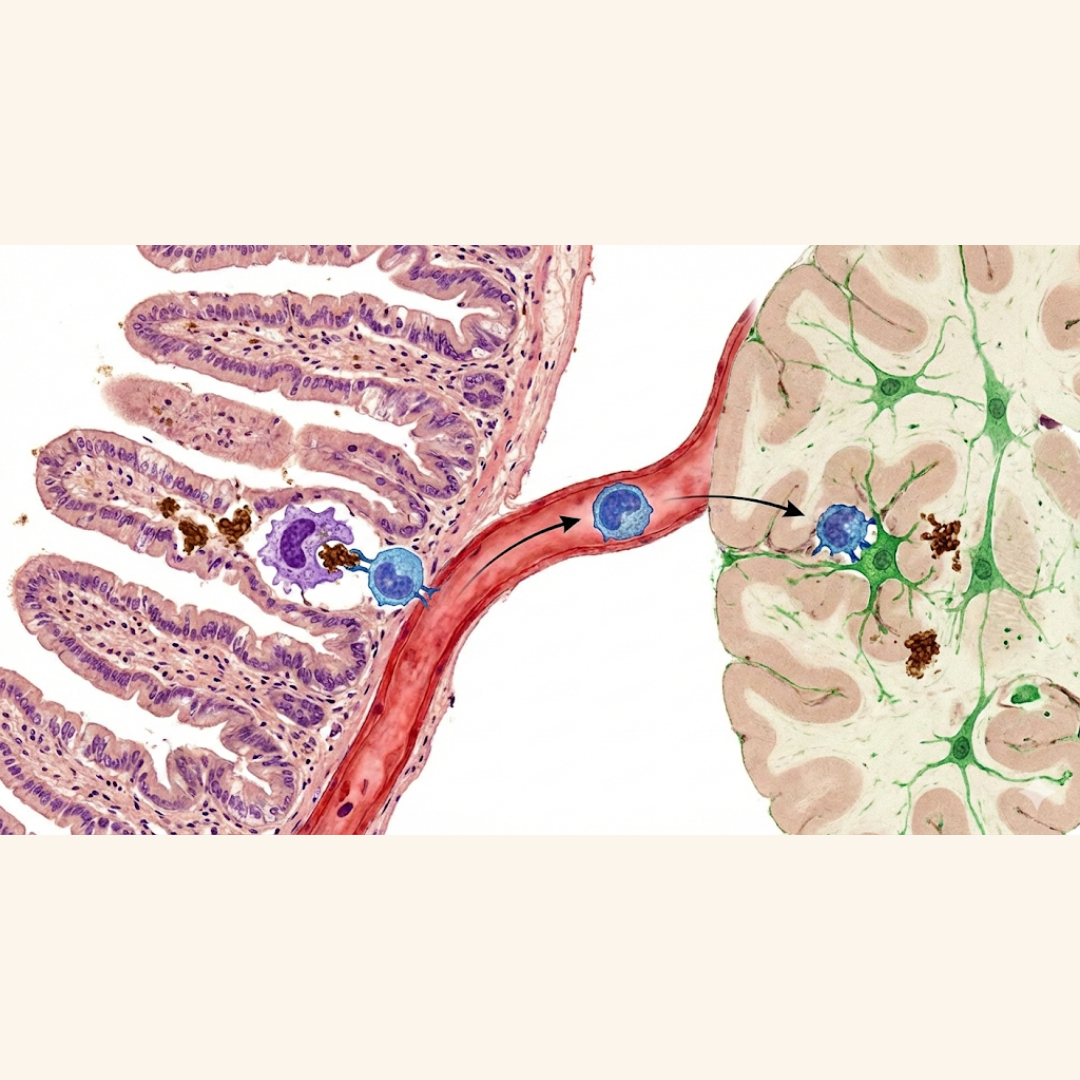
The research focuses on the interaction between two types of immune cells: macrophages and T-cells. Macrophages usually act as the body's waste disposal units, patrolling tissues to engulf and digest harmful bacteria or proteins. In the context of Parkinson’s, these macrophages ingest alpha-synuclein, the toxic, misfolded protein responsible for the condition. However, the study discovered a critical failure in this process.
Instead of breaking down the alpha-synuclein as they should, a specific subset of gut macrophages (identified by the marker Lyve1) preserves the toxic protein. These macrophages then move towards the blood vessels in the intestinal wall and perform a process called "antigen presentation." Essentially, they display fragments of the toxic alpha-synuclein to CD4+ T-cells, effectively training these T-cells to recognise the protein as a threat.
Once "educated" by the macrophages, these T-cells enter the bloodstream and migrate directly to the brain. Upon arrival, they identify alpha-synuclein in the central nervous system and launch an inflammatory attack. It is this immune response, driven by the T-cells but initiated by the gut macrophages, that ultimately damages the dopamine-producing neurons and leads to motor symptoms.
The implications of these findings are significant for future treatment. The researchers found that by blocking this specific mechanism—either by depleting the Lyve1 macrophages or preventing the T-cells from entering the brain—they could stop the progression of the disease in mouse models. This suggests that we may be able to intervene in the earliest stages of Parkinson’s by targeting the immune system in the gut, stopping the signal before it ever reaches the brain.
Comments (0)
Loading comments...