


Vibrating Gloves for Parkinson’s: A Practical Innovation, Not Just a Novelty
June 13, 2025
For years, scientists have explored how vibration might help reduce symptoms of Parkinson’s disease, particularly tremor. While the idea might sound a bit unconventional, it’s grounded in both observation and solid neurological research.
Back in the UK, some people with Parkinson’s noticed that riding a train—specifically the vibrations from the train—seemed to reduce their tremors. That observation sparked a wave of scientific interest. One of the most notable responses came from Professor Peter Tass and his team at Stanford University, who began testing whether carefully timed fingertip vibrations could positively influence brain activity.
They developed wearable gloves containing small motors—similar to what makes a phone vibrate—positioned over the fingertips. These motors delivered controlled vibration patterns designed to reset disrupted motor signals in the brain. Early results were promising, but the technology remained expensive, and not particularly accessible to the wider Parkinson’s community.
From Research to Real Use: New Developments in Wisconsin
More recently, a team of faculty and student researchers from the University of Wisconsin–Eau Claire has picked up where Tass left off—this time with a sharper focus on practicality and affordability.
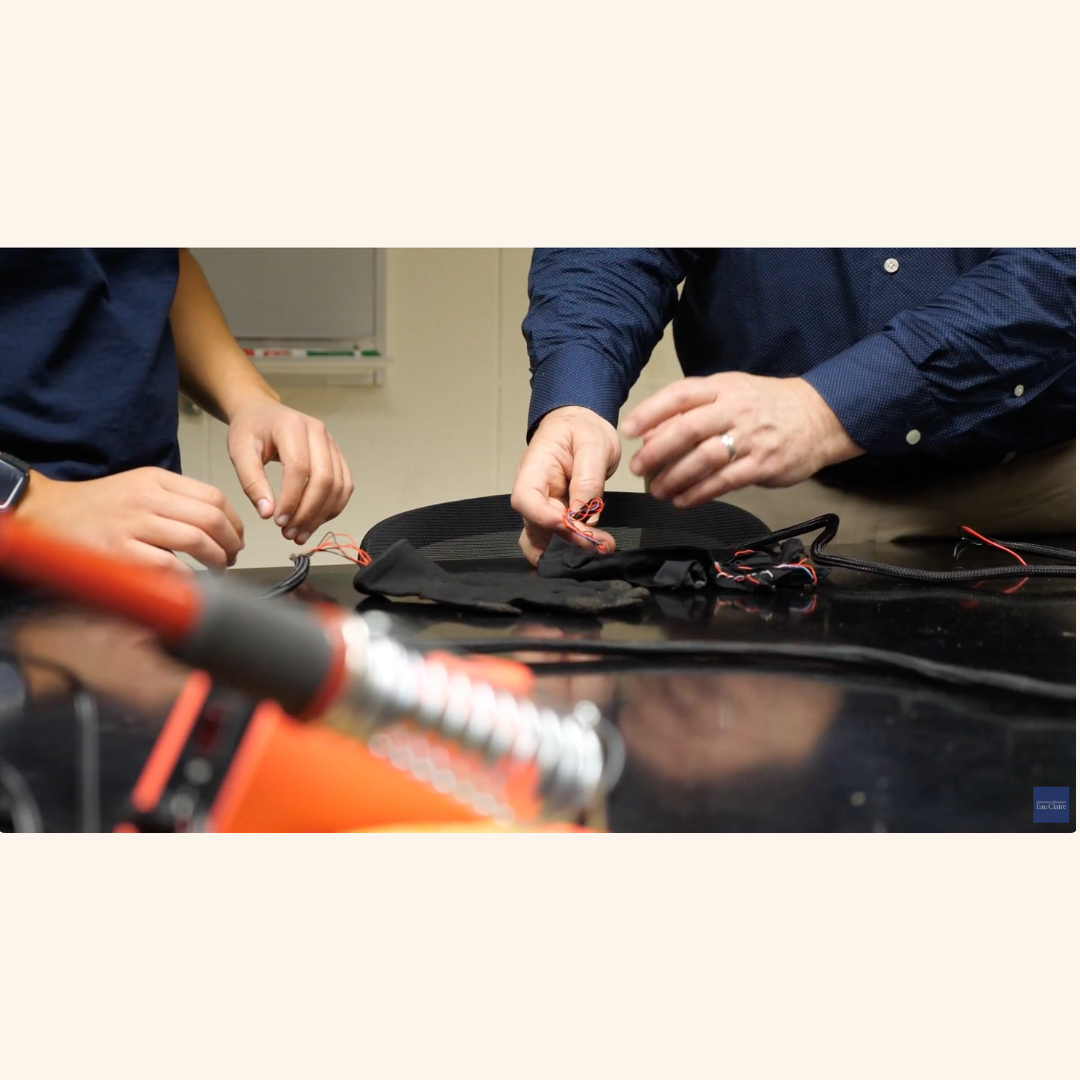
Working across departments—Materials Science, Engineering, and Kinesiology—and in collaboration with a physician from the Mayo Clinic Health System, they’ve been developing their own version of the vibrating glove. It’s still early days, but the aim is clear: produce a glove that is effective, comfortable to wear, low-cost, and genuinely useful to people with Parkinson’s.
What makes their approach interesting is how directly they’ve involved people with Parkinson’s in the process. Many were already experimenting with homemade vibration devices but wanted something more portable and reliable. The research team listened, then designed a glove that runs on standard batteries, uses inexpensive components, and can be built and repaired locally—rather than relying on imported, high-end medical devices.
With the right funding, they plan to manufacture 20 to 30 pairs of these gloves and distribute them within the local community for testing and feedback.
Why It’s Worth Watching
The science behind the vibrating glove is still being refined, but the logic is sound. The fingertips have strong sensory connections to brain areas involved in movement. The idea is that consistent, well-timed vibrations may help "retrain" or stabilise the brain's motor pathways, leading to improved control.
There’s no suggestion this is a cure, or even a solution for everyone. But as part of a broader set of tools—exercise, medication, physiotherapy—it’s another option that may help people manage symptoms more effectively.
What’s Next?
This kind of university-led project shows how practical innovation can happen when researchers work closely with patients and keep cost and accessibility in mind. If trials continue to go well, the glove could become part of clinical practice, or at least an affordable add-on for people looking to explore non-drug options to support their Parkinson’s treatment.
In short: this isn’t a flashy gadget or a gimmick. It’s a grounded, research-based attempt to turn a simple idea—vibration—into something that makes a tangible difference.
Comments (0)
Loading comments...