


The new tech that could improve care for Parkinson’s
September 23, 2024
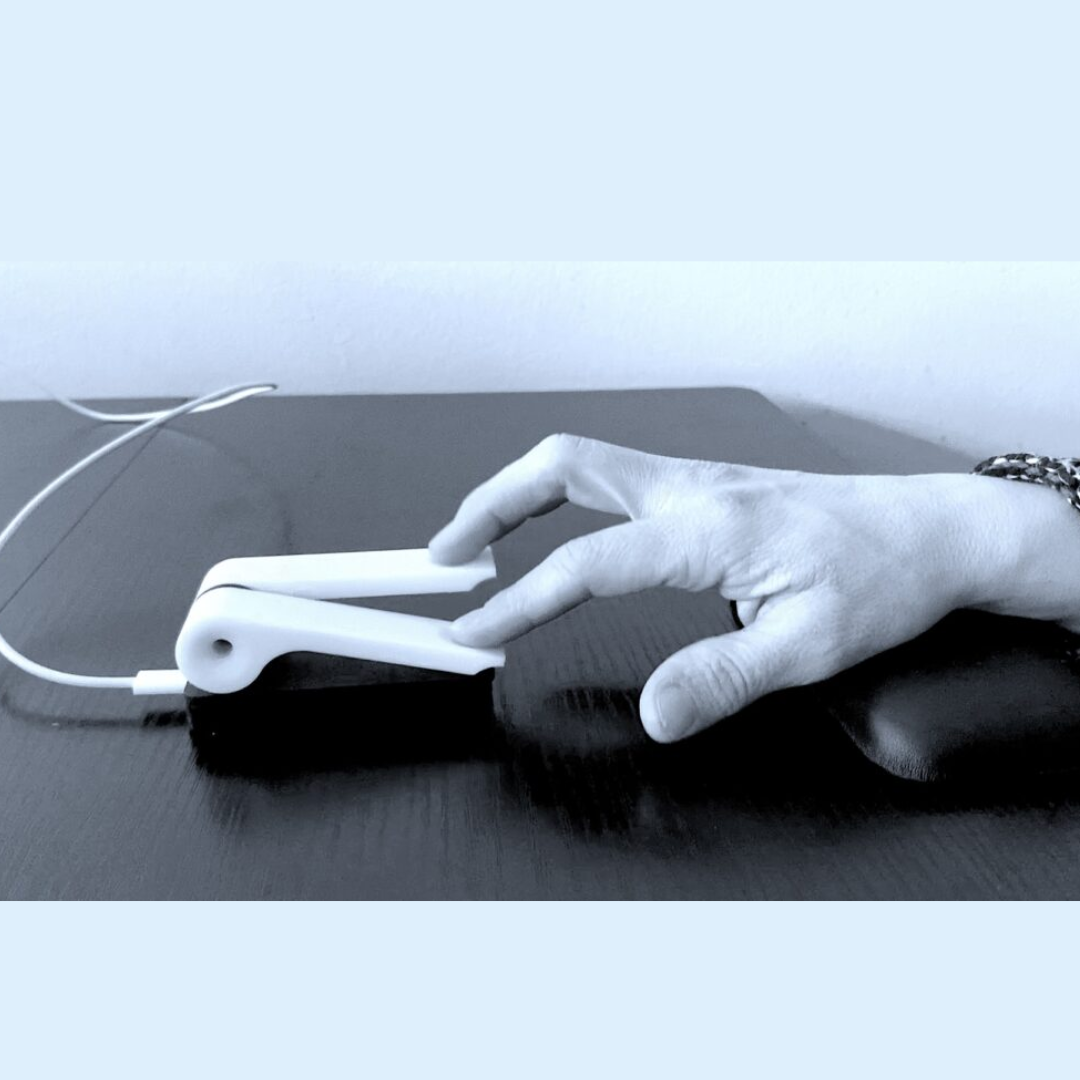
Stanford Medicine researchers have created a simple, portable device paired with a smartphone platform that allows patients to measure their Parkinson’s disease symptoms at home in a reliable and precise way. This device captures detailed data from finger movements that doctors can use to adjust treatments remotely.
Dr. Helen Bronte-Stewart, a neurology professor at Stanford, led this innovative project. It has been highlighted in two research papers and has received funding from multiple sources, including a grant from the Wu Tsai Neuroscience Institute and awards from the Fogarty Innovation program and Stanford Medicine Catalyst.
We spoke with Dr. Bronte-Stewart about this groundbreaking technology, which includes a digital platform called Quantitative DigitoGraphy Care and a small device named KeyDuo, and how it could revolutionize care for Parkinson’s patients.
What challenges exist in tracking Parkinson’s progression? Currently, monitoring Parkinson’s disease relies on in-person exams, where symptoms like tremors and slowed movements are rated on a somewhat subjective scale. Rigidity, or stiffness, is judged by manually rotating a patient’s joints. While useful, these evaluations can vary, and clinicians lose valuable tactile information when reviewing video footage. There’s a need for more accurate, detailed data to assess the disease.
Also, only about 40% of Parkinson’s patients ever see a neurologist, and many wait months between appointments. The lack of specialists makes it hard for patients to get the care they need and manage their medications effectively.
Fellowship-trained movement disorder specialists, who use specific rating scales to assess Parkinson’s symptoms, make up only a tiny percentage of doctors. Without objective data, clinical trials for new Parkinson’s treatments have also been challenging, slowing down the development of new therapies. This is unlike diabetes, where patients can monitor glucose levels regularly and adjust medications accordingly. Parkinson’s needs a similar solution.
How did the idea for the measuring device come about? The concept started in a clinic for musicians with dystonia, a muscle disorder. We had created a computerized keyboard to measure their symptoms, and a pianist with Parkinson’s disease happened to try it. We noticed that the keyboard data could differentiate between when he was on and off his medication.
What makes this device unique is that it’s not just a regular keyboard—it has tension-engineered levers that measure how hard and fast someone presses, as well as how far the lever moves. This provided insights into muscle rigidity, a key Parkinson’s symptom, without needing an in-person exam.
By using two levers, we found we could assess joint stiffness through a simple finger-tapping test. Patients tap for 30 seconds, and the device generates a detailed motor assessment that doctors can use to adjust treatments in real time.
Can patients use this device at home? Yes, patients can take the device anywhere. It’s lightweight, fits in the palm of the hand, and connects to a smartphone or tablet via a mobile app. This allows patients to perform tests anytime, and the results are sent to their doctor immediately.
What have the latest studies shown? In June, we published a paper detailing the full system and how it integrates with electronic medical records. We followed eight patients for 30 days, having them test their symptoms twice a day. The data gave us valuable insights into how their symptoms fluctuated in response to medications throughout the day and over several weeks.
In August, we published another study showing the device could also detect involuntary tremors—a difficult-to-capture symptom of Parkinson’s. By analyzing the timing and force of lever presses, we were able to identify tremors with 98% accuracy.
Could this improve care and standardize treatment? The device provides objective, validated results, eliminating the variability of traditional rating scales. Doctors can better manage patients between rare in-person visits, and the system generates a wealth of data for clinicians to track motor symptoms and potential trends.
We hope that continuous motor monitoring, similar to glucose monitoring for diabetes, will enable patients to manage their medications more effectively. For primary care doctors who aren’t trained in Parkinson’s assessments, this tool could provide the data needed to enhance their ability to treat patients.
Additionally, this technology could accelerate the development of new Parkinson’s drugs by offering more detailed metrics, allowing researchers to see therapeutic effects faster, with fewer participants and lower costs. Since patients can use the device at home, it could simplify clinical trials by reducing the need for visits to specialized centers.
Comments (0)
Loading comments...