


Decoding the Gut’s "Chemical Language" to Detect Parkinson's
March 4, 2026
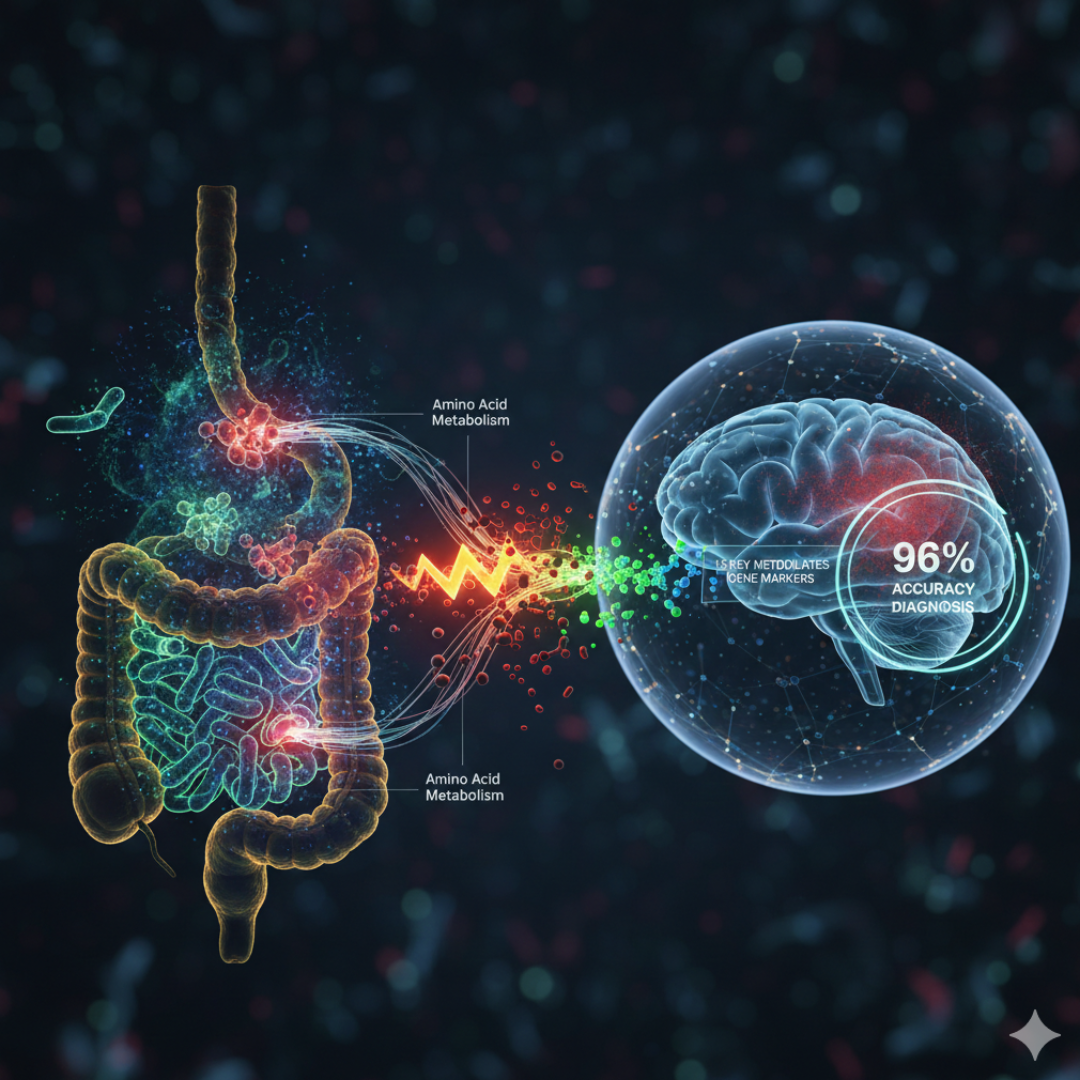
A groundbreaking study published on 2nd March 2026 in npj Parkinson's Disease has introduced a sophisticated new way to identify the condition by decoding the complex relationship between gut bacteria and the chemicals they produce. By integrating "metagenomics" (the study of bacterial genes) with "metabolomics" (the study of the small molecules or metabolites produced by those bacteria), researchers from Shanghai Jiao Tong University have achieved a staggering 96% accuracy in detecting the condition through simple stool samples.
Beyond Bacteria: The Metabolome-Metagenome Link
For years, we have known that the gut microbiome is altered in people living with the condition. However, simply identifying which bacteria are present only tells half the story. The real "intelligence" lies in what those bacteria are actually doing—the chemical signals they send through the gut-brain axis.
This study identified 33 specific metabolites that are significantly altered in people with the condition. The researchers discovered that the gut ecosystem’s dysfunction isn't just about the "bad" bacteria moving in; it’s a co-disruption where specific microbial genes (particularly those involved in amino acid metabolism) fail to produce the necessary chemical signatures for a healthy nervous system. By combining these 12 key metabolites with specific gene markers, the team created a "combinatorial diagnostic panel" that can distinguish someone with the condition from a healthy individual with exceptional precision.
Amino Acids: The Core Perturbed Pathway
One of the most significant findings of this research is the identification of amino acid metabolism as a "core" pathway that goes wrong in the gut. Amino acids are the building blocks of the neurotransmitters the brain uses to communicate. When the gut's "metabolic factory" is broken, it fails to process these building blocks correctly, potentially contributing to the chronic inflammation and neurodegeneration seen in the brain.
This discovery moves the focus away from just "fixing the gut" in a general sense and toward "precision diagnosis." It suggests that the condition leaves a clear, measurable biochemical fingerprint in our digestive tract long before it might be detectable through traditional clinical exams.
A Future of Precision Care
The implications of this study for the community are transformative. If these diagnostic panels can be standardized, we move closer to a future where a simple, non-invasive test could provide:
Early Detection: Identifying the condition at its earliest stages, perhaps even before motor symptoms appear.
Mechanistic Insights: Understanding exactly which metabolic pathways are failing in an individual, allowing for personalised nutritional or probiotic interventions.
Monitoring Progress: Using the gut's "chemical language" to see how well a treatment is working.
This research bridges the gap between microbial ecology and molecular neuropathology. It reinforces the idea that the gut is not just a secondary symptom site, but a primary engine driving the condition’s trajectory. By learning to read the signals from our internal ecosystem, we can move toward a new era of proactive, precision-based management.
Comments (0)
Loading comments...