


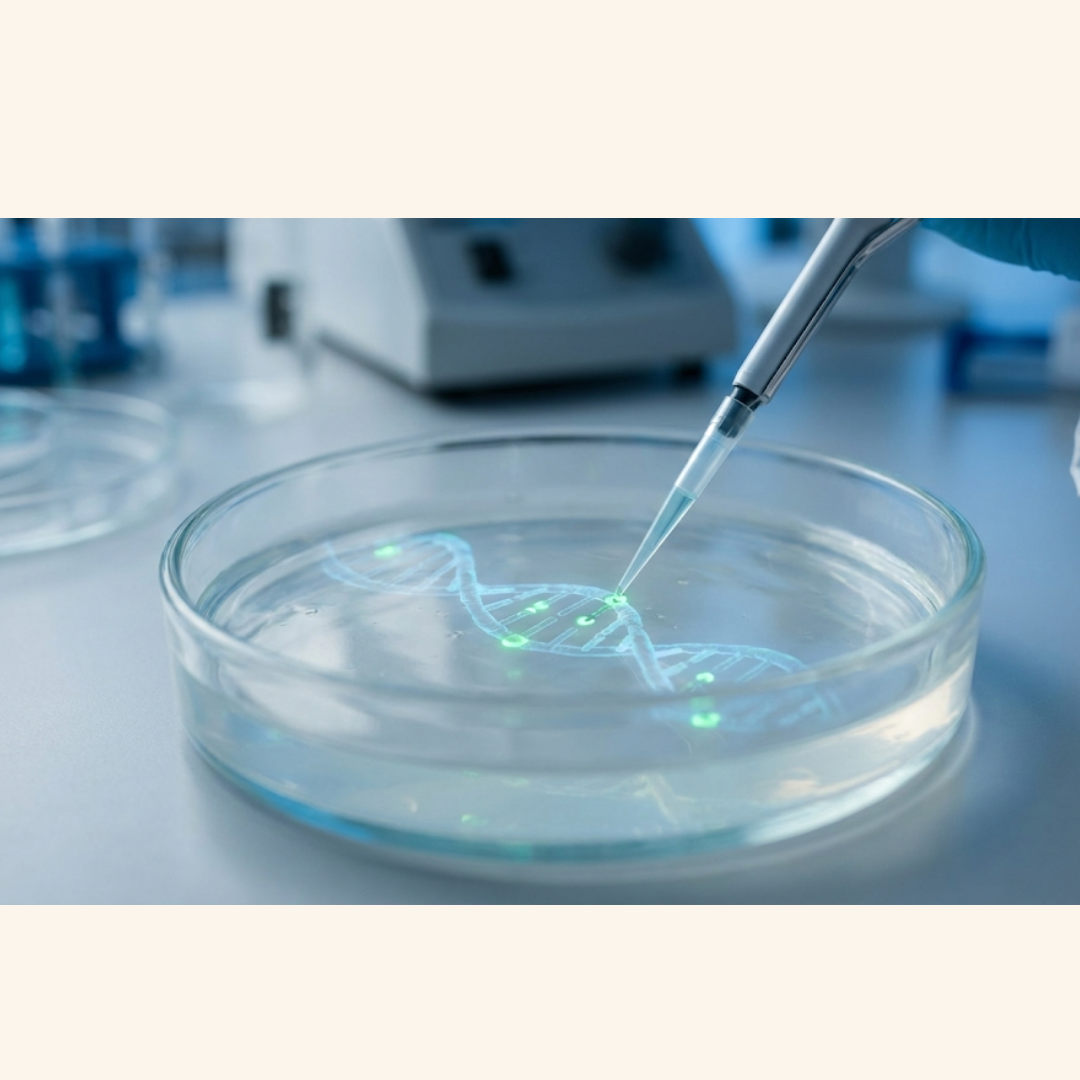
Beyond CRISPR: How Epigenetic Editing Offers Precision Control for the Brain
December 29, 2025
We are all guilty of it. The little notification pops up on our phone screen saying "System Update Available," and we ignore it for weeks because it is annoying. But eventually, we click it, the phone restarts, and suddenly everything runs smoother, faster, and the battery doesn't die by lunch.
For decades, science has been obsessed with the "hardware" of the human body—our DNA. We thought if we could just go in with a pair of molecular scissors and cut out the broken bits (traditional gene editing), we could fix everything. But a new paper on Epigenetic Editing has just landed, and it is essentially telling us that we have been looking at the problem all wrong. We don't need to smash the phone to fix a glitch; we just need a software update.
This new review, published in a major scientific journal, lays out a concept that is frankly a bit mind-bending. Your DNA is the script of a play. It is written in ink; you can't really change it without making a mess. But the epigenome? That is the director. The director decides which lines get shouted, which ones get whispered, and which scenes get cut entirely.
In conditions like Parkinson's, the script (DNA) might be fine, or it might have a typo, but the real chaos often comes because the director is asleep at the wheel. Maybe a gene that causes inflammation is being screamed through a megaphone, or a gene that protects your neurons is being whispered so quietly no one can hear it.
This is where it gets clever. Traditional gene editing (like the famous CRISPR) is a bit like using a chainsaw to fix a leaky tap. It cuts the DNA strand. If it goes wrong, you have a permanent problem.
Epigenetic editing is different. It uses a "dead" version of CRISPR that has had its cutting teeth removed. Instead of scissors, it carries a toolkit of chemical markers. It finds the specific gene causing trouble and simply attaches a "Do Not Disturb" sign to it, or conversely, a "Loudspeaker." It doesn't break the DNA; it just changes the instructions on how to read it. It turns the volume knob down on the bad stuff and up on the good stuff.
Why This Is a Game-Changer for Us: The paper highlights why this is such a massive deal for neurological conditions. Our brains are precious, delicate things. We don't really want scientists going in there and snapping DNA strands if they can avoid it. This new approach offers "precision control."
Even cooler, they are working on a "hit-and-run" mechanism. This means they can go in, update the software, and then leave. The cell remembers the new instructions. It is a one time reset that could potentially last a lifetime without needing constant medication.
Of course, there is a catch. The brain is the most heavily guarded fortress in the body (thanks to the blood-brain barrier). Getting these sophisticated little editors inside is still a logistical nightmare, like trying to post a letter through a letterbox that has been welded shut. But the paper suggests that with new delivery systems, like tiny nanoparticles, we are getting closer to picking the lock.
It is early days, but the idea that we could one day treat this condition not by adding more pills, but by simply tweaking the volume on our own biology, is the kind of science fiction that is fast becoming science fact.
Comments (0)
Loading comments...