


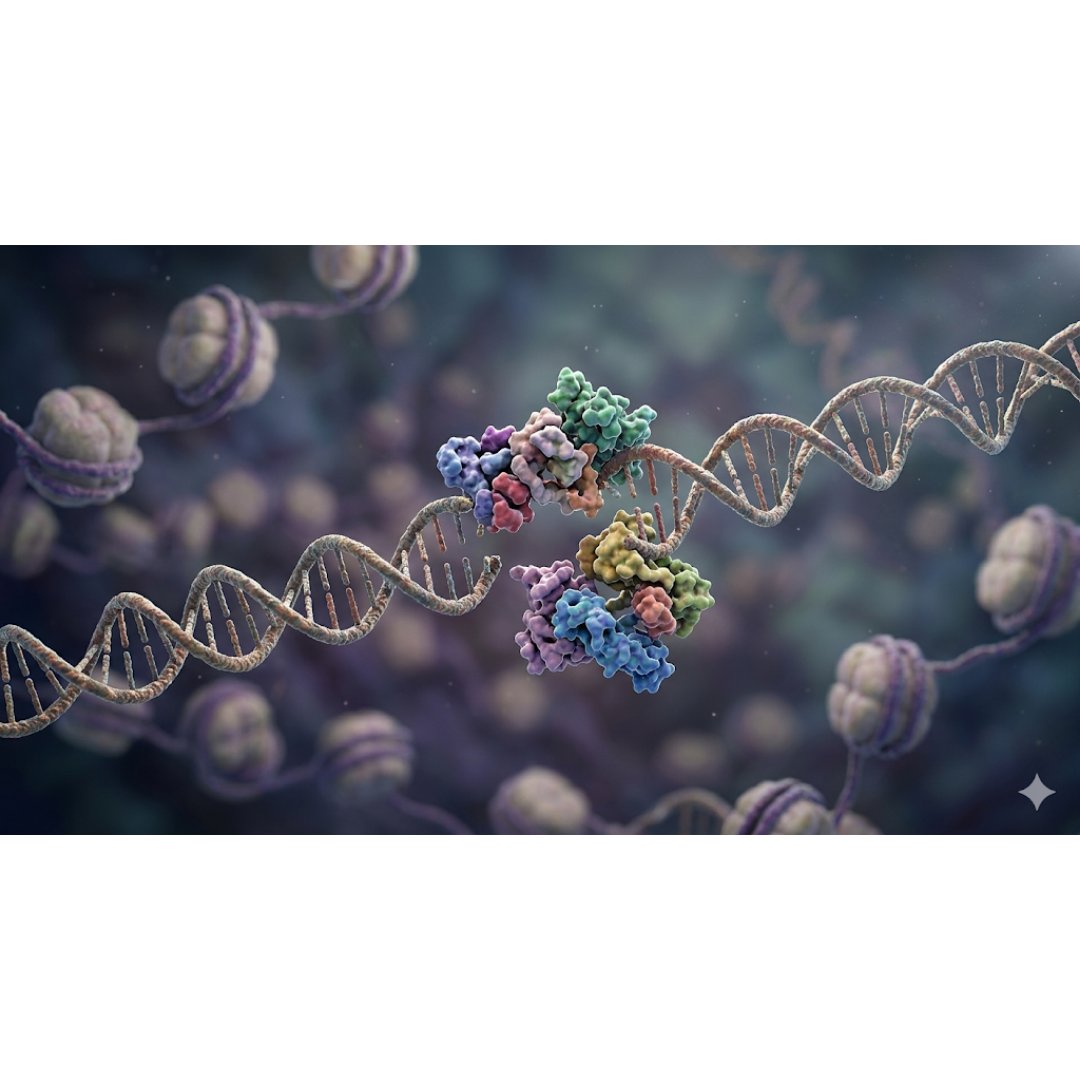
How a Single Protein Links DNA Repair, Cancer, and Dementia
March 16, 2026
Researchers have discovered a "missing link" that explains why seemingly different diseases—like ALS, certain cancers, and dementia—might actually share the same biological root. By identifying this specific protein, scientists have a new target for therapies that could potentially treat multiple conditions by fixing how our cells repair their own genetic code.
At the heart of this discovery is a protein often associated with ALS (Amyotrophic Lateral Sclerosis). Scientists have found that this protein acts as a crucial coordinator for DNA repair. Our DNA is under constant attack from environmental stress and natural cellular processes, leading to thousands of tiny breaks every day. In a healthy person, "repair crew" proteins quickly mend these breaks to keep the cell functioning.
The study reveals that when this specific protein becomes "misfolded" or trapped in the wrong part of the cell, the DNA repair bridge collapses. This failure leads to three distinct but related outcomes. In the case of ALS and certain types of dementia, the accumulation of unrepaired DNA damage eventually triggers the death of neurons. Because nerve cells are particularly sensitive to genetic instability, this breakdown leads to the motor and cognitive decline seen in these conditions.
The link to cancer is equally profound. When DNA is not repaired correctly in other types of cells, it can lead to mutations that cause cells to grow uncontrollably. This research explains why some people with a genetic predisposition to neurodegeneration might also face a different risk profile for certain cancers. They are two sides of the same coin: one where cells die too soon (dementia and ALS), and one where they do not die when they should (cancer).
This discovery shifts our understanding of these conditions away from being isolated "accidents" and toward a unified theory of cellular health. It suggests that the loss of dopamine-producing cells or the decline of motor neurons is not just a random event, but the result of a fundamental breakdown in the cell's ability to maintain its own blueprint.
By focusing on this protein, science is moving toward "broad-spectrum" neuroprotective treatments. Instead of just acting as a temporary fix for symptoms, future therapies could aim to restore the DNA repair bridge. This move toward protecting the "whole person" at the most fundamental level offers a new pathway for durable care, giving hope that fixing this single cellular bridge could one day prevent the onset of both cognitive decline and genetic instability.
Comments (0)
Loading comments...