


Living well with Parkinson's: finding meaning beyond symptoms
November 24, 2025
 Michel
 Dr Angeliki Bogosian is Reader in Health Psychology, Department of Psychology & Neuroscience, School of Health and Medical Sciences, City St George's, University of London.
When we talk about Parkinson's, we often talk about loss of movement, of independence, of control. But what if the work of living well with Parkinson's is not about fighting loss, but redefining what it means to live fully?
A few years back, I was facilitating mindfulness sessions for people with Parkinson's for a research project (Bogosian et al., 2022). For a lot of people, just taking part in those sessions was a challenge. The sessions were held online, and pre-pandemic video conferences were not common; people had to find a device that could run Skype, download and install the programme, learn how to use it, and then join a group of people they never met before to practice mindfulness. Most people who took part in those sessions were early in their diagnosis, and they were trying to find ways to manage the emotional consequences of the Parkinson's diagnosis. But soon, it became clear, 'accepting the diagnosis' was not easy. People wanted more than 'be mindful'. They wanted to carry on doing the things they used to love doing and now were difficult to do.
At the same time I was delivering these mindfulness sessions, I was also conducting interviews with people with progressive multiple sclerosis on how they adapt as the condition changes. What I learnt from those interviews is that being adaptable made people overall more satisfied with their lives (Bogosian et al., 2017). This didn't mean people changed their values as the condition progressed, but they changed the activities that aligned with those values or the way they did things. For example, they started listening to audio books instead of reading when vision was getting impaired; they asked their family to visit them at home rather than going to restaurants. Paterson (2004) talks about how living with a chronic disease is an ongoing and continually shifting process in which an 'illness-in-the-foreground' or 'wellness-in-the-foreground' perspective has specific functions in the person's world. It is natural early in the diagnosis, or when there is a new symptom or progression in severity, for the illness to be in the foreground. But then when people have found ways to manage the new or progressing symptoms, they could go back to focusing on wellness. Problems start when staying focused on the illness is not necessary or helpful anymore.
A focus on meaning and purpose
Parkinson's is associated with a complex range of disabling and distressing non-motor symptoms, including dementia and cognitive impairment, apathy, depression and anxiety, psychosis, bowel and bladder dysfunction, fatigue, sleep problems and pain (Tolosa et al., 2021). For a lot of people with Parkinson's, quality of life and well-being considerably deteriorates with the progression of the condition and age, with most of them reporting not being satisfied with their lives and about half of them reporting mental health problems, such as anxiety, depression and low subjective well-being (Burchill et al., 2024; Yamanishi et al., 2013). A survey by Parkinson's UK indicated that, in the first two years of diagnosis, psychological issues should be prioritised (Port et al., 2021).
Traditionally, the focus of psychological research in neurological conditions has been on symptom management or psychological adjustment (meaning reducing anxiety and depression) rather than resilience and flourishing. However, trends in research and clinical practice have started to shift. The World Health Organization defines well-being as quality of life encompassing the ability of people and societies to contribute to the world in accordance with a sense of meaning and purpose (WHO, 2021). Psychological well-being is shaped by meaning, connection, and values, not just the absence of distress.
The focus on meaning and purpose has been a particular characteristic of the so-called 'third wave' therapeutic approaches, which promote personal growth by enhancing flexibility (Hayes et al., 2004) and have become part of the mainstream approaches in mental health. Third wave therapies include Acceptance and Commitment Therapy (ACT), Dialectical Behaviour Therapy (DBT), Mindfulness-Based Cognitive Therapy (MBCT), Compassion-Focused Therapy (CFT), and Metacognitive Therapy (MCT). A recent systematic review of 'third wave' therapies in Parkinson's identified nine mindfulness-based interventions and one acceptance and commitment therapy, and showed that mindfulness-based interventions were well received. Future adaptation of these approaches in larger trials to assess effectiveness was recommended (Christodoulou et al., 2025). Similarly, in a digital ACT intervention, we found that people with Parkinson's found the approach acceptable, and the feasibility study results showed it could improve depressive symptoms and reduce health costs (Pinto et al., 2025). The evidence of the effectiveness of third wave approaches we have so far is based mainly on feasibility and pilot trials but is promising, nevertheless.
Mindfulness slows down the breathing and focuses the brain to the now. This helps with the physical manifestation of anxiety, so physically you are calmer and cognitively you have better clarity of what is needed to do and focus your attention. Everyone has the capacity to be mindful, even if it does not come easily at first. While some people may be naturally good at focusing their attention, they might find it harder to be gentle or nonjudgemental with themselves. Others might be very compassionate, but find their attention drifts or scatters easily, especially when under stress or living with symptoms like fatigue or tremor. Mindfulness brings together attention and attitude. It is about what we are focusing on, and how we relate to what we find. It is not about achieving a blank mind or pushing away thoughts and feelings. Rather, it is about noticing what is happening in the moment and choosing how to respond, with awareness and kindness. In a study published in PLOS Medicine, Galante and colleagues gathered data from 136 mindfulness trials that included 11,605 participants. When compared with no intervention, people in the mindfulness groups showed improved depression, with no statistically significant evidence on improving anxiety, distress, and well-being (Galante et al., 2021). On a more recent study, published in the British Journal of Health Psychology last year, 1247 participants from 91 countries were randomised to either practicing 10 minutes mindfulness daily through a guided meditation audio file or an attention-matched control condition and found that those who received the mindfulness training reported significantly better well-being, lower depression and anxiety symptoms than control (Remskar et al., 2024).
ACT is another popular third-wave therapy and includes acceptance, mindfulness, motivation, and behaviour change methods. ACT focuses on increasing the everyday life activities that feel enriching and meaningful (Hayes, 2004). People are encouraged to face problems head-on rather than avoid the stress or distress this can entail, and to engage in actions that help them live the life they want. Regarding chronic conditions, ACT can be more beneficial than Cognitive Behavioural Therapy (CBT), which is frequently used for those with long-term conditions. For example, negative illness beliefs and distress may be realistic at certain times. Thus, ACT's focus on instigating valued behaviours while accepting such thoughts and feelings may prove more effective than attempts to directly alter them, as in traditional CBT (Graham et al., 2016). For example, if someone values being caring towards family and friends, ACT encourages them to find ways to express that care within their current abilities, perhaps through shared meals, listening or simply being present. By clarifying what truly matters and acting in line with those values, people can regain a sense of purpose and direction.
A luxury, or clarity?
A question remains: how to make space for these meaningful activities while balancing the many demands of living with Parkinson's and maintaining the rhythm of everyday life. During the co-production of our digital ACT intervention, people with Parkinson's were wary of adding yet another thing they had to do. When you have Parkinson's and you need to balance complex medication regimes, deal with the off periods, and do the necessary to function, trying to identify your values and infuse your day with meaningful activities can sound like a luxury you can't afford.
However, with ACT, we get clarity on our values that can be very useful when managing competing priorities and busy lives. ACT encourages individuals to be more selective with how they choose to spend their time. For example, if I value being peaceful, does 30 minutes scrolling Facebook help me relax, or is there anything else that will help me calm?
Living well with Parkinson's, then, is about finding the space to do what matters most, even when life feels uncertain and different to what it used to.
Dr Angeliki Bogosian is Reader in Health Psychology, Department of Psychology & Neuroscience, School of Health and Medical Sciences, City St George's, University of London
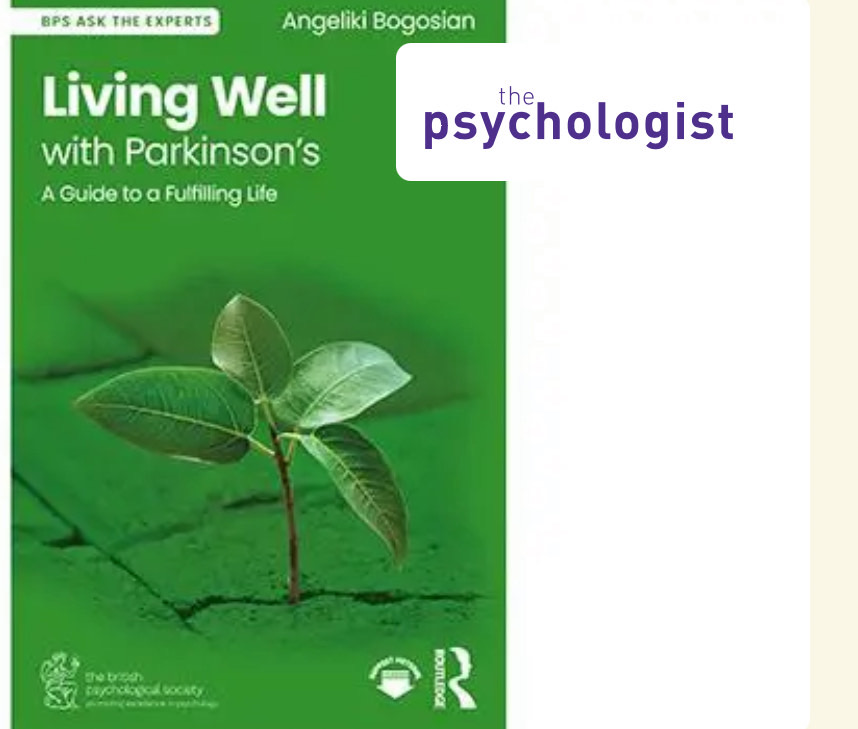
Living Well With Parkinson's: A Guide to a Fulfilling Life is published by Routledge and the British Psychological Society, as part of the 'BPS Ask the Experts' series. BPS members get 25% off all Routledge books.
Comments (0)
Loading comments...