


Simple Skin Test Shows Early Promise in Tracking Parkinson’s Treatment
November 12, 2025
A US company called CND Life Sciences has shared early results from a new type of test used in a Parkinson’s drug trial — and the signs look hopeful.
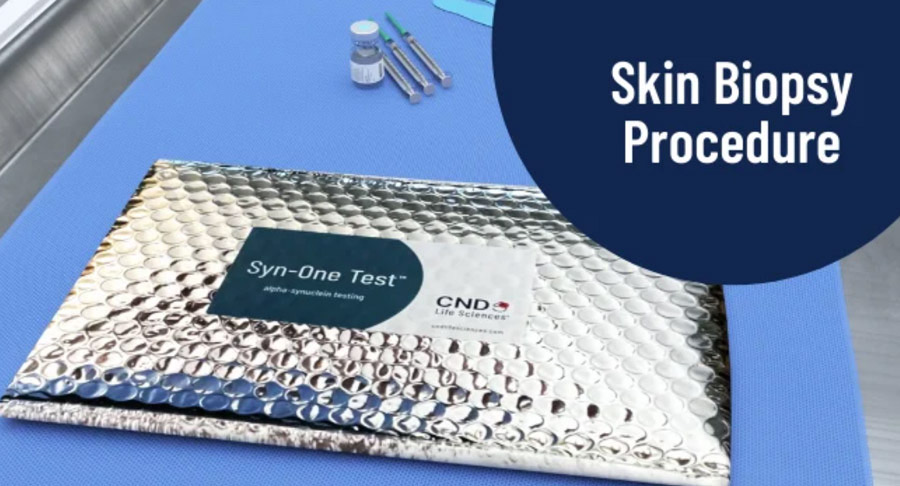
The test, called Syn-One, looks for a protein called alpha-synuclein in tiny skin-nerve samples. This protein builds up in the brain and nerves of people with Parkinson’s disease and other related conditions. Measuring it may help doctors see how the disease is changing or whether a treatment is making a difference.
⸻
What the study did
CND worked with ABLi Therapeutics, a company testing a new drug called risvodetinib in a Phase 2 trial.
A small group of 36 volunteers with Parkinson’s gave skin samples before starting treatment and again 12 weeks later.
Researchers used the Syn-One test to measure how much of the harmful alpha-synuclein protein was present in the nerves of the skin. After treatment, they found less of the protein in those who received the drug.
⸻
Why this matters
That’s an exciting sign. It suggests the drug might be helping reduce the build-up of alpha-synuclein — something that could, in time, slow down the disease itself.
Even more important, the Syn-One test offers a simple and safe way to measure these changes without needing a brain scan or spinal tap. A small skin sample can give valuable information about what’s happening inside the body.
For people with Parkinson’s, this kind of test could one day help with:
• Earlier and more accurate diagnosis
• Tracking how the disease changes over time
• Checking whether new treatments are working
⸻
A note of caution
These results are early and come from a small study.
We don’t yet know whether the drug will actually improve movement or slow the disease in real life. Larger and longer studies are still needed.
So while this is a good step forward, it’s not a cure — at least not yet.
⸻
What’s next
CND Life Sciences is now running a longer 18-month study called Syn-Q, supported by the Michael J. Fox Foundation. This research will follow people with Parkinson’s to see how alpha-synuclein levels change over time.
If future trials confirm these early findings, tests like Syn-One could become a regular part of Parkinson’s care — helping doctors pick the right treatments for the right people, at the right time.
Comments (0)
Loading comments...