


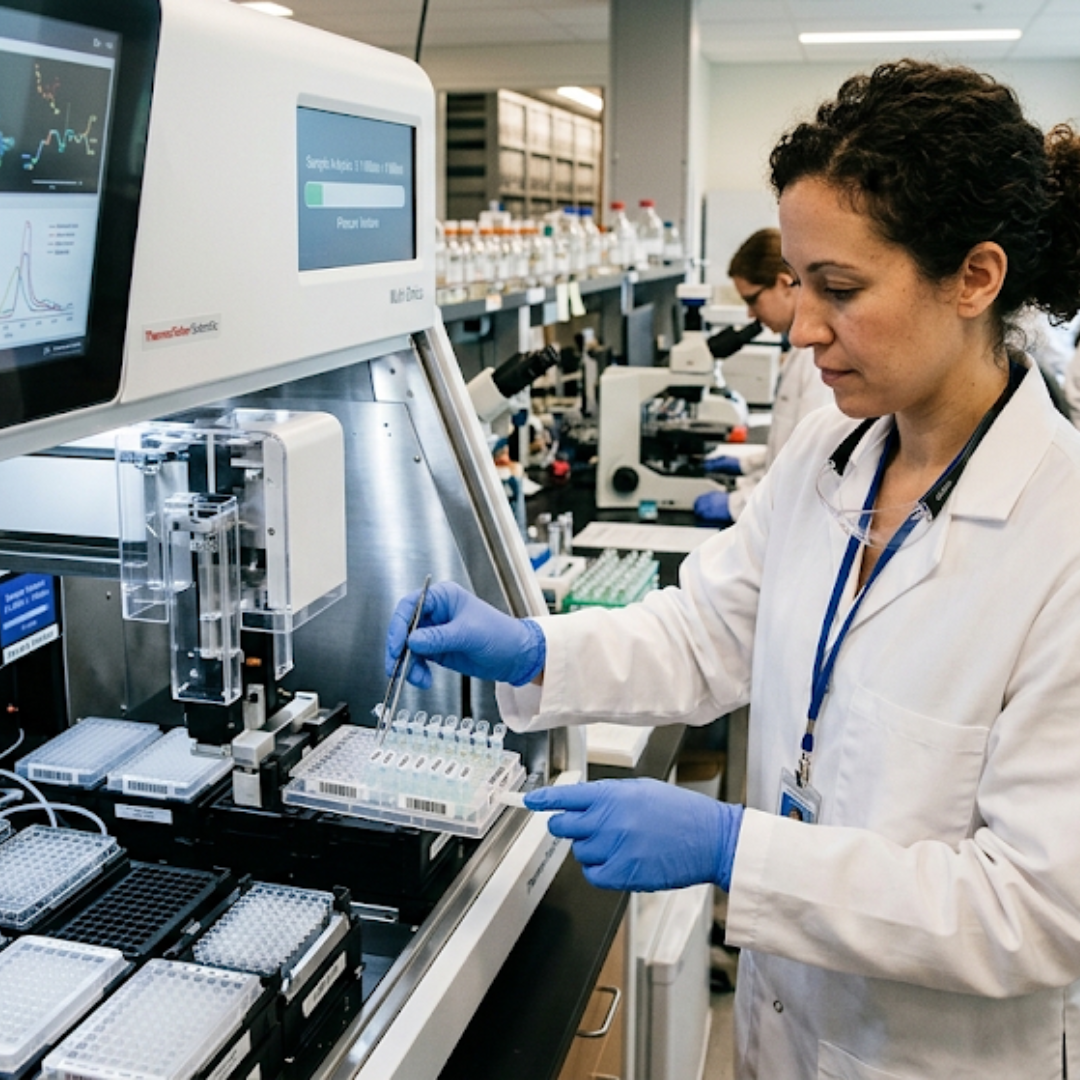
Mayo Clinic and Thermo Fisher Scientific have launched Precure to analyse one million biological samples for early disease detection, bringing fresh hope for earlier intervention in Parkinson's
September 21, 2026
 Beatrice
Mayo Clinic and scientific instrument maker Thermo Fisher Scientific have formed a new venture called Precure to study one million human biological samples in search of the earliest molecular whispers of illness. By examining blood and tissue samples matched with medical records collected over many years, scientists plan to identify what happens inside the body long before any symptoms appear.
Most medicine today is reactive. A person notices that something feels wrong, visits a doctor, undergoes tests, and receives a diagnosis. By that point, the underlying condition has often been quietly developing for years, making treatment far more complicated. Precure aims to flip this timeline completely by identifying biological shifts well before a clinical diagnosis is made.
To achieve this, the initiative brings together two distinct strengths. Mayo Clinic holds an immense collection of biological samples matched with detailed clinical records gathered across decades. Thermo Fisher provides the specialised analytical technology needed to read those samples at a massive scale. Mayo Clinic holds the majority share in the venture, while Thermo Fisher holds a minority stake. Any financial returns earned by Mayo Clinic will flow directly back into medical research, education, and patient care.
At the heart of the project is an approach known as multiomics. While genetics examines the DNA instructions we inherit, other biological layers, such as proteomics, look at the active proteins carrying out daily tasks inside our cells. By measuring genes, proteins, and clinical histories side by side, researchers can build a dynamic picture of how health shifts over time. Precure will use advanced artificial intelligence and large scale data analytics to sift through billions of data points, searching for hidden patterns that reveal subtle biological markers.
For people with Parkinson's, this shift in research focus could not be more critical. Parkinson's is notorious for its quiet, stealthy onset. By the time characteristic motor signs like tremor, stiffness, or balance changes prompt an assessment, a substantial proportion of dopamine producing neurons in the brain have already been lost. Identifying reliable biological markers in blood or tissue years before these visible changes emerge has long been one of the biggest hurdles in neurodegenerative medicine.
By analysing one million samples across multiple years, Precure could help uncover the precise protein changes and molecular signals that accompany the earliest phases of Parkinson's. Finding these early biological flags would completely change clinical trials. Drug developers could test neuroprotective therapies on people at the very beginning of the biological process, when preserving brain cells is far more achievable than trying to rebuild lost neural pathways.
Earlier detection could also lead to practical, non invasive diagnostic tests that confirm what is happening far sooner, removing the lengthy periods of uncertainty that often precede an official diagnosis. Precure aims to turn these large scale laboratory discoveries into real clinical tests and therapies, bringing medicine closer to halting progression before irreversible changes take hold.
Comments (0)
Loading comments...