


Yale Study Identifies the Protein 'Gateway' That Allows Toxic Alpha-Synuclein to Enter Healthy Cells
January 7, 2026
For years, scientists have watched the condition march through the brain like a slow-moving invasion. We know that toxic clumps of a protein called alpha-synuclein act as the foot soldiers, travelling from one healthy nerve cell to the next, corrupting them one by one. But until now, no one quite knew how these invaders were getting through the city walls.
A team at Yale University has finally found the answer. It turns out the brain’s own cells are unwittingly opening the door.
The Trojan Horse Effect
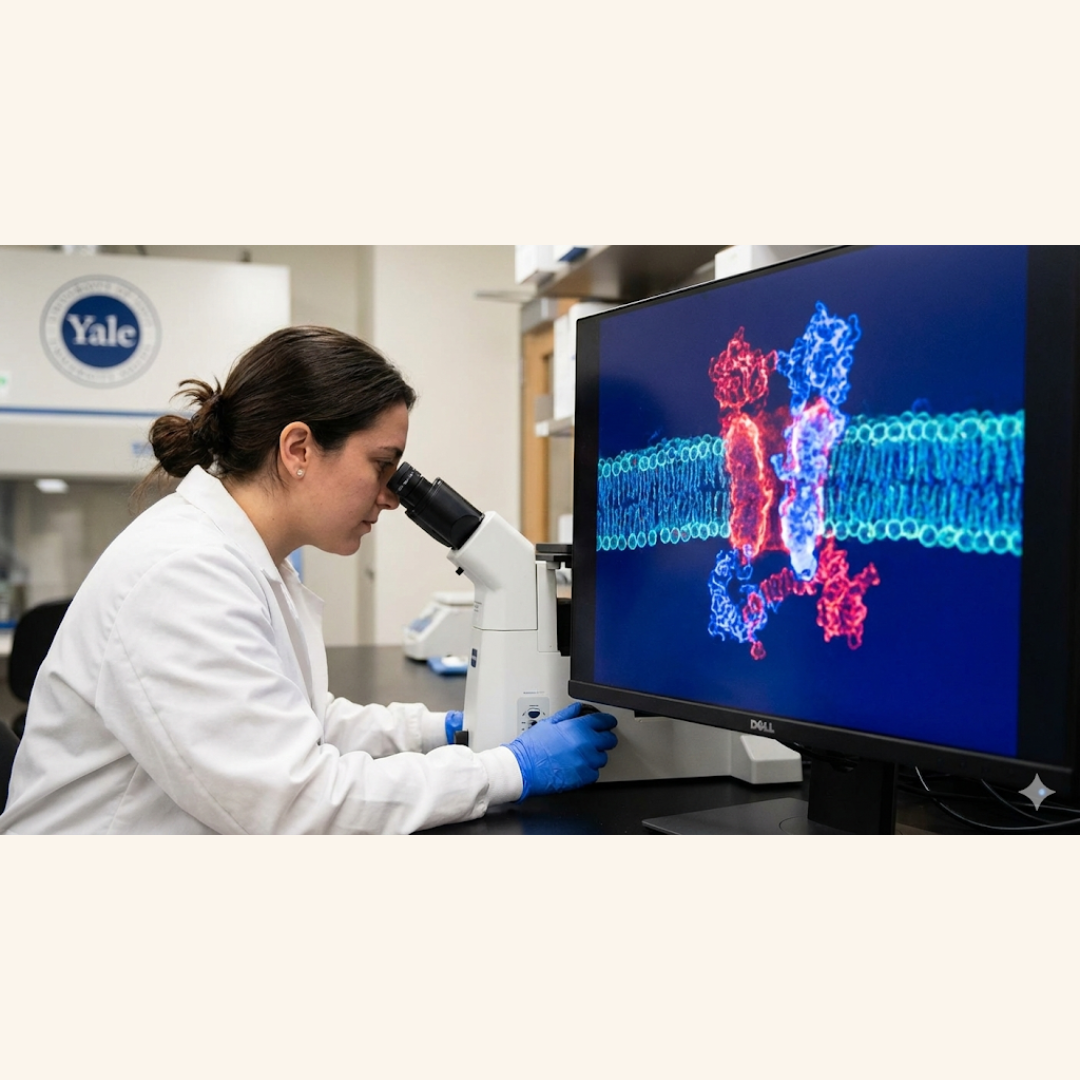
The study, published in Nature Communications, identifies two specific proteins sitting on the surface of neurons that act as a disastrous welcome committee. Their names are mGluR4 and NPDC1. Under normal circumstances, they have their own jobs to do. But when confronted with toxic alpha-synuclein, they team up to form a deadly "complex"—essentially holding hands to escort the toxic protein inside the healthy cell.
Think of it less like a battering ram and more like a Trojan Horse. The toxic protein cannot easily force its way in; it needs an accomplice on the inside. mGluR4 and NPDC1 are those accomplices.
Locking the Gate
What makes this discovery so electric is what happened when the researchers intervened. In experiments with mice, when either of these two "gatekeeper" proteins was blocked or removed, the toxic alpha-synuclein was left stranded outside. It knocked, but no one answered.
The result? The brain cells survived. The mice didn't develop the classic signs of the condition, and the usual spread of damage ground to a halt.
A New Strategy
This represents a massive shift in thinking. Most current treatments for the condition focus on mopping up the mess—replacing lost dopamine to help with movement. This approach, however, targets the process of the condition itself. If we can create a drug that locks this specific gate—stopping mGluR4 and NPDC1 from coupling up—we might finally be able to stop the condition’s progression in its tracks, rather than just managing the fallout.
It is early days, of course. But for the first time, we aren't just watching the invasion happen; we know exactly which door they are using, and we might just have found the key to lock it.
Comments (0)
Loading comments...