


How Deep Brain Stimulation rewires the brain’s communication network
March 4, 2026
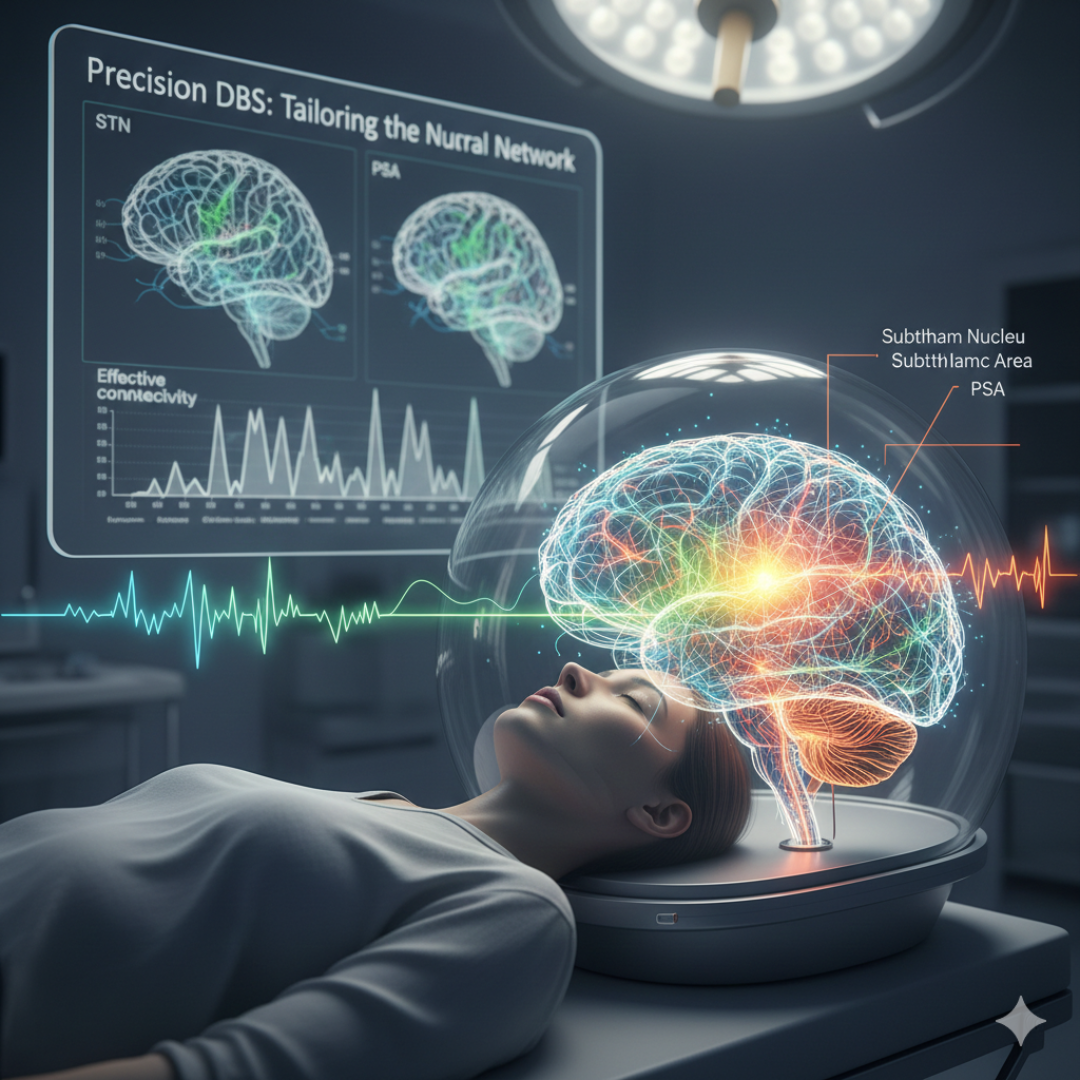
A new study published in npj Parkinson's Disease has provided a detailed look at how Deep Brain Stimulation (DBS) affects the "effective connectivity" of the brain. While DBS is a well-established treatment for managing motor symptoms, researchers from the University of Cologne and the Michael J. Fox Foundation have been investigating how targeting different areas of the brain—the Subthalamic Nucleus (STN) versus the Posterior Subthalamic Area (PSA)—changes the way brain regions talk to one another.
The Brain’s Internal Switchboard
Deep Brain Stimulation works by delivering electrical impulses to specific hubs in the brain, essentially acting as a pacemaker for the nervous system. However, the brain is a complex web of connections, and stimulating one hub can have a ripple effect across the entire network. Using advanced 3.0T resting-state fMRI scans, scientists measured "effective connectivity," which describes the direct influence that one brain region exerts over another.
The researchers focused on how these two different surgical targets affect the motor circuit. They found that while both targets are effective at improving movement, they achieve this by "rewiring" the brain’s communication in distinct ways. The STN-DBS, which is the more traditional target, appears to modulate a broad network involved in movement control and inhibition. In contrast, PSA-DBS—often used for people who struggle with severe tremors—shows a more specific impact on the pathways that regulate coordination and steady movement.
Moving Toward Precision Surgery
The study reveals that the condition involves a fracturing of the brain’s communication network, where certain signals become too loud or too weak. Both types of DBS help to rebalance this internal conversation. However, the research suggests that the choice of surgical target might be tailored more specifically to a person’s individual symptom profile.
By mapping these changes, scientists discovered that DBS does not just "turn off" a faulty signal; it actively restores a more logical and tiered sequence of communication between the grey matter offices of the brain. This "normalising" effect on the brain’s infrastructure is what allows for the smooth, fluid motion that often returns after a successful procedure.
Why Connectivity is the Future of Care
This insight into the brain’s failing infrastructure and how it responds to stimulation is a significant stride toward personalised management. By understanding how different surgical targets influence the fibre-optic-like cables of the white matter, clinicians can move closer to predicting which surgical approach will be most effective for each individual.
The research reinforces the idea that the brain is highly adaptable. Even when the original pathways are compromised by the condition, targeted electrical stimulation can help the brain find a "backup plan" by strengthening the connections that remain. This study provides a structural understanding of how we can better repair the internal communication network, offering a clear roadmap for the future of precision surgery.
Comments (0)
Loading comments...