


The Cellular Overflow Valve: A New Breakthrough in Parkinson’s Research
March 27, 2026
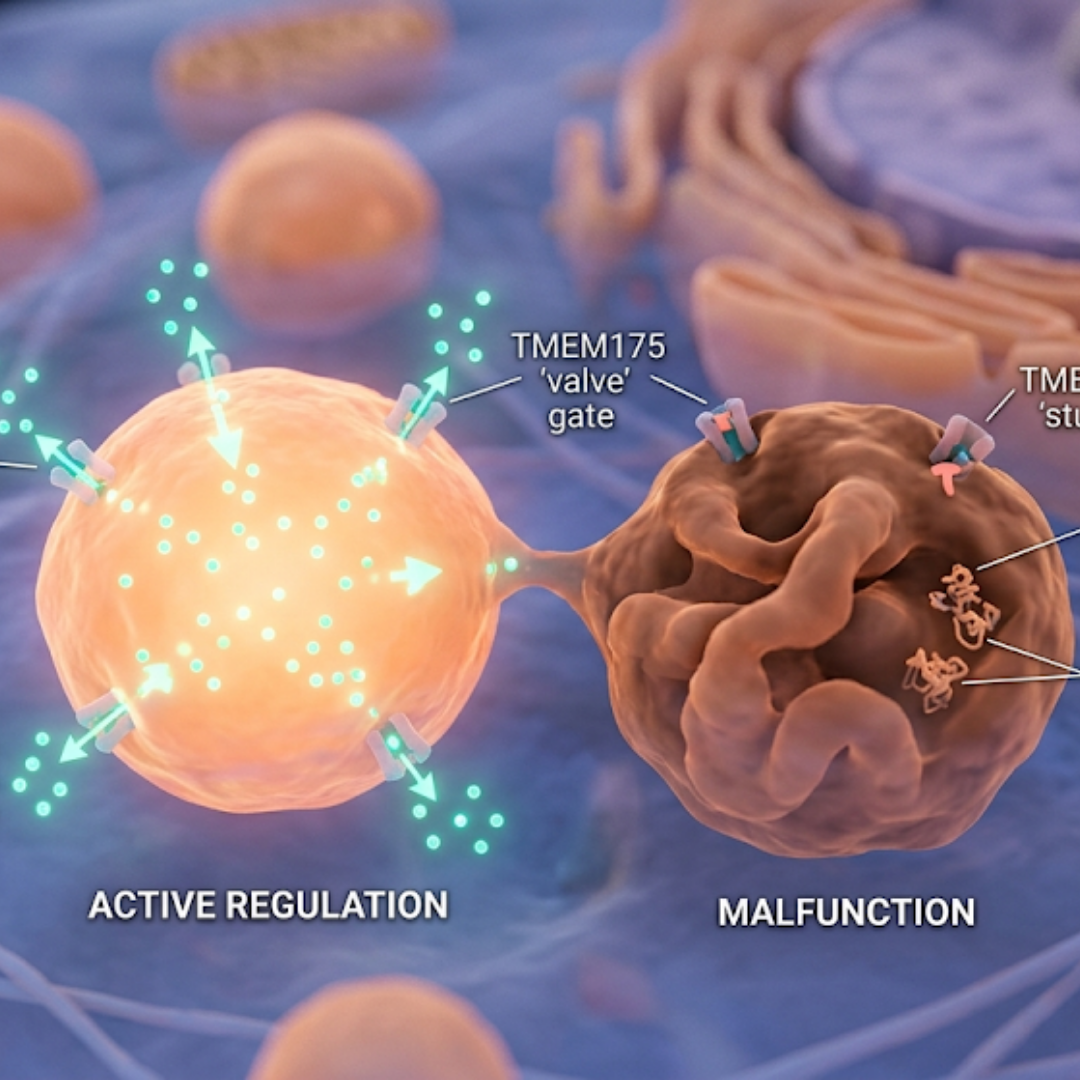
Just as a sink or bathtub has an overflow drain to prevent a flood, researchers have discovered that our cells possess a similar built-in safeguard. A new study, published in the Proceedings of the National Academy of Sciences (PNAS) and led by scientists from LMU Munich and Bonn-Rhein-Sieg University, has identified a cellular "overflow valve" that appears to play a critical role in the development of Parkinson’s.
The Recycling Centre of the Cell
The focus of this discovery is the lysosome. Think of lysosomes as the cell's recycling centres; they are small compartments responsible for breaking down large molecules and waste into simpler building blocks that the cell can reuse. For these recycling centres to function efficiently, they must maintain a very specific level of acidity (pH).
If a lysosome becomes too acidic or not acidic enough, the recycling process grinds to a halt. This leads to a toxic buildup of cellular "trash," which is a known hallmark of Parkinson's.
The Role of TMEM175
For years, scientists were puzzled by a specific protein called TMEM175. While they knew it sat on the surface of the lysosome, its exact job was a mystery. This new research has finally decoded its function: TMEM175 acts as the "overflow valve" for protons.
When the interior of a lysosome becomes too acidic, TMEM175 senses the danger and opens up, allowing protons to flow out and restore the perfect balance. The study revealed that this channel doesn't just transport potassium, as previously thought, but specifically regulates the concentration of protons to fine-tune the lysosome’s environment.
Why This Matters for Parkinson’s
The connection to Parkinson's is direct and significant. The researchers found that when mutations disrupt this TMEM175 channel, the "overflow valve" fails. Without this regulation:
The lysosome’s acidity levels go out of control.
Waste proteins are not properly degraded.
Toxic buildup occurs, eventually leading to the death of nerve cells.
Previous genetic studies have already linked variations in the TMEM175 gene to an increased risk of developing Parkinson’s. This new biological evidence explains why those genetic links exist, providing a clear target for future treatments.
A New Target for Therapy
This discovery shifts the focus toward a promising new strategy for intervention. Instead of just managing the symptoms of Parkinson’s, scientists can now look at developing drugs that "fix" or "boost" the TMEM175 valve. By helping the cell maintain its recycling system, it may be possible to prevent the toxic buildup that leads to neurodegeneration in the first place.
While this research is still in the laboratory stage, identifying this specific "overflow valve" provides a vital foundation for understanding how Parkinson's progresses and how we might one day stop it at the cellular level.
Comments (0)
Loading comments...