


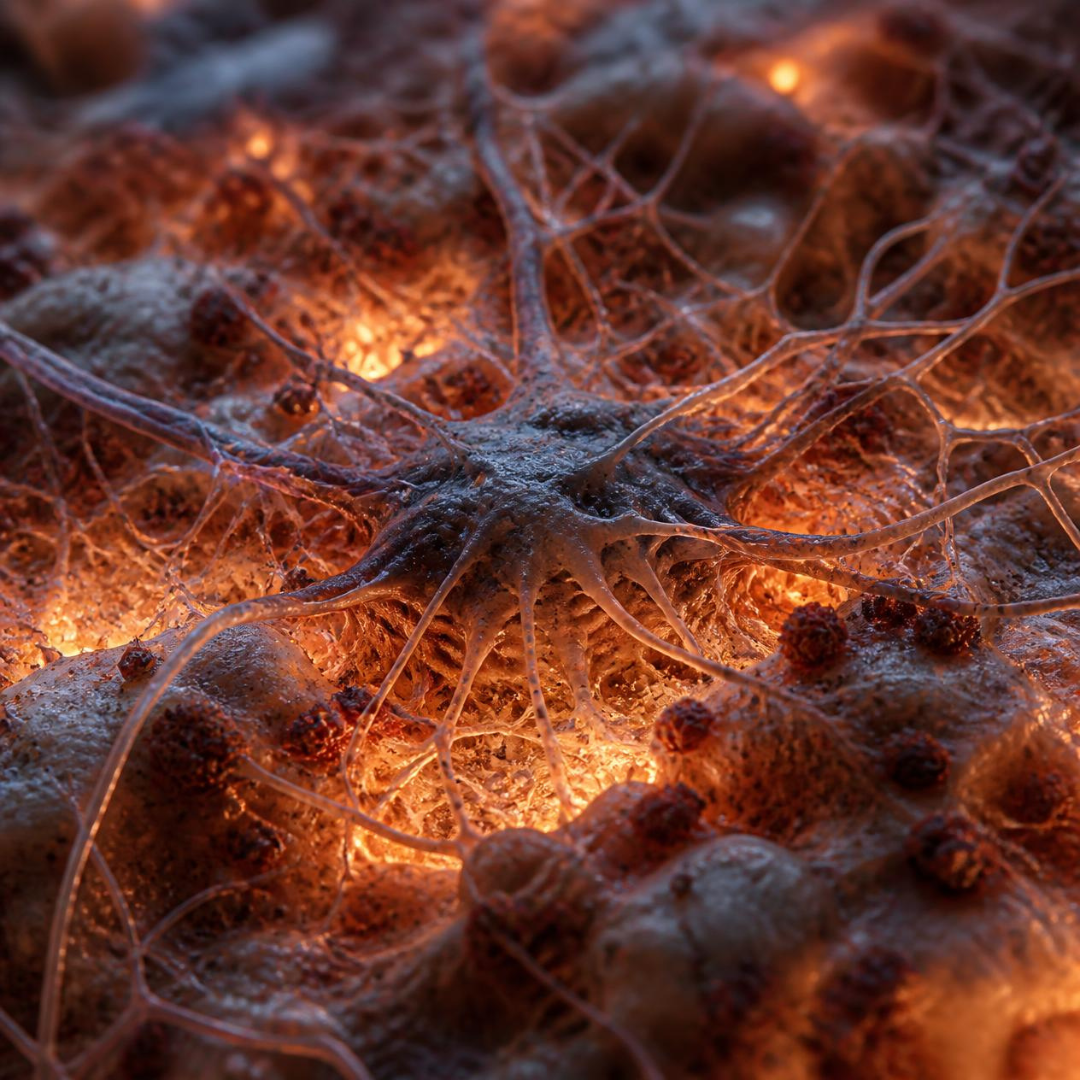
How tiny brain alarms called inflammasomes drive Alzheimer’s and Parkinson’s
September 10, 2026
 Beatrice
Instead of merely clearing up damage after it has already occurred, scientists are now turning their attention to the root cause of chronic brain inflammation. For years, most research focused almost entirely on breaking apart sticky protein plaques or replacing lost brain chemicals. Today, researchers are targeting microscopic molecular alarms called inflammasomes, working to switch them off before they can destroy vulnerable nerve cells.
The reason for this shift comes down to how the brain responds to stress. In Alzheimer’s and Parkinson’s, misfolded proteins build up in neural tissue. In Alzheimer’s, these are amyloid and tau. In Parkinson’s, clumps of alpha synuclein form inside the brain regions responsible for movement.
When the brain’s resident cleanup cells, known as microglia, attempt to swallow and clear these stubborn protein clusters, they become overwhelmed. The digestive compartments inside the cells rupture, spilling their contents. The microglial cell mistakes this internal mess for a severe emergency and activates an inflammasome, which behaves like a household smoke detector.
Once triggered, this tiny sensor snaps together and sounds the alarm by flooding surrounding brain tissue with harsh inflammatory chemicals. Rather than resolving the issue, the alarm gets stuck on full volume. Overworked immune cells eventually burst open, scattering alarm fragments into neighbouring tissue. These fragments act like sparks, landing on nearby cells, triggering fresh alarms, and causing even more proteins to clump together.
What began as a protective cleanup mission turns into a self sustaining fire that actively accelerates nerve cell loss.
Because scientists now understand this exact domino effect, the focus has shifted towards stopping the loop entirely. New experimental therapies are being designed to prevent the inflammasome sensor from clicking together in the first place or to neutralise the harsh chemicals it releases. By calming this runaway immune response, researchers hope to disarm the brain’s destructive alarm system and preserve vital nerve cells for the future.
Comments (0)
Loading comments...