


The Cell’s New Bodyguard: How a "Trojan Horse" Could Halt the Damage
December 30, 2025
We know the central problem in Parkinson's isn't just that dopamine levels drop; it is that the cells responsible for making it are under siege. They face a double threat of oxidative stress—essentially biological rusting—and a process called apoptosis, where the cell decides to push its own self-destruct button because it can't handle the pressure. A new study has just identified a clever way to intercept both these threats using a protein fusion called PEP-1-PGAM5, effectively hiring a personal bodyguard for our most vulnerable neurons.
The Delivery Problem: The biggest headache in treating the brain is getting the medicine to where it needs to be. Most protective proteins are too big and clumsy to get through the cell walls; they are like trying to push a sofa through a keyhole. This is where the PEP-1 part of the discovery comes in. Think of PEP-1 as a "Trojan Horse" or a VIP courier service. It is a peptide carrier designed specifically to slip through cell membranes unnoticed, dragging its cargo along with it.
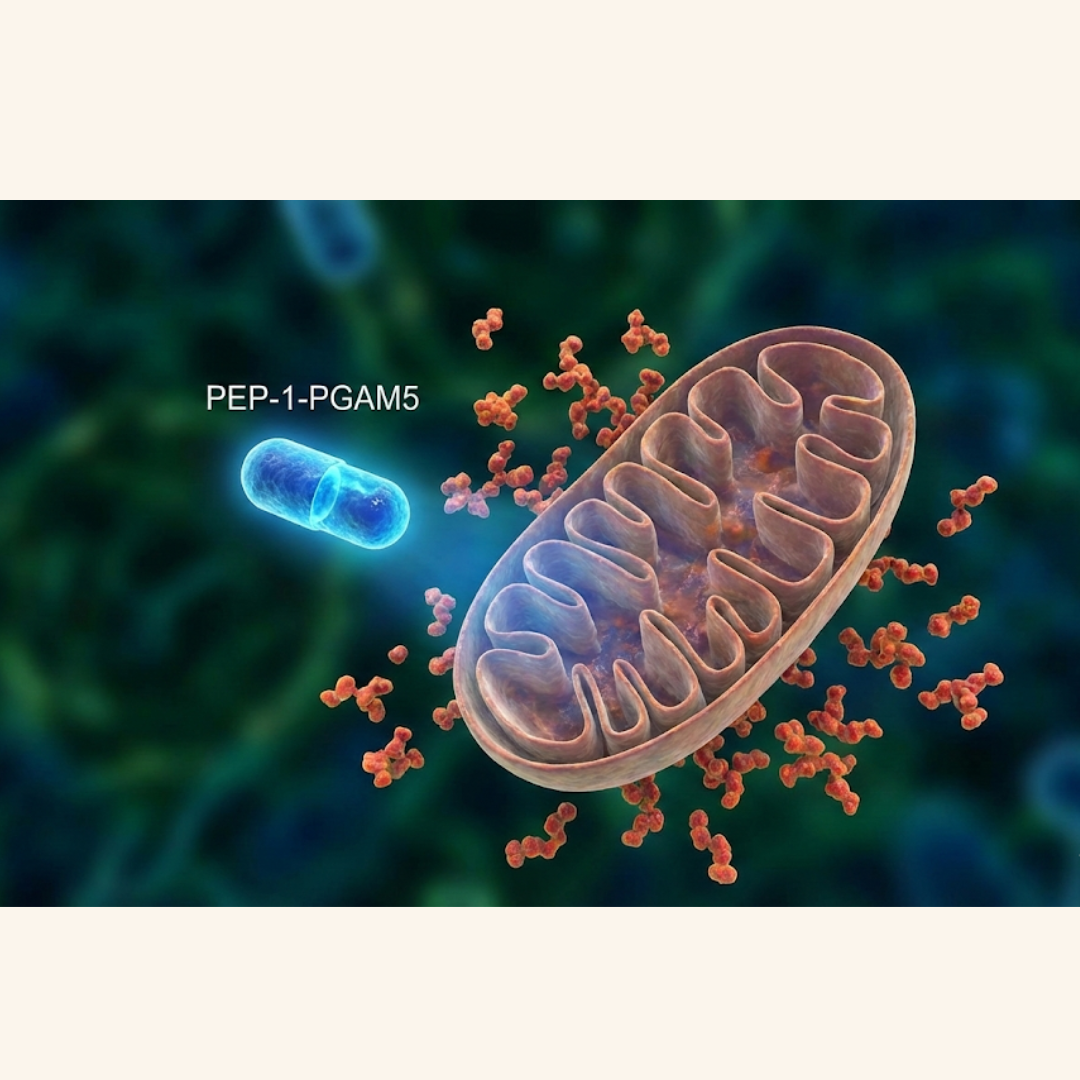
The Cargo: PGAM5 The cargo in this case is PGAM5, a protein that works directly on the mitochondria—the tiny power plants inside every cell. In Parkinson's, these power plants often malfunction, leaking toxic exhaust fumes (oxidative stress) that trigger the cell to die.
The Findings: When the researchers used this "courier service" to deliver PGAM5 into the cells, the results were striking. The protein successfully crossed the barriers and went straight to work. It calmed the mitochondria down, significantly reducing the toxic "rust" and, crucially, blocking the signal that tells the cell to commit suicide.
Current treatments are brilliant at replacing lost dopamine, but they don't stop the underlying fire. This approach is different because it offers neuroprotection. It is not just topping up the fuel tank; it is trying to stop the engine from leaking in the first place. By proving we can smuggle this bodyguard protein directly into the brain cells, we are one step closer to a therapy that preserves what we have left, rather than just managing the loss.
Comments (0)
Loading comments...