


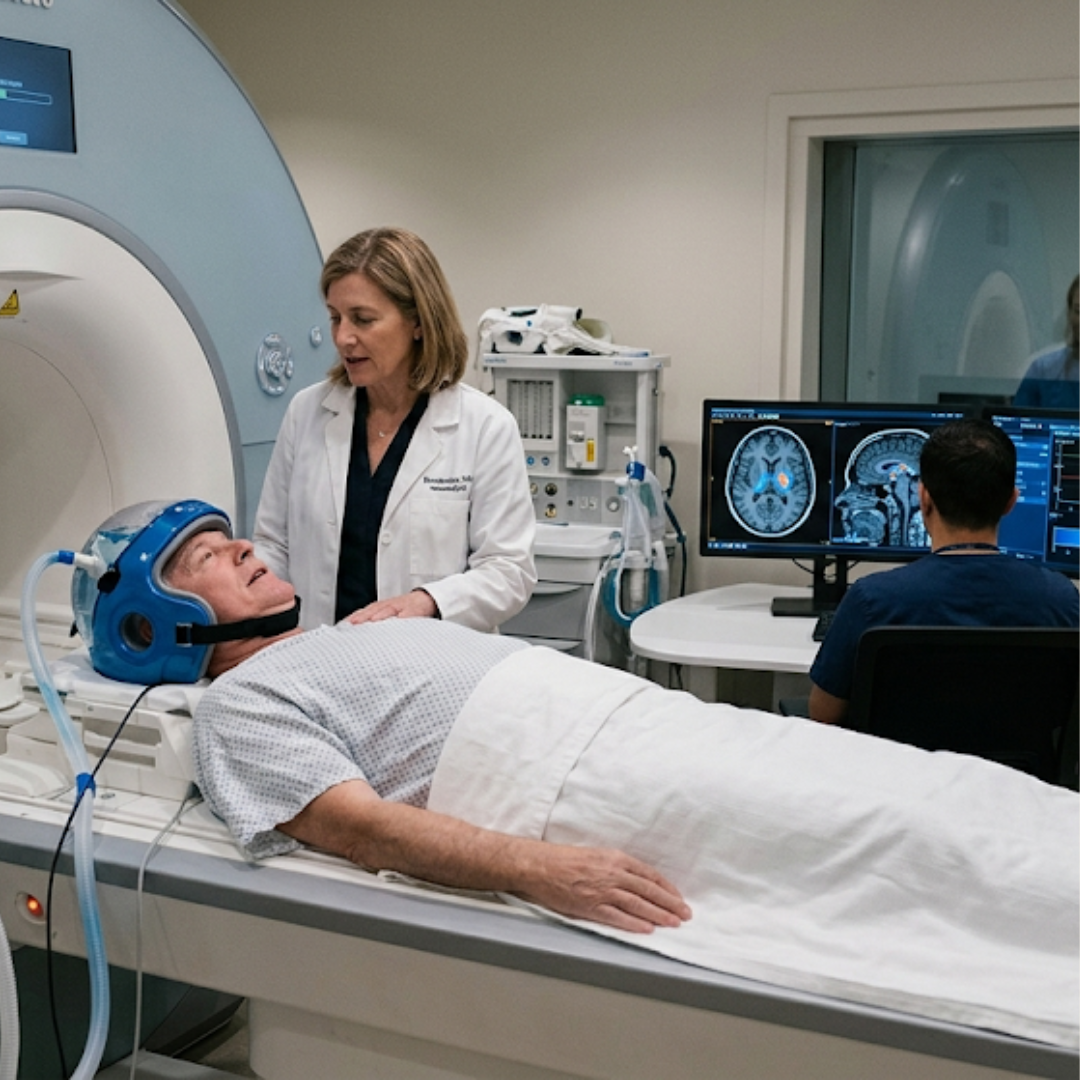
Two sided focused ultrasound treatment receives regulatory approval after successful multi centre clinical trial
June 19, 2026
 Beatrice
A medical study published in Lancet Neurology shows that treating both sides of the brain with incisionless focused ultrasound provides significant, long lasting relief from the debilitating movement difficulties associated with Parkinson's.
The clinical trial evaluated Insightec's Exablate Neuro system, which uses magnetic resonance guided focused ultrasound to target specific areas of the brain without surgery. While previous treatments often focused on managing symptoms on just one side of the body, this trial systematically looked at a staged bilateral approach, meaning one side of the brain was treated first, followed by the second side at least six months later. This carefully planned gap allowed researchers to monitor how well each step worked.
The trial took place between July 2021 and November 2023, tracking fifty-four people across nine medical centres, including six in the United States, two in Spain, and one in Taiwan. The results show that the benefits appear within one month of the procedure and remain stable for a year after the second treatment, marking a total tracking period of more than two years from the very first session.
The data reveals deep improvements in day to day living. People in the study reported that the time they spent dealing with dyskinesia, which are the frustrating, uncontrolled, involuntary movements that make simple daily tasks difficult, dropped from roughly seventy-five percent of their waking hours down to just fourteen percent after their second procedure. Overall motor complications, including the unpredictable shifts in mobility that happen as standard medication wears off, improved by sixty-six point eight percent at the three month mark and stayed at that level a year later. Furthermore, the primary motor score improved by thirty-two point six percent, and the time spent in a severe OFF state, which is when standard Parkinson's medications completely stop working and movement becomes incredibly difficult, was cut in half.
Because the procedure does not require incisions, it avoids many risks of traditional brain surgery, though the researchers noted that any treatment affecting the brain requires careful management. Most side effects reported in the trial were mild or moderate, but changes to speech and walking ability were more frequent after the second side of the brain was treated. This emphasizes the need for medical teams to carefully select who is best suited for the two part procedure.
This technology received regulatory clearance from the United States Food and Drug Administration in July 2025 for this specific two sided treatment, offering an option that goes beyond treating basic tremors to address the wider, complex movement fluctuations that occur as the condition progresses. With over thirty thousand people worldwide already treated for various movement conditions using this specific ultrasound technology, these latest trial findings provide a clear roadmap for expanding access to long term, non invasive relief.
Comments (0)
Loading comments...