


Why Leaking Dopamine Becomes Toxic
February 25, 2026
New research from LMU Munich has revealed a fascinating biological "packaging" problem that might be a key driver in how Parkinson’s progresses. Published in Science Advances on 24 February 2026, the study explains that dopamine, the chemical messenger we often talk about, can actually become toxic to the brain if it isn't stored properly. However, the researchers also found a potential way to "fix" this system by focusing on the cell’s energy supply.
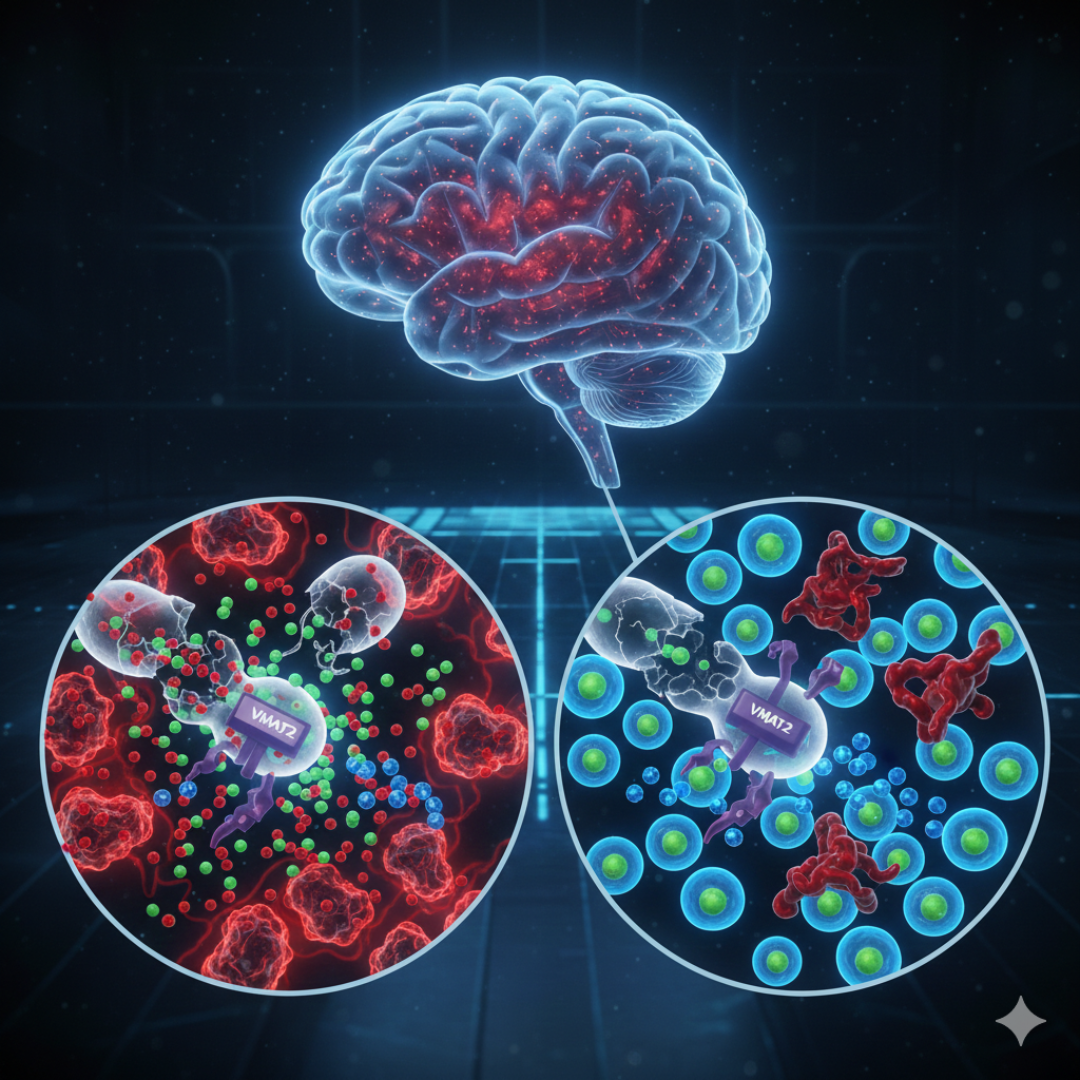
To understand this, it helps to think of dopamine as a powerful fuel. Inside our brain cells, dopamine is usually kept safely inside tiny "bubbles" called vesicles. These bubbles act like protective packaging, keeping the dopamine stable so it can do its job. If the dopamine isn't tucked away in these bubbles, it reacts with oxygen and turns into a toxic substance that damages the very neurons meant to produce it.
The Problem with the Packaging Pump
The team, led by Professor Lena Burbulla, used stem cells from people with the condition to see exactly why this packaging system fails. They discovered that a specific protein called VMAT2—which acts like a pump to pull dopamine into its protective bubbles—stops working correctly.
There are two reasons for this failure. First, the brain cells simply don't produce enough of the VMAT2 pump. Second, and perhaps most importantly, the pumps run out of fuel. They require a molecule called ATP, which is the universal energy currency of our cells. Without enough energy, the pumps stall, dopamine leaks out, oxidises into toxins, and triggers the build-up of alpha-synuclein.
Recharging the System
The most encouraging part of this discovery is what happened when the researchers intervened. By manually delivering ATP (the energy source) back into the cells, they were able to jump-start the packaging process. Once the "fuel" was restored, the dopamine was tucked back into its protective bubbles, and the toxic damage to the neurons stopped.
This research provides a vital link between energy metabolism and the health of our brain cells. It suggests that if we can find ways to protect the VMAT2 pump or boost the energy levels within our neurons, we might be able to stop the cycle of damage before it spreads.
While this study was conducted in a laboratory setting using patient cells, it opens up a new and exciting path for future treatments. By focusing on the "packaging and power" of our cells, we move closer to therapies that don't just replace dopamine, but ensure the brain can handle it safely and efficiently.
Comments (0)
Loading comments...