


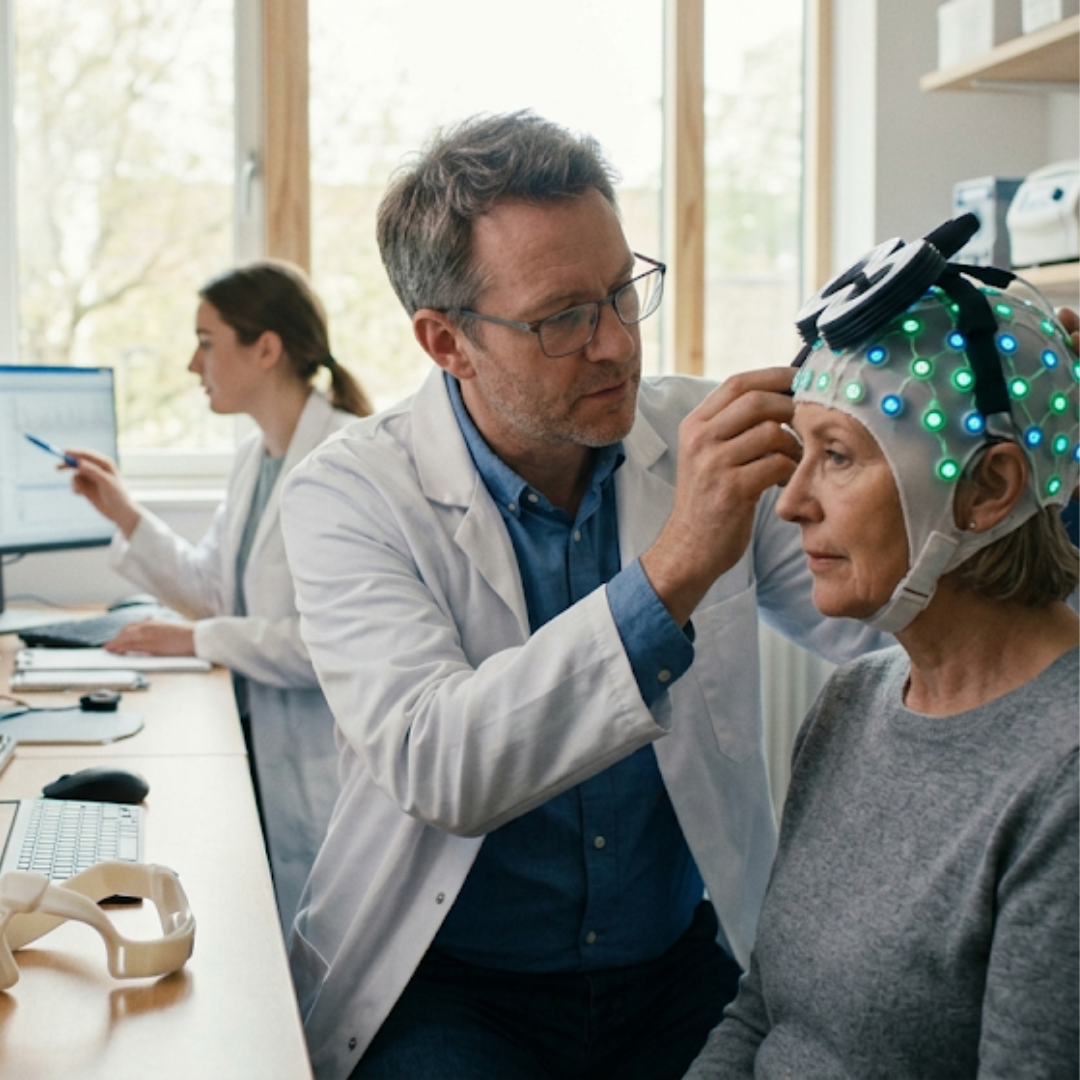
New brain stimulation technologies aim to move beyond treating symptoms to slowing Parkinson's
May 1, 2026
Researchers and medical experts are looking at new ways to use neuromodulation—a method that uses electrical signals to change how the brain works—to help people with Parkinson's. While current treatments like Deep Brain Stimulation (DBS) are very successful at managing tremors and stiffness, scientists are now investigating if these tools can be used to protect brain cells from further damage.
Moving beyond symptom management
For many years, treatments have focused on making life easier by controlling the physical signs of Parkinson's. However, the condition continues to change the brain over time. Researchers are now shifting their focus toward "disease modification," which means finding a way to interfere with the underlying process of the condition to slow it down or stop it entirely.
Advanced technology is making this possible through "closed-loop" or adaptive systems. Unlike older devices that send a constant electrical pulse, these new systems can listen to the brain's activity in real-time. This technology is now available to patients following recent approvals for adaptive DBS (aDBS) systems that self-adjust based on individual brain activity. By providing more precise and natural signals, researchers hope this might reduce the stress on brain cells and help them stay healthy for longer.
Available and emerging technologies
There are several ways to stimulate the brain, ranging from surgical implants to wearable devices. Here is what is currently available and what is being researched:
- Deep Brain Stimulation (DBS): This is a well-established, available surgical treatment where electrodes are implanted in the brain. While very effective for tremors and stiffness, it is invasive and may not be suitable for everyone due to the potential for post-operative side effects such as confusion or cognitive decline.
- Adaptive DBS (aDBS): A newer version of DBS, such as Medtronic’s BrainSense, is now available. It was the first system of its kind to receive FDA approval and it adjusts therapy in real-time.
- TAPS Therapy: This is an available, non-invasive wearable wristband. It sends signals through the skin to the same brain regions targeted by surgery, making it a viable option for those who are not ready for or cannot have an operation.
- Focused Ultrasound (FUS): This available, non-invasive treatment uses sound waves to reach deep parts of the brain without surgery to address tremors and dyskinesia.
- Transcranial Magnetic Stimulation (TMS): This is a non-invasive method that uses magnetic fields to stimulate nerve cells. While it is a well-established technology, it is currently being tested in research for Parkinson's to see if it can improve movement and mood.
- Vagus Nerve Stimulation (VNS) & Photobiomodulation: These therapies—one using nerve signals from the neck and the other using light—are currently undergoing clinical trials to see if they can help with balance or protect brain cells.
The power of data
One of the biggest hurdles to finding a way to slow Parkinson's is the collection of large amounts of patient data. New digital tools, such as PD Buddy App, are designed to help with this challenge by allowing people to track their symptoms and metrics like sleep quality every day.
By collecting this information, doctors can get a much clearer picture of how the condition behaves outside of a quick clinic appointment. This type of data collection is helping scientists identify patterns that could lead to the first true disease-modifying treatments. The goal is to move towards "personalised medicine," where a treatment is tuned specifically to one person's brain patterns.
Comments (0)
Loading comments...