


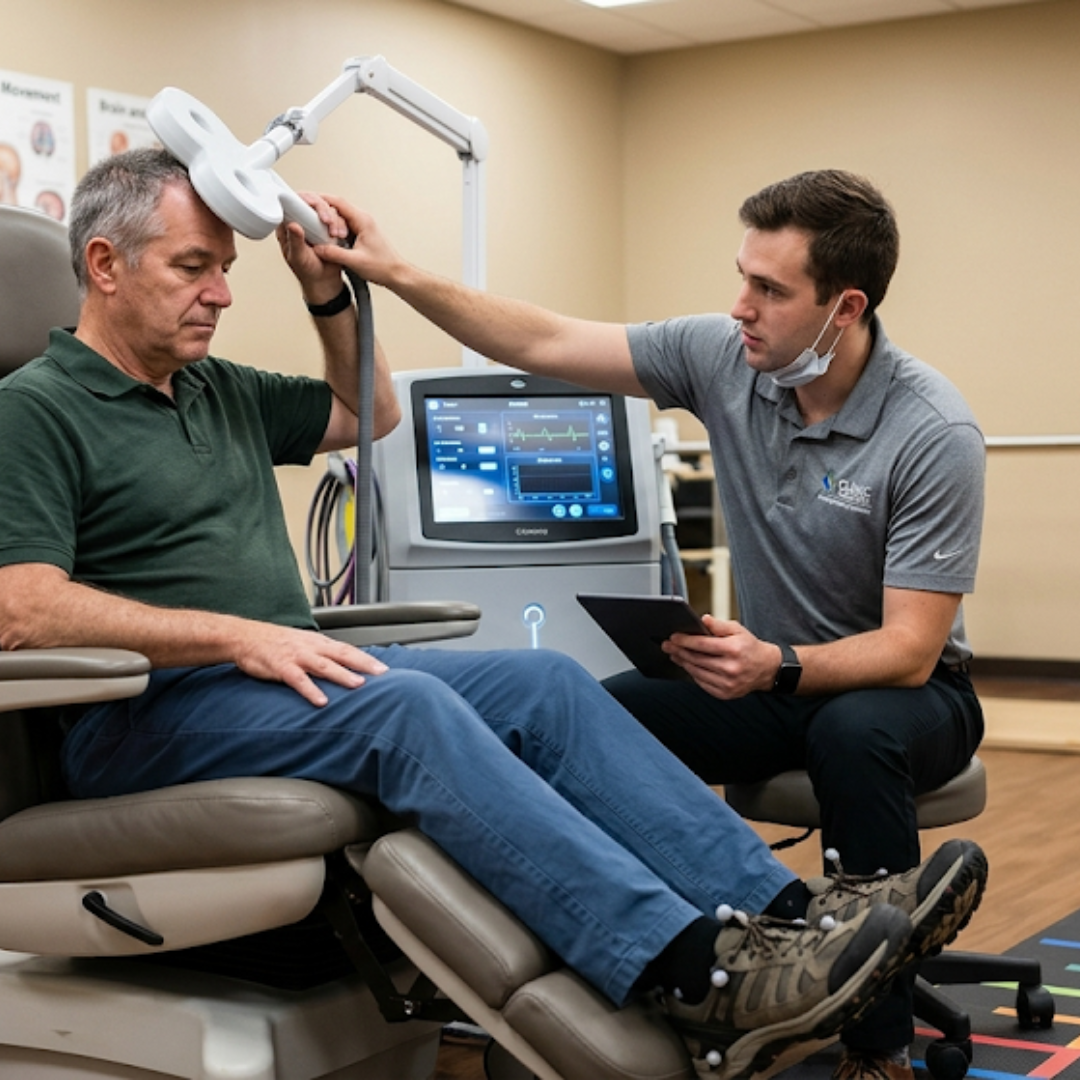
Targeted magnetic pulses applied to the brain provide a significant drug-free breakthrough for managing freezing of gait
June 19, 2026
 Beatrice
Freezing of gait is one of the most disabling symptoms of Parkinson's, often described as the terrifying feeling that your feet are suddenly superglued to the floor while your upper body keeps moving forward. Traditional dopamine medications frequently fail to control these unpredictable episodes, leaving people at a high risk of falling. To find a better solution, researchers recently conducted a massive systematic review and meta-analysis, pooling data from nineteen separate randomized controlled trials involving 547 people with Parkinson's. Their goal was to see exactly how a non-invasive technology called repetitive transcranial magnetic stimulation can help rewire the brain to unlock frozen steps.
The therapy works by placing an electromagnetic coil against the scalp to send gentle, painless magnetic pulses into the brain tissue. These pulses generate tiny electrical currents that stimulate specific sluggish nerve pathways responsible for movement. The comprehensive analysis proved that this stimulation leads to a highly significant reduction in freezing episodes. Scientists measured this using a standardized tracking tool called the Freezing of Gait Questionnaire, and the data showed a clear, mathematically strong improvement in how often and how severely individuals froze.
The most exciting detail uncovered by the research is that the therapy is not a one-size-fits-all approach. By looking closely at the different study examples, researchers figured out the exact brain targets and settings needed to get the best results. They discovered that high-frequency, rapid pulses delivered to a specific brain region called the supplementary motor area, which helps plan movements, are the absolute best for increasing overall walking speed. On the flip side, if the goal is to relieve general stiffness and overall motor symptoms, a slower, low-frequency pulse targeting either that same planning area or the primary motor cortex works best.
The data showed that a typical successful treatment routine involves sessions lasting at least twenty minutes, repeated over ten sessions. When clinicians delivered more than one thousand magnetic pulses per session, people experienced a dramatic boost in their general mobility. Beyond just stopping the freeze, the therapy significantly improved overall walking velocity, helping people take longer, more confident strides.
While the analysis did note that these benefits can fade over time, meaning people will likely need occasional top-up sessions to maintain their progress, the safety profile was excellent. Because it is completely non-invasive and does not rely on changing drug doses, it avoids the side effects like involuntary movements that come with long-term medication use. Ultimately, this major research review gives doctors a clear, evidence-based roadmap to customize magnetic brain stimulation, offering a powerful new way to help people keep moving smoothly.
Comments (0)
Loading comments...