


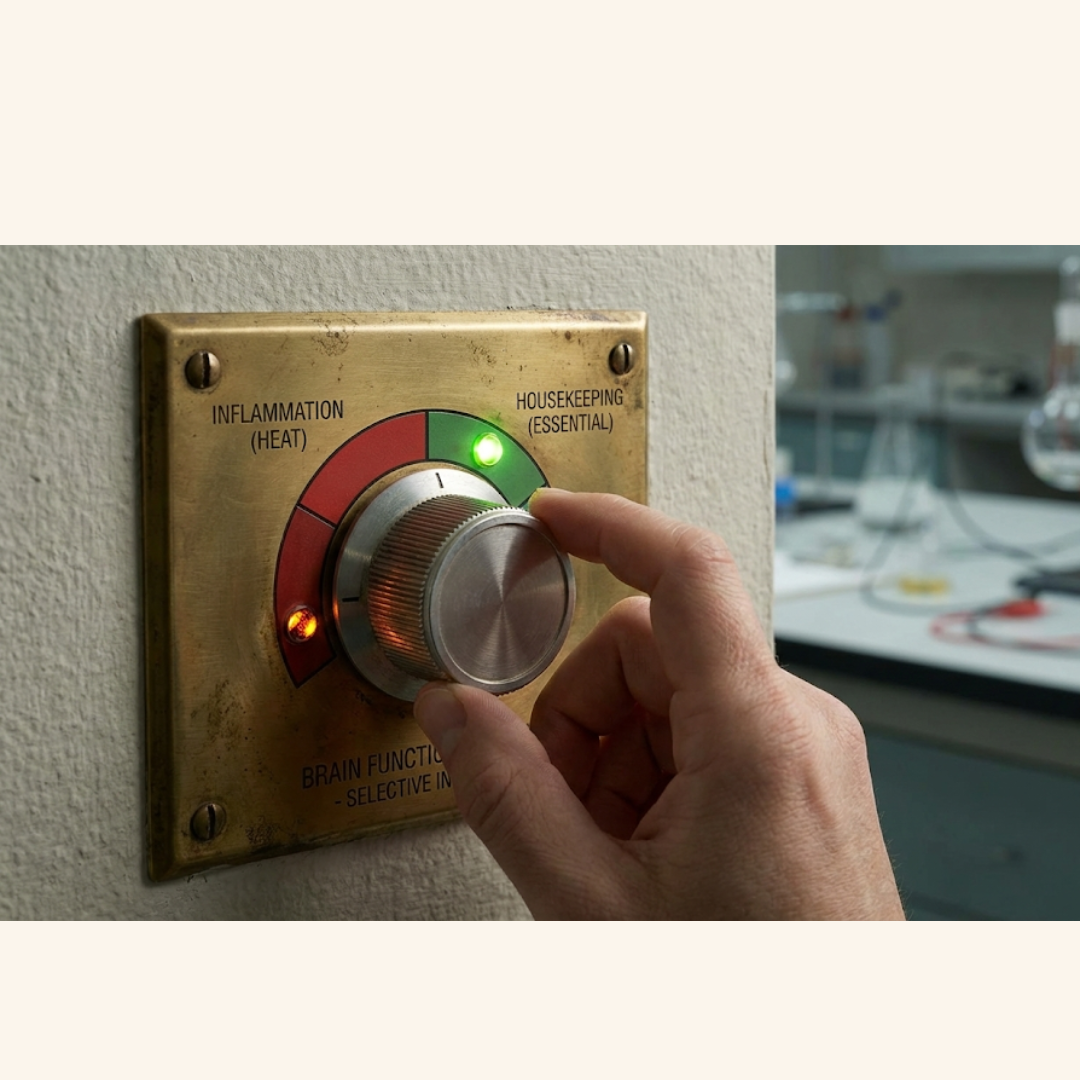
A New Way to "Cool Down" the Brain
January 26, 2026
A fascinating new study published just days ago in npj Drug Discovery has sparked excitement in the neurology world. Researchers at the University of Southern California (USC) have identified a potential new way to tackle brain inflammation—a massive driver of neurodegenerative conditions—without shutting down the brain’s essential immune system.
While the headline news focuses on Alzheimer’s, the mechanism they have uncovered is deeply relevant to us in the Parkinson’s community. Here is what you need to know about this "smart switch" for inflammation.
The Problem: The "Master Switch" Was Stuck
For years, scientists have known that an enzyme called cPLA2 plays a villainous role in brain diseases. Think of cPLA2 as a "master switch" for inflammation. When it gets stuck in the "ON" position, it floods the brain with chemicals that cause chronic inflammation, essentially "overheating" the brain and damaging neurons.
In people with the APOE4 gene (a high-risk factor for Alzheimer’s), this enzyme is hyperactive. We see a similar problem in Parkinson’s, where chronic neuroinflammation is a key reason why cells continue to degenerate over time.
Why We Couldn't Just Block It
You might ask, "Why not just create a drug to block cPLA2?" Scientists tried, but there was a major catch. This enzyme isn't just a villain; it also has a day job. It is essential for normal daily brain functions and cellular cleanup. In the past, blocking it completely was like removing the fire alarm to stop the noise—it stopped the inflammation, but it also left the building unprotected and unable to function.
The Breakthrough: A Dimmer, Not an Off-Switch
The new breakthrough is all about selectivity. The team at USC didn't just find a sledgehammer; they found a precision tool.
They discovered a specific compound that acts like a "dimmer switch." It is capable of inhibiting the hyperactive part of the enzyme that causes the damaging inflammation, but it leaves the enzyme's essential housekeeping functions perfectly intact. Crucially, they proved that this compound is small enough to cross the blood-brain barrier—the fortress wall that stops most drugs from ever reaching the brain.
What This Means for Parkinson’s
Although this specific study focused on Alzheimer's risk genes, the implications for Parkinson's are hopeful. We know that neuroinflammation is a shared enemy. In Parkinson’s, the immune cells in our brain (microglia) often become overactive, contributing to the progression of the condition.
If this new "selective inhibition" approach works in humans, it proves we can cool down this inflammation safely. It suggests a future where we could take a daily treatment to lower the "temperature" of our brain's immune response, potentially slowing down the disease process without compromising our ability to fight off other infections.
It is early days—this is currently in the "drug discovery" phase—but it is a brilliant example of how smarter, more precise medicine is finally learning to distinguish between the "good" and "bad" activity in our brains.
Comments (0)
Loading comments...