


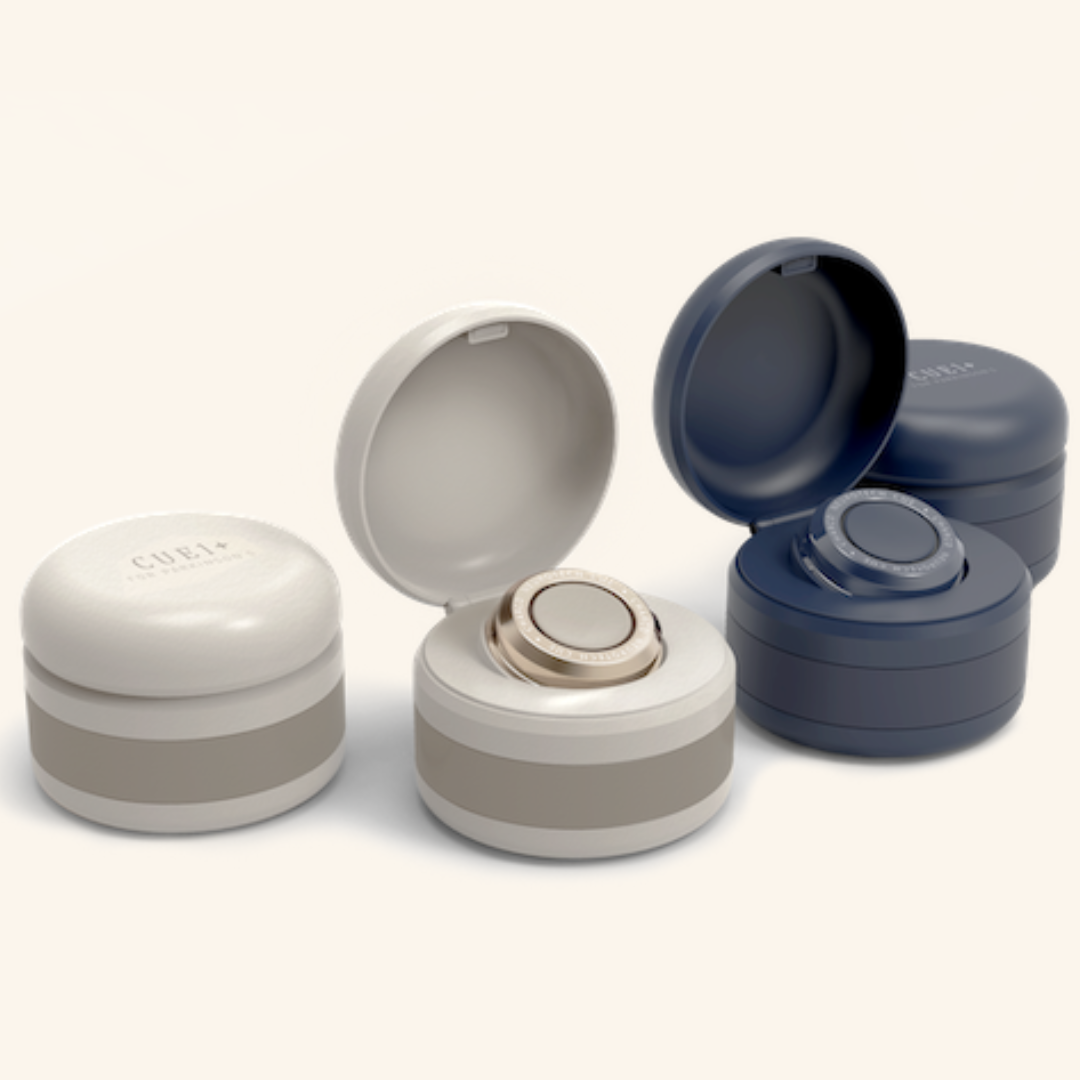
A small pilot trial suggests the chest worn CUE1 plus device is safe and improves movement
July 9, 2026
 Beatrice
A randomised, double-blind, placebo-controlled pilot trial published in the journal npj Parkinson's Disease has evaluated the safety and efficacy of the CUE1 plus. This non-invasive medical device is an updated version of the original CUE1, a technology that has been commercially available and used by thousands of people with Parkinson's for a few years. The newer CUE1 plus model features identical stimulation settings to the original version but includes an extended battery life. Currently, the manufacturer has temporarily paused sales of the CUE1 plus to complete regulatory process updates required to assist a wider population.
The mechanics of vibrotactile stimulation on the chest
The device is designed to be worn on the sternum, or breastbone, using a medical-grade adhesive. It delivers focused vibrotactile stimulation, which consists of physical pulses and rhythmic vibrations. Parkinson's typically disrupts the internal timing mechanisms of the brain, specifically within the basal ganglia, leading to symptoms like slowness of movement, stiffness, and freezing of gait.
The chest area over the breastbone contains a high concentration of specialised nerve endings known as mechanoreceptors, such as Pacinian corpuscles and Merkel cells. When the device vibrates against the skin, these receptors convert the mechanical motion into electrical signals that travel up the peripheral nervous system to the brain. This continuous sensory input provides an external physical rhythm. The stimulation helps the brain bypass its faulty internal signaling and engage alternative neural networks, allowing for smoother and better coordinated physical actions.
Trial structure and participant demographics
The clinical trial was conducted across two research sites in the United Kingdom to establish objective data regarding how well the technology works compared to a placebo. It involved fifty adult participants diagnosed with idiopathic Parkinson's, all of whom had been maintained on a stable routine of standard antiparkinsonian medication for at least three months.
The participants were randomly split into two equal groups of twenty-five. Group A received a sham device, which looked and felt identical but did not deliver the therapeutic vibrotactile patterns. Group B received the active CUE1 plus device. The trial was double-blind, meaning the participants, the investigators, and the clinical assessors did not know who was using the active or the sham technology. All participants were instructed to wear their assigned device for eight hours daily over a continuous twelve week period.
The average age of the participants was seventy years in the sham group and sixty-eight years in the active group. Men accounted for fifty-six percent of the sham group and fifty-two percent of the active group.
Safety, compliance, and dropout rates
The primary objective of the pilot trial was to evaluate the usability, safety, and tolerability of the technology. The data showed high levels of compliance and tolerance over the twelve weeks.
Adherence: Participants in both groups successfully wore the device for more than ninety-five percent of the requested eight hours per day.
Dropouts: Four out of the fifty participants discontinued the study before the twelve weeks were complete. This included three individuals from the sham group and one individual from the active group, representing an overall drop-out rate of eight percent.
Side Effects: The device was well tolerated with no serious adverse events reported. Only two participants, representing just over four percent of the total cohort, experienced mild and temporary skin irritation caused by the adhesive patch.
Statistical findings on movement and quality of life
At the beginning of the study and during a follow-up assessment at week thirteen, researchers measured the participants using standard clinical tools. All physical assessments were strictly performed while the participants were in their ON-medication state to determine if the device provided a measurable benefit beyond standard drug therapies.
The secondary exploratory outcomes showed statistically significant differences between the two groups. Physical movement was evaluated using Part III of the Movement Disorder Society-sponsored revision of the Unified Parkinson's Disease Rating Scale, which scores motor signs like tremors, rigidity, and gait. Over the twelve weeks, the sham group showed a modest improvement of four and a half points on this scale. In comparison, the active CUE1 plus group showed a reduction of fifteen and a half points. This resulted in an official eleven point clinical difference favoring the active stimulation group.
Quality of life was measured using the Parkinson's Disease Questionnaire Summary Index, which tracks how the condition impacts daily functions, mobility, emotional well-being, and social interactions. The data revealed a seven point six point improvement in the summary index score for the active group compared to the sham group, indicating a measurable reduction in daily difficulties.
The researchers note that because this was a pilot trial, the sample size was small, meaning the clinical signals observed do not definitively establish absolute clinical efficacy on their own. The findings support the safety and usability of the technology and provide the statistical basis needed to design larger, fully powered clinical trials to confirm these long-term benefits within standard healthcare pathways.
Comments (0)
Loading comments...