


Purple Power: How a Berry Pigment Could Calm the Brain
January 13, 2026
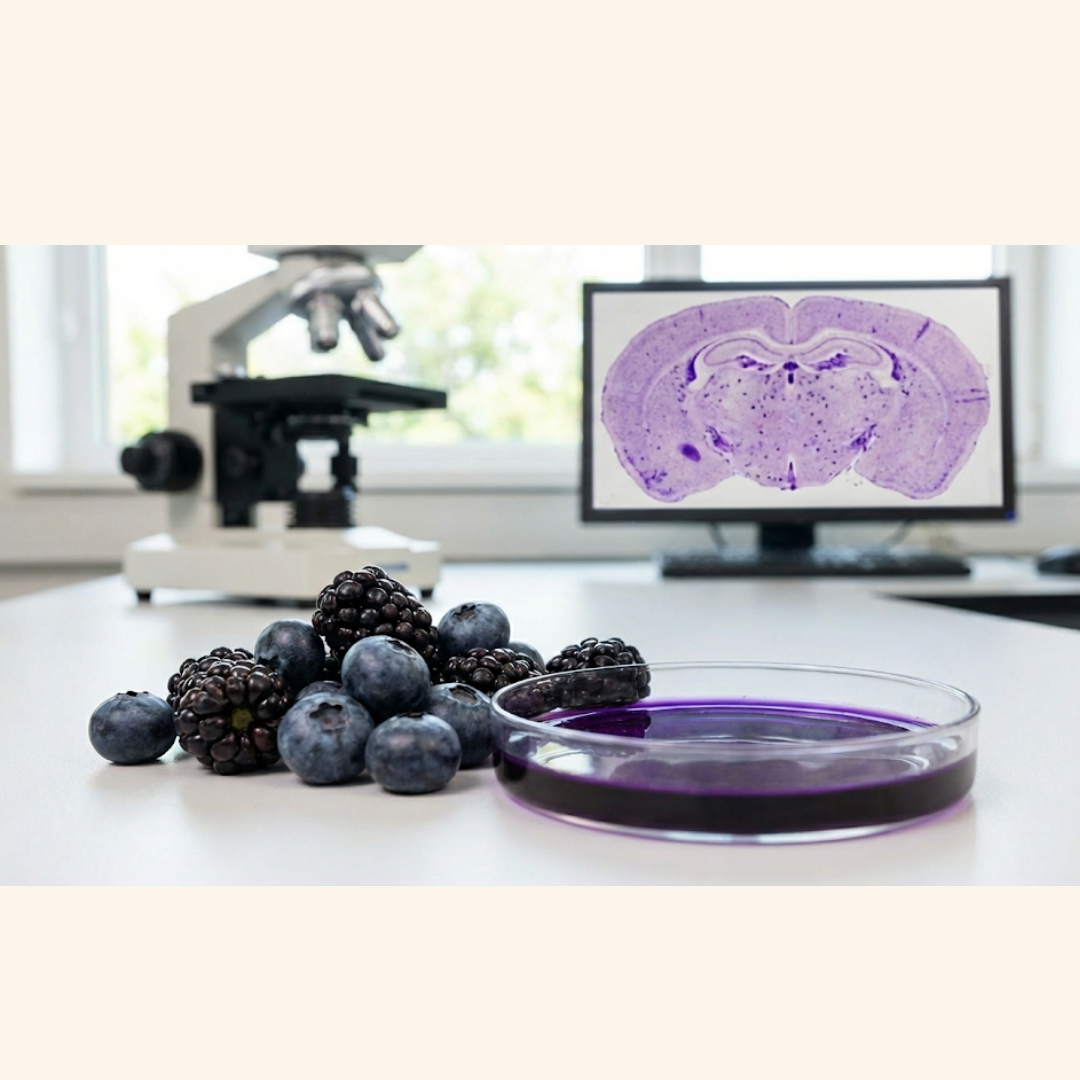
There is a fresh buzz in the world of research this month, and it centers on something you might find in your fruit bowl rather than a pharmacy. A new study published in npj Parkinson’s Disease has found that delphinidin—the natural pigment that gives blueberries, grapes, and aubergines their deep purple hue—might be capable of calming the brain’s immune system and restoring lost movement.
The study, led by Grotemeyer and colleagues, moves away from the traditional focus on dopamine replacement and looks instead at the chaotic environment inside the brain itself. We know that in this condition, the brain is often in a state of silent inflammation. The "microglia"—the brain’s resident immune cells—switch from being helpful housekeepers to aggressive soldiers, firing off chemical signals that accidentally damage the very neurons they are meant to protect.
This is where delphinidin steps in. When researchers treated mice with this specific purple compound, the results were striking. The "angry" immune cells in the substantia nigra—the movement centre of the brain—calmed down. The chronic inflammation subsided, and the levels of oxidative stress (essentially biological rust) dropped significantly.
But the most exciting part was not just what happened under the microscope, but what happened in the cage. The mice, which had previously shown the stiffness and slowness characteristic of the condition, began to move more freely. They performed significantly better on coordination tests, showing less fatigue and more willingness to explore their environment. It was as if the "noise" in their nervous system had been turned down, allowing the signals for movement to get through clearly again.
The team also found that the treatment helped preserve the actual connections between neurons. Usually, these communication bridges, known as synapses, crumble as the condition progresses. The delphinidin seemed to act as a shield, keeping these vital lines of communication open.
Of course, mice are not humans, and we cannot simply eat our way out of the condition with a few punnets of blackberries. However, this research is a crucial proof-of-principle. It suggests that targeting neuroinflammation with potent, natural antioxidants could be a viable strategy to slow down the progression, rather than just masking the symptoms. It paints a hopeful picture where the future of treatment might be as much about cooling the brain's internal fires as it is about topping up its chemical fuel.
Comments (0)
Loading comments...