


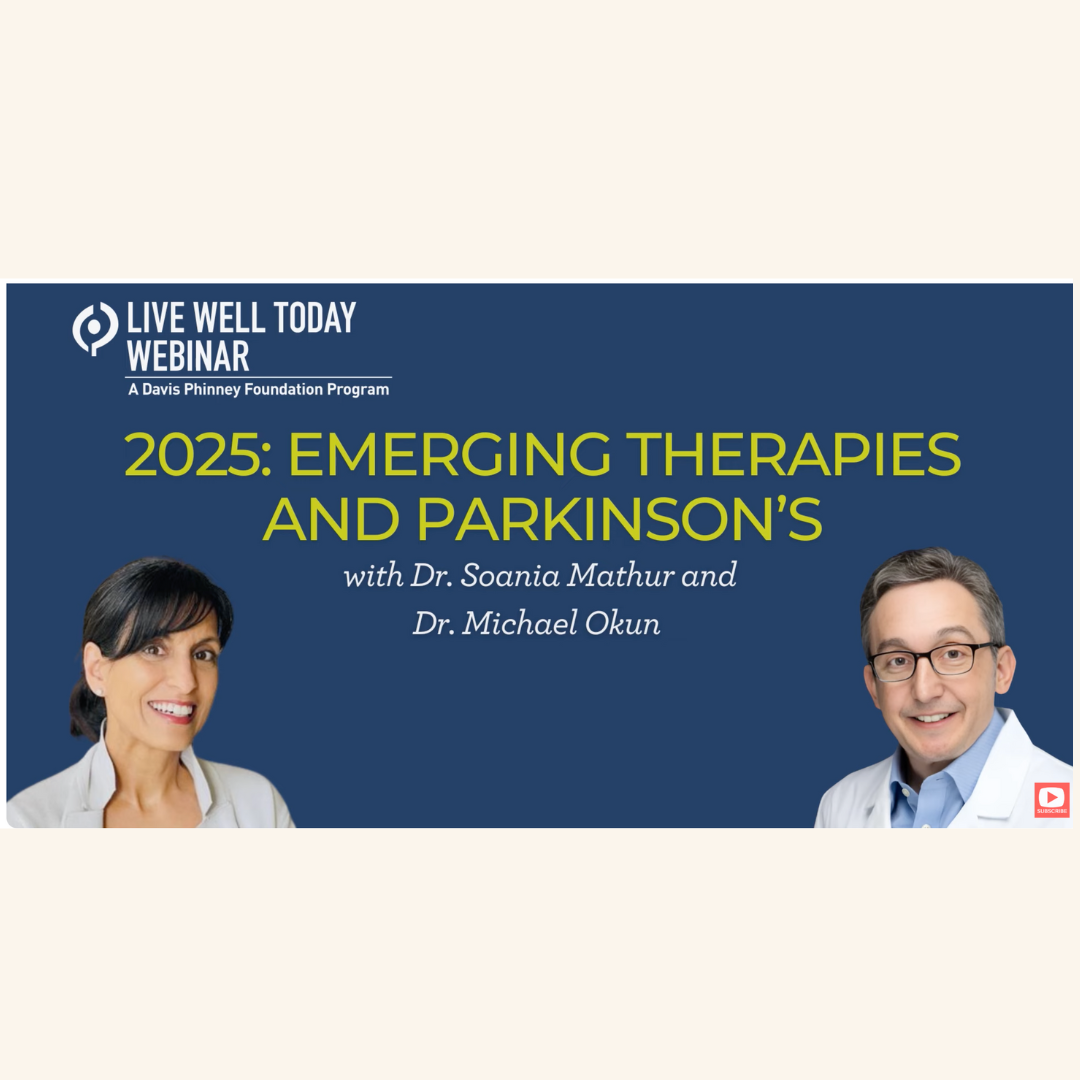
Emerging Therapies and Parkinson's with Dr. Soania Mathur and Dr Michael Okun
May 5, 2025
 mister green
In a recent enlightening webinar, Dr. Michael Oaken, a leading movement disorder specialist, shared insights on the emerging therapies for Parkinson's disease set to transform the landscape of treatment by 2025. With Parkinson’s disease affecting an estimated 11.8 million people globally, the need for innovative therapies is more pressing than ever. Here’s a closer look at what’s on the horizon.
### The Current Landscape of Treatments
Dr. Oaken kicked off the discussion by addressing the limitations of current Parkinson's treatments, which primarily focus on alleviating symptoms rather than modifying the disease itself. Traditional medications like levodopa help manage symptoms but do not alter the disease’s progression. However, exciting advancements are on the way.
**Crexant: A New Breakthrough in Levodopa Therapy**
One of the most promising developments is Crexant, a new formulation of levodopa designed to provide extended relief. This drug uses a two-part pill system that delivers both immediate and extended-release medication, potentially extending the "on time" (periods of symptom control) by approximately 1.5 hours per dose compared to traditional immediate-release formulations. This could significantly improve patients' quality of life, although doctors will consider cost implications before prescribing it.
### Continuous Drug Delivery: The Future of Medication Management
Dr. Oaken also discussed the advent of drug delivery pumps, which provide continuous medication infusion. These devices aim to reduce the burden of taking numerous pills throughout the day, enhancing patient compliance and comfort. The Vielab pump delivers a pro-drug formulation of levodopa/carbidopa, which effectively targets the brain while minimising side effects.
Additionally, the webinar introduced another innovative approach: adaptive deep brain stimulation (aDBS). This technique uses sensors to monitor brain activity and adjust stimulation levels in real-time, making it a more dynamic and responsive treatment option. While still in its early stages, aDBS holds promise for improving treatment efficacy while potentially reducing side effects associated with conventional deep brain stimulation.
### The Potential of Repurposed Drugs
The webinar also highlighted the exciting research around repurposed drugs—medications initially developed for other conditions but showing promise for Parkinson’s treatment. A notable example is exenatide, a GLP-1 agonist originally designed for type 2 diabetes. Early studies suggest that exenatide may have neuroprotective effects, but results from larger trials have been mixed. As Dr. Oaken cautioned, while there is potential, careful monitoring is essential due to possible side effects, such as muscle loss.
### Looking Ahead: Gene Therapy and Regenerative Medicine
Dr. Oaken provided a glimpse into long-term therapies that could revolutionise Parkinson’s treatment over the next decade. These include gene therapy and stem cell treatments. Recent research has explored the use of induced pluripotent stem cells—adult cells reprogrammed to behave like embryonic stem cells—showing safety and potential efficacy in improving symptoms without causing additional movement disorders.
Furthermore, gene therapy trials are underway, focusing on delivering growth factors to specific brain regions to promote neuron survival and regeneration. Although still in the experimental phase, these approaches offer hope for more effective treatments that could modify the course of the disease.
### Conclusion: A Cautious Optimism
While the future of Parkinson’s disease treatment looks promising, Dr. Oaken emphasised the importance of rigorous testing and patient safety. As new therapies emerge, it’s crucial for patients and caregivers to remain informed and engaged with their healthcare providers.
As we look forward to the advancements on the horizon, it’s clear that the ongoing research and development hold the potential to not only improve the quality of life for those affected by Parkinson’s disease but also to redefine how we understand and treat this complex condition. With a multidisciplinary approach and continued support from the medical community, the fight against Parkinson's disease is gaining momentum.
Comments (0)
Loading comments...