


When Brain Noise Speaks: The Hidden Electrical Signature of Parkinson’s
October 31, 2025
For years, scientists studying Parkinson’s disease have focused on the brain’s rhythm—the regular electrical pulses that control movement. But a new discovery from researchers at the Max Planck Institute in Leipzig suggests they may have been listening to the wrong part of the symphony. It turns out the so-called “background noise” of the brain, once thought to be meaningless static, may in fact hold powerful clues to how Parkinson’s affects movement and how it might one day be treated.
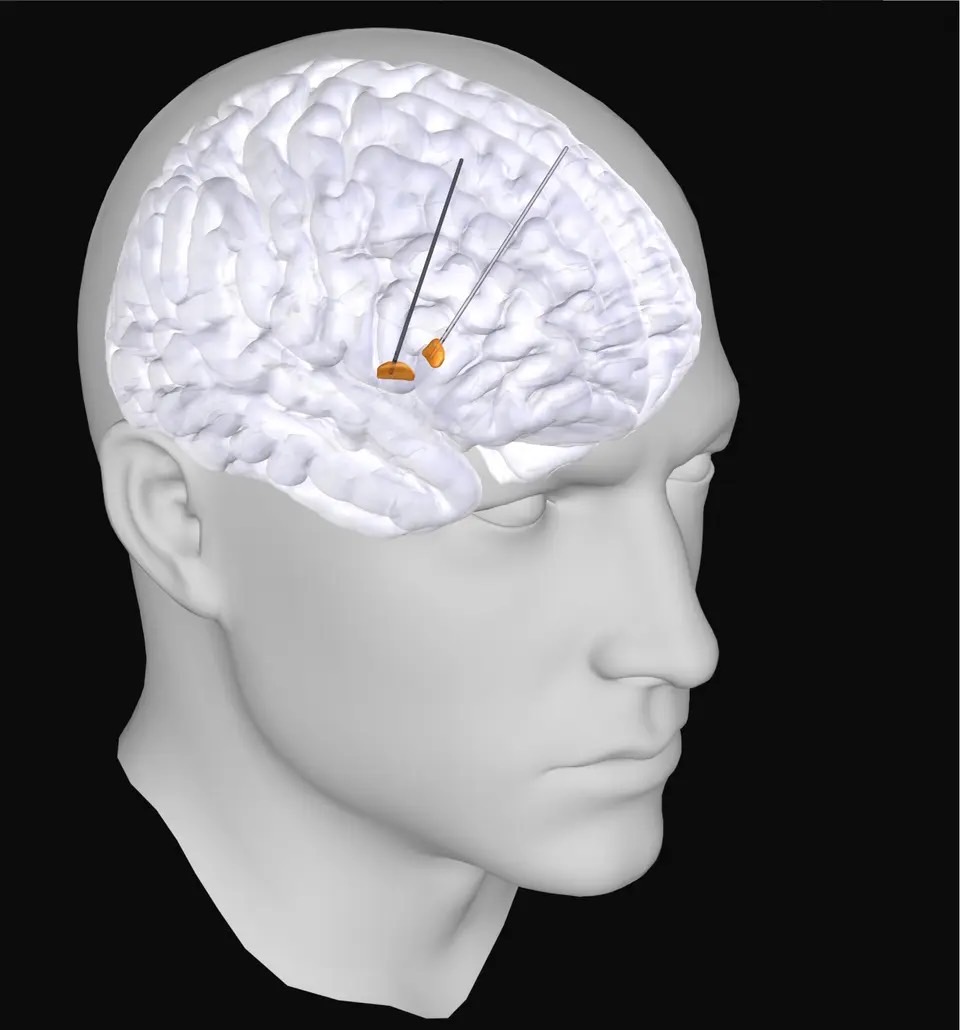
When people with Parkinson’s reach the stage where medication no longer does the job, some receive deep brain stimulation (DBS). Electrodes are implanted in a tiny structure called the subthalamic nucleus, deep within the brain, to deliver gentle electrical pulses that help smooth out movement. Those electrodes don’t just stimulate—they can also record what’s going on electrically inside the brain, giving researchers a rare window into the live workings of Parkinson’s.
Traditionally, scientists have looked for rhythmic patterns known as beta waves, which pulse at around 13 to 30 cycles per second. Stronger beta activity has long been linked to worse motor symptoms, like stiffness and slowness. But the link has never been perfect. Results vary from one study to another, and the patterns don’t always line up neatly with symptoms. Something in the picture didn’t quite fit.
The Max Planck team decided to look beyond the obvious rhythms and examine everything the brain produces—both the neat oscillations and the messy, non-rhythmic background. They analysed recordings from 119 people with Parkinson’s across several major European hospitals, one of the largest data sets of its kind. When they stripped away the rhythmic waves, what remained was the “aperiodic” part of the signal, the noisy chatter of countless neurons firing out of sync.
What they found was striking. The louder this background noise, the worse the motor symptoms tended to be. In every patient, the side of the brain more affected by Parkinson’s had higher levels of this non-rhythmic activity. In other words, the static itself carries meaning. The “noise” is actually a signal—a new electrical fingerprint of Parkinson’s.
This finding challenges the long-standing belief that only the rhythmic part of brain activity matters. By paying attention to the broadband hum beneath the rhythm, scientists uncovered a stronger, more reliable link to the severity of symptoms. It’s as if Parkinson’s doesn’t just disturb the brain’s beat; it cranks up the background hiss.
The implications are exciting. Deep brain stimulation is moving into a new era of “adaptive” therapy, where the device doesn’t just fire continuously but adjusts itself based on the patient’s brain activity. If this noisy signal truly reflects symptom severity, it could serve as a built-in guide, helping future DBS systems decide when and how much stimulation to deliver. That means more precise treatment, fewer side effects, and possibly longer battery life for implanted devices.
The discovery might also offer doctors a new way to measure disease progression objectively. Instead of relying only on clinical observation—watching how someone moves or trembles—future technology could track this electrical marker directly, offering a clearer, continuous picture of how Parkinson’s is behaving inside the brain.
There are, of course, caveats. The people studied already had DBS implants, meaning they were in later stages of the disease. It’s not yet clear whether this noisy signature appears in earlier Parkinson’s or in those who don’t have surgery. Analysing the data also requires complex processing tools not yet used outside research labs. But the pattern is strong enough to make scientists rethink how they interpret the brain’s electrical landscape.
For decades, brain noise was treated as a nuisance, something to be filtered out in search of cleaner signals. Now it looks like that very noise might be the key to understanding how Parkinson’s disturbs movement. By learning to listen to the static, researchers may have uncovered a new language of the brain—one that could help make treatment more personalised, more adaptive, and far more precise.
It seems that in Parkinson’s, silence isn’t golden. The noise speaks volumes.
Photo: © MPI CBS/ VistaPrime
Comments (0)
Loading comments...