


The Gut Connection: Could Your Microbiome Predict Parkinson’s Before Symptoms Start?
April 21, 2026
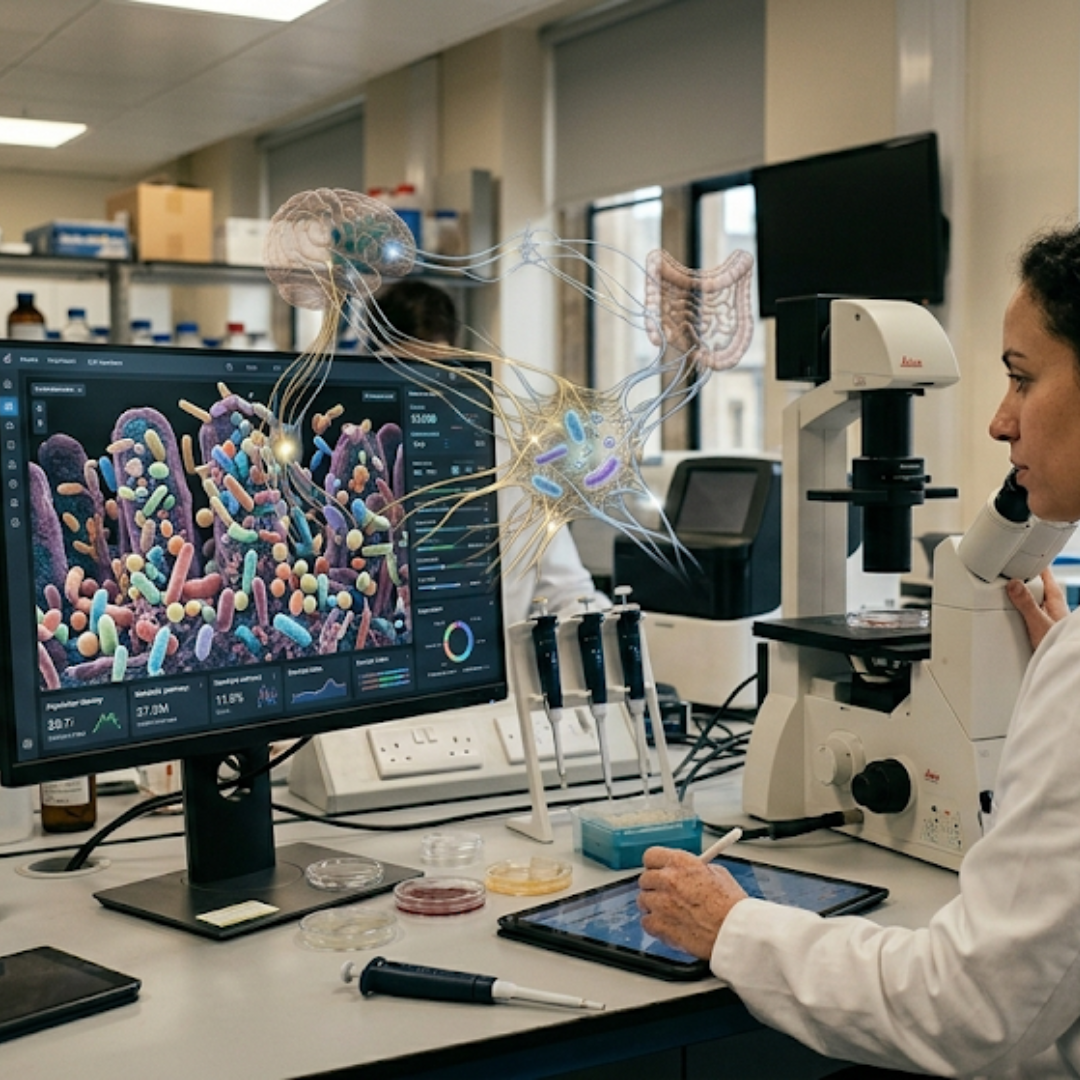
For years, scientists have been investigating the "gut-brain axis"—the powerful communication highway between our digestive system and our mind. A major new study published in Nature Medicine has taken this research to a new level by identifying a specific "microbiome signature" that appears not only in those living with Parkinson’s but also in healthy individuals who are genetically at risk.
This discovery suggests that the bacteria living in our gut may hold the secret to identifying the condition years, or even decades, before the first tremor appears.
The Search for a Biological Fingerprint
The research team conducted a massive analysis, comparing the gut bacteria of three distinct groups: people already diagnosed with Parkinson’s, healthy relatives who carry genetic risk factors (such as the LRRK2 or GBA mutations), and a control group with no known risk.
By using advanced genomic sequencing, they found that the gut environment in Parkinson’s is not just "slightly different"—it follows a highly specific and predictable pattern. This biological fingerprint is characterized by an increase in certain "pro-inflammatory" bacteria and a significant decrease in the beneficial bacteria that protect our nervous system.
The "At-Risk" Discovery
The most startling finding was that this same bacterial signature was often present in healthy relatives who showed no signs of the condition but carried the "at-risk" genes. This implies that the gut changes might be one of the very first dominoes to fall in the long process of the condition's development.
In these genetically at-risk individuals, the microbiome showed a gradual shift. It acted as a sliding scale: the closer the gut environment looked to the "Parkinson's signature," the more likely that individual was to show early, subtle signs of "prodromal" symptoms, such as a reduced sense of smell or sleep disturbances.
Why Do Gut Bacteria Matter?
You might wonder how bacteria in the stomach can affect neurons in the brain. The study points to a few key biological mechanisms:
Inflammation: The "bad" bacteria identified in the signature produce toxins that can trigger inflammation in the gut lining. This inflammation may eventually spread to the brain via the vagus nerve.
Short-Chain Fatty Acids (SCFAs): The "good" bacteria that were missing in the Parkinson’s group are responsible for producing SCFAs. These molecules are vital for brain health, acting as a fuel source for brain cells and helping to maintain the protective blood-brain barrier.
Protein Clumping: There is a growing theory that the "misfolding" of alpha-synuclein—the protein responsible for Parkinson's—actually starts in the gut and travels to the brain like a toxic ladder. An unbalanced microbiome may provide the perfect environment for this process to begin.
Moving Toward Early Prevention
This research is a significant step toward a world where we can prevent Parkinson’s rather than just managing it. If we can use a simple stool sample to identify a "high-risk" microbiome signature, we could intervene much earlier.
Future treatments might not just be pills for the brain, but "precision probiotics" or dietary interventions designed to restore the gut’s balance. By "fixing the soil" (the microbiome), we may be able to prevent the "seeds" of the condition from ever taking root.
A New Era of Personalised Care
This study reminds us that Parkinson’s is a whole-body condition. By looking beyond the brain and into the gut, researchers are finding a new map for early diagnosis. For families with a history of the condition, this offers a sense of hope: the more we understand about these early bacterial shifts, the closer we get to stopping the progression before it even begins. Keeping our gut healthy isn't just about digestion; it’s about protecting our brain for the long term.
Comments (0)
Loading comments...