


Cellular chain reactions offer new insights into how toxic proteins form in the brain
June 24, 2026
 Beatrice
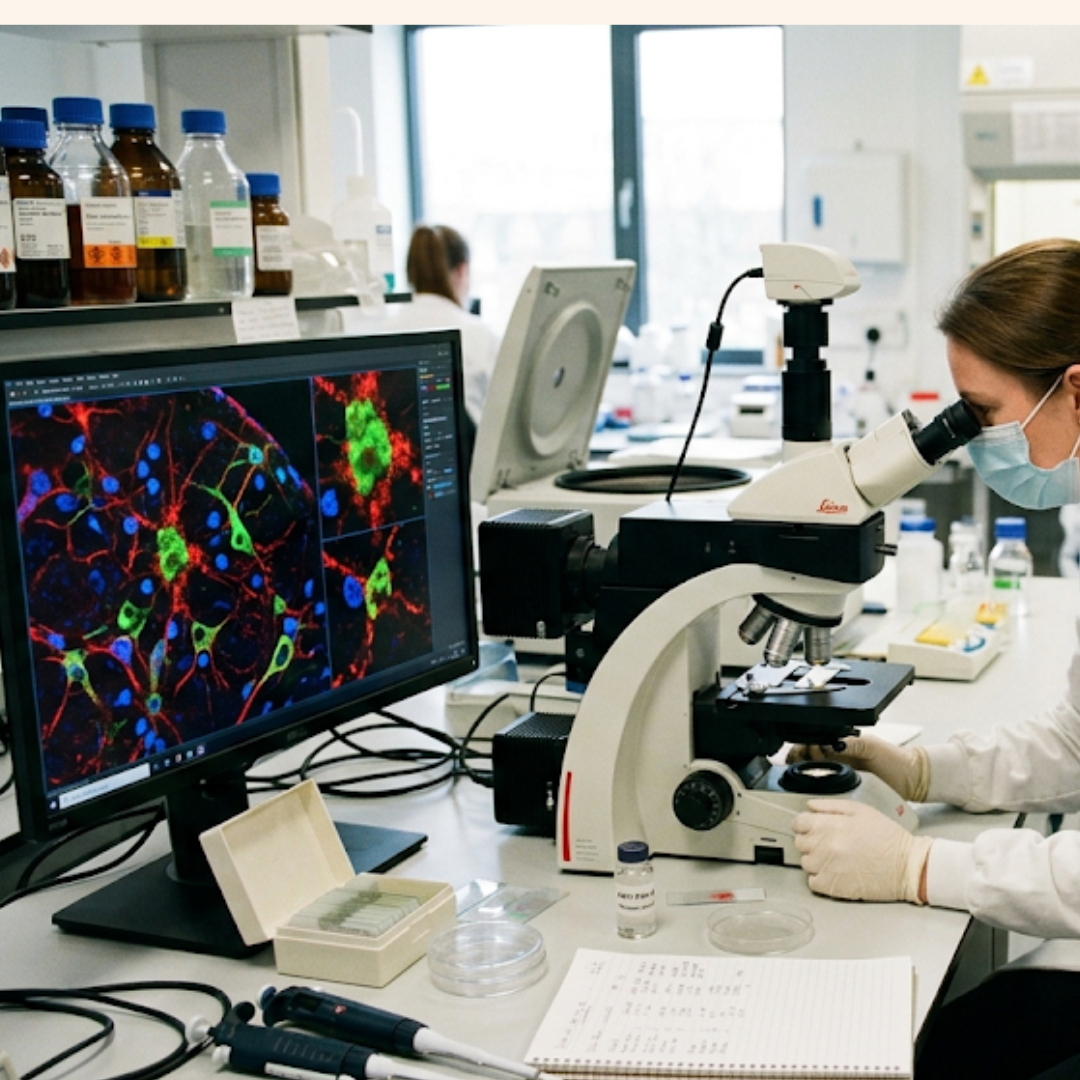
A detailed study has mapped out a hidden cellular process in the human brain that explains how toxic proteins form and why vital brain cells die. Researchers focused on a specific chemical process called PARylation, revealing that it acts as a crucial bridge between the buildup of harmful protein clumps and the loss of essential neurons. By examining human brain tissue under high-powered microscopes, the team managed to trace the exact sequence of events, providing a much clearer picture of how the condition progresses on a microscopic level.
The process centers around an enzyme known as PARP1, which creates chains of a chemical called poly-ADP-ribose, or PAR. In a healthy brain, these chemical chains do a vital job by helping to repair damaged DNA and keeping cells stable. However, the study found that in brains affected by Parkinson's, these PAR chains build up to abnormally high levels inside the main body of the brain cells. Remarkably, this chemical accumulation happens well before alpha-synuclein, the protein responsible for the condition's hallmark clumps, even begins to gather together. This specific timing proves that the chemical buildup is actually an early trigger that sets the whole damaging process in motion.
As these chemical chains accumulate, they get tangled up with tiny cellular emergency packages called stress granules. This mixture creates a sticky sort of scaffolding that actively speeds up the formation of Lewy bodies, which are the larger, toxic protein masses that disrupt brain function. At the same time, the study showed that these chemical chains invade the mitochondria, which act as the power stations of the cell, specifically within the substantia nigra region of the brain. This invasion of the cell powerhouses, combined with severe damage to the cell's genetic material, directly causes the death of the critical dopamine-producing neurons. By uncovering this early chain reaction, scientists have pinpointed a specific target for new treatments that could potentially halt the loss of these precious brain cells.
Comments (0)
Loading comments...