


Vanderbilt Health researchers find three common asthma drugs could point the way towards new treatments for Parkinson's
June 26, 2026
 Beatrice
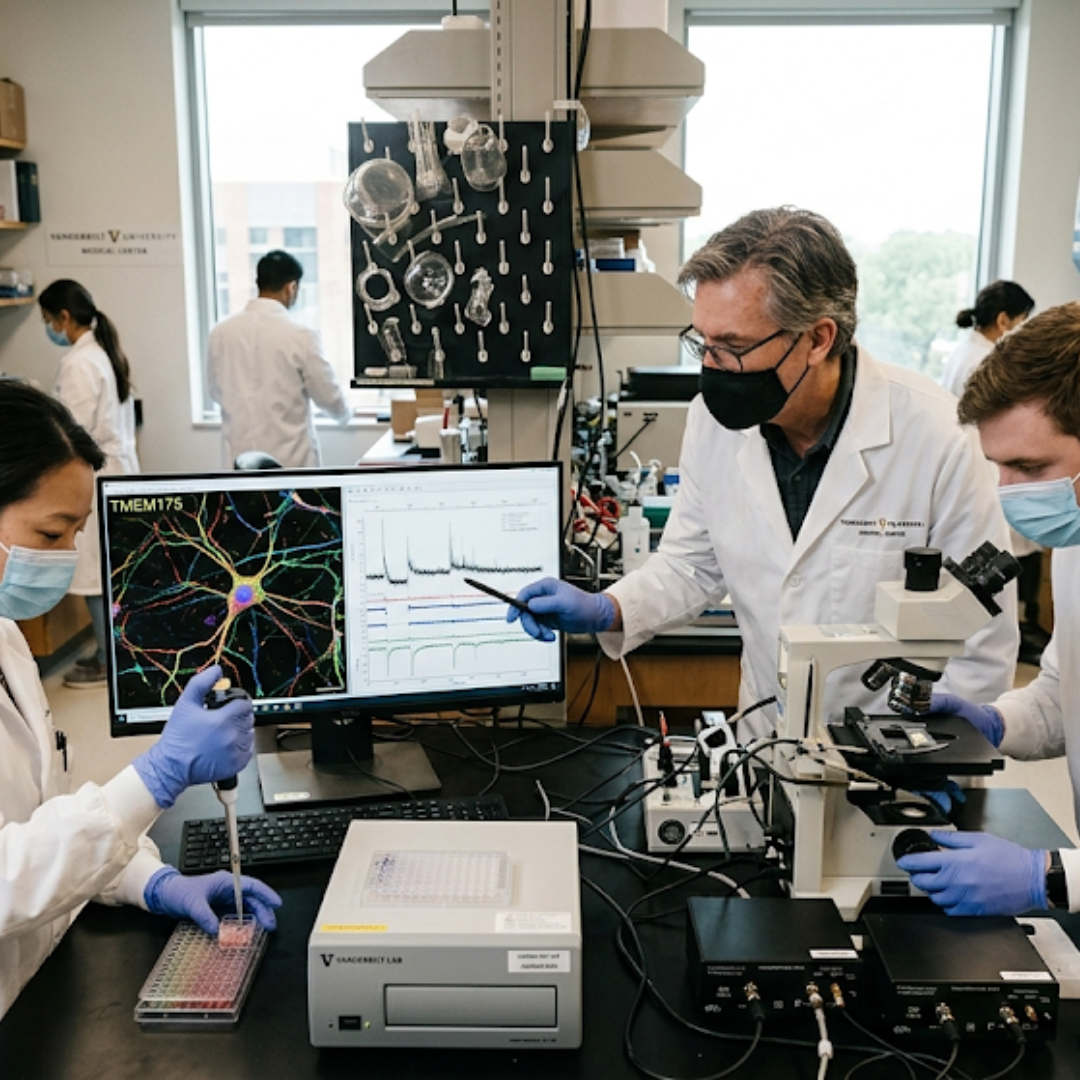
A team of scientists looking for new ways to protect brain cells has found a surprising connection to everyday asthma medications. Led by Professor Jerod Denton, the research team discovered that three drugs currently used to prevent asthma attacks can also switch on a vital component in our cells that is closely linked to Parkinson's. The research team behind this discovery is based at Vanderbilt University Medical Center in Nashville, Tennessee, which is in the United States.
The focus of the study is a tiny gateway inside our cells called TMEM175. This gateway is an ion channel found in lysosomes, which act as the recycling centres of our cells. These recycling centres are incredibly important because they manage cell stress and clear out waste. When someone carries genetic variations that turn down the activity of this specific gateway, their risk of developing Parkinson's increases.
To find something that could kickstart this gateway back into action, the researchers used a specialised high throughput screening facility to test 960 drugs already approved by the Food and Drug Administration. Out of nearly a thousand possibilities, three specific asthma medications stood out as top candidates: zafirlukast, pranlukast, and montelukast.
The exciting element of this discovery is that it could drastically speed up the time it takes to develop new therapies. Because these medications are already thoroughly tested and approved for human use, scientists can use them immediately to study how the cellular gateway works in condition models without the lengthy process of designing completely new molecules from scratch.
The ultimate goal for the team is to design new, highly targeted therapies that enhance this gateway's activity. By doing so, they hope to restore the cell's waste disposal system, helping cells better manage the stress and buildup of waste material that leads to the loss of brain cells.
Interestingly, the team noted that these three asthma drugs do not all behave the same way. Some open the gateway directly, while others rely on different signalling paths inside the cell. By studying these differences, the scientists have already managed to pinpoint the exact part of the gateway that controls how it opens and responds to medication. This specific region acts just like a physical gate, giving the team a clear roadmap to design even more precise treatments in the future.
Comments (0)
Loading comments...