


How DNA Maintenance Defines the Parkinson’s Journey
March 12, 2026
Scientific research into Parkinson’s has long focused on the "end result"—the loss of dopamine and the physical symptoms that follow. However, a significant study published in Nature Scientific Reports is shifting the spotlight to the very beginning of cellular health: the ability of our cells to repair their own DNA. The paper, titled Deciphering novel genotypic biomarkers and functional alterations in double strand break repair pathways, explores why some people may be more vulnerable to the condition because of a "glitch" in their internal maintenance system.
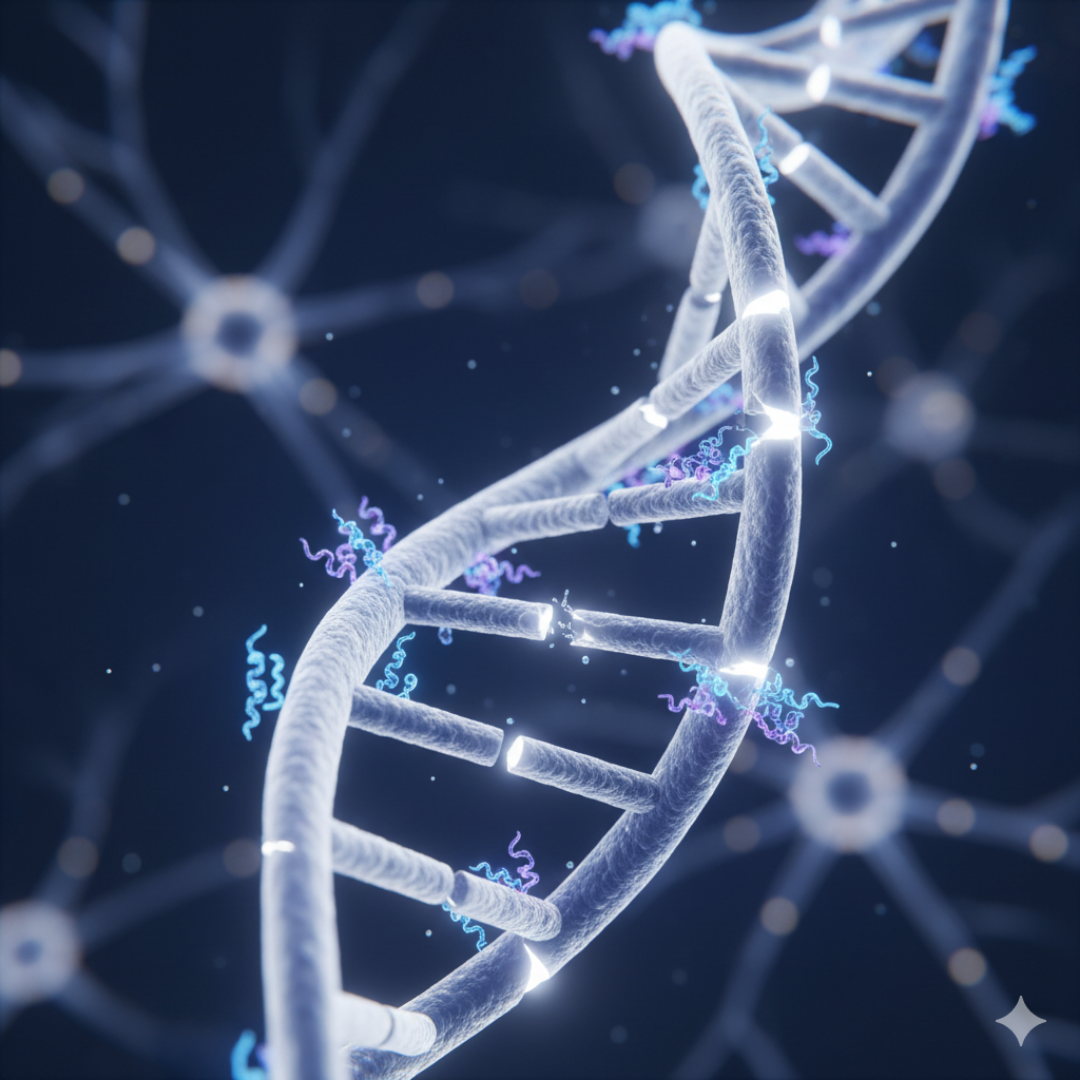
To understand this, we have to look at how our cells function. Every day, the DNA in our cells faces damage from various sources, such as stress, toxins, or simply the process of aging. The most dangerous form of this damage is known as a Double Strand Break (DSB). Think of DNA as a long, twisting ladder; a DSB is a complete snap through both sides of that ladder. If it isn't fixed quickly and accurately, the cell can become dysfunctional or die.
The Genetic Architects of Repair
The researchers behind this study focused on how our bodies handle these snaps. We all have a "repair crew" of proteins designed to find these breaks and weld them back together. However, the study discovered that certain people carry specific genetic variations—known as genotypic biomarkers—that make their repair crew less effective.
By analyzing the genetic profiles of people with the condition, the team identified specific "faulty blueprints" in the repair pathways. When these pathways are altered, the cells lose their ability to maintain genomic stability. For the neurons in our brains, which are incredibly active and require a lot of energy, this inability to fix DNA damage is catastrophic. Over time, the unrepaired breaks pile up, leading to the cellular exhaustion and death that characterizes the progression of the condition.
Beyond Genetics: Functional Alterations
The study didn't just look at the "code" of the DNA; it looked at the "function" of the repair process in real-time. The researchers found that in people with the condition, the repair machinery wasn't just built differently—it was actually performing poorly. They observed "functional alterations," meaning the proteins responsible for the repairs were either sluggish or failed to show up to the site of the damage entirely.
This is a crucial distinction. It suggests that the condition is not just about a single "bad gene," but rather a systematic failure in how the body maintains its most basic biological instructions. When the repair crew is out of commission, the cell’s internal environment becomes unstable, leading to the inflammation and protein clumping that many associate with the condition.
Why This Research Changes the Conversation
This study is a major step toward a more personalized understanding of the condition. By identifying these specific biomarkers, scientists may eventually be able to predict how quickly the condition might progress in different people based on their unique DNA repair capacity.
It also highlights why protecting our cells from damage is so important. While we cannot change our genetic blueprints yet, understanding that "DNA repair" is a primary battlefield allows researchers to look for new ways to support these internal repair crews. If we can find ways to boost the efficiency of DNA maintenance, we might find a new path to slowing down the decline.
Ultimately, this research proves that the journey of the condition is written in our cells. By deciphering these novel biomarkers, we are moving closer to a future where we don't just treat the symptoms of the snap in the ladder, but learn how to reinforce the ladder itself.
Comments (0)
Loading comments...