


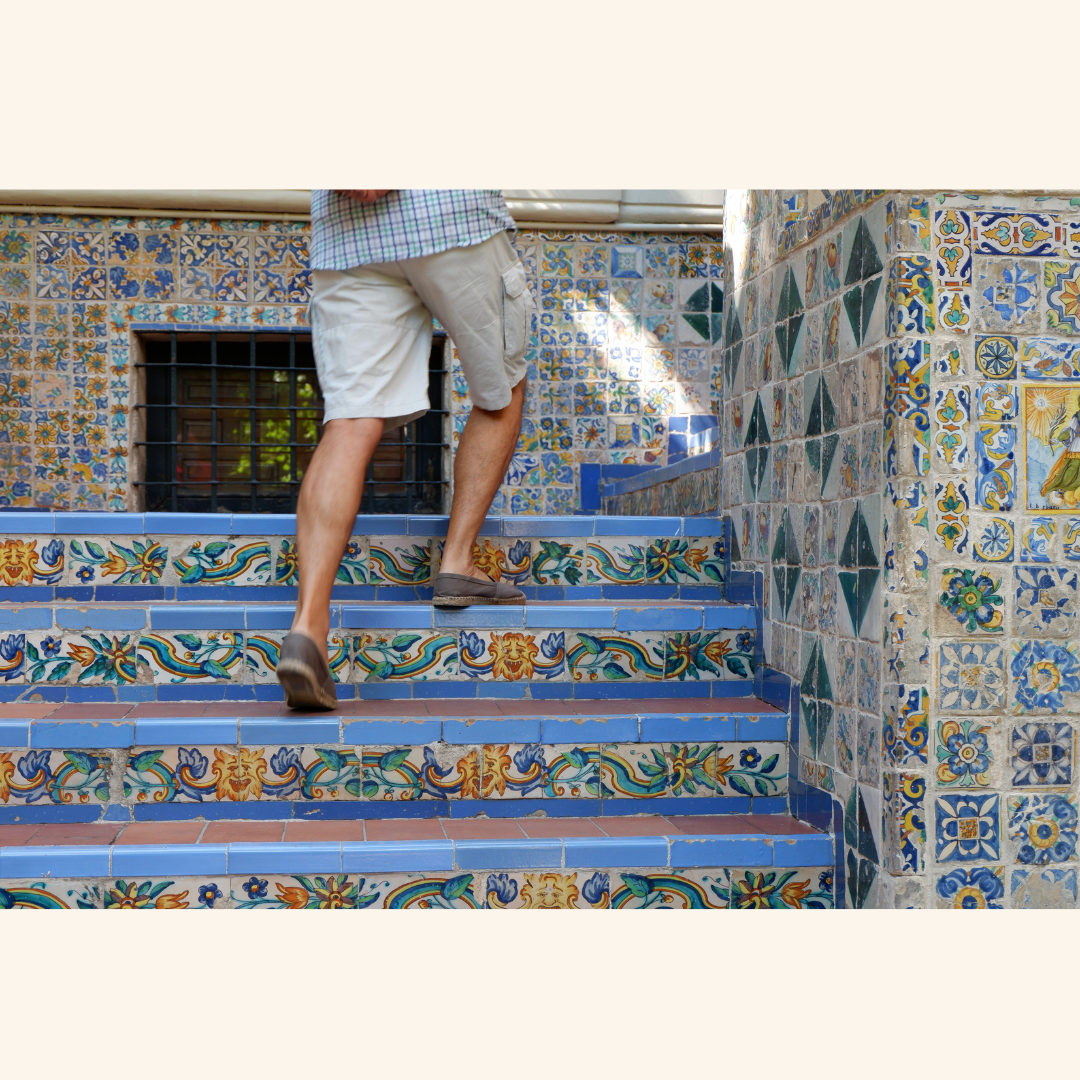
Every Step Counts: Why "Exercise Snacking" is a Game-Changer for Longevity and Parkinson’s
February 16, 2026
We often think of exercise as a dedicated hour at the gym, but major medical studies—including data from the UK Biobank—reveal that one of the most powerful tools for health is right in your hallway. Climbing just 50 steps a day, or roughly five flights of stairs, can fundamentally shift how your body ages. Crucially, research shows that you don’t have to do this all at once; "exercise snacking" is just as effective and may be the ultimate hack for staying active.
The Science of "Vertical Loading"
What makes stairs so much more effective than walking on flat ground? The answer is "vertical loading." When you climb, you aren't just moving forward; you are fighting gravity. This forces your heart and lungs to work harder, improving your cardiovascular fitness (VO2 max) in a fraction of the time it takes to go for a jog.
Beyond the heart, this movement acts as a form of resistance training for your legs. Engaging these large muscle groups releases "myokines"—small molecules that help lower inflammation throughout the entire body. It is a rare "two-for-one" exercise that builds both aerobic capacity and muscle strength simultaneously.
Why "Snacking" is a Health Hack
The experts advocate for a routine called "exercise snacking"—brief bouts of vigorous activity spread throughout the day. Instead of one long, exhausting session, you take "bites" of movement when they fit your schedule.
Metabolic Wake-Up: These short bursts keep your metabolism "awake." Sitting for hours can cause our bodies to enter a sluggish metabolic state; a quick flight of stairs resets the system.
The Power of 50: Research from Tulane University found that climbing 50 steps daily is associated with a 20% lower risk of heart disease. This can be broken into two flights in the morning, two at lunch, and one in the afternoon.
Micro-Bursts: For women, just 3 to 4 minutes of total intense activity per day—even in 60-second increments—was linked to a 45% reduction in major cardiovascular events.
A Vital Strategy for Parkinson’s
While these studies were conducted on the general population, the concept of "exercise snacking" is a particularly useful strategy for those living with Parkinson’s. When every day counts toward maintaining mobility and slowing progression, the traditional "hour at the gym" can sometimes feel daunting or physically impossible during "off" periods.
Exercise snacking allows you to take advantage of "on" periods when your medication is working best. A 2-minute "snack" of stair climbing or stepping up and down on a sturdy block is far more manageable than a long workout. These bursts help maintain the leg strength and balance necessary to prevent falls, while the high intensity provides the neuroprotective benefits that the condition requires.
Staying Consistent and Safe
Consistency is the most important factor. The research carried a stark warning: regular climbers who stopped their routine saw their heart disease risk rise significantly. The body thrives on these small, regular challenges.
If traditional stairs are difficult on your joints, focus on the descent. Going down stairs is an "eccentric" exercise—where the muscle lengthens under tension—which is excellent for strengthening the muscles around the knees. Alternatively, a simple "step-up" routine at home while the kettle boils provides a similar cardiovascular boost.
By choosing the stairs over the lift and embracing the "snack" approach, you are adopting one of the most effective secrets for a longer, healthier, and more mobile life.
Comments (0)
Loading comments...