


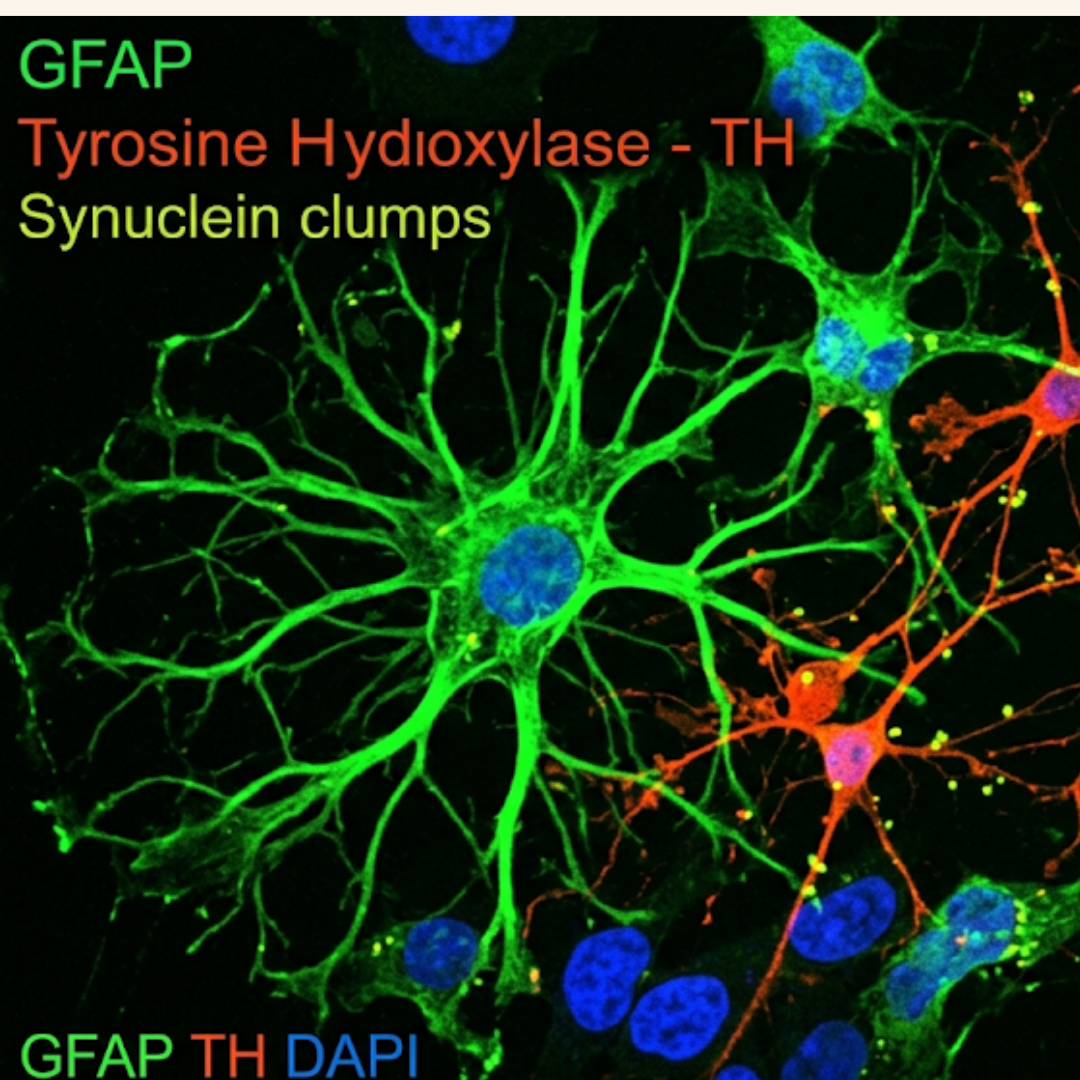
Brain support cells can turn toxic and damage dopamine neurons
June 15, 2026
A team of researchers has provided an in depth look into how certain brain cells switch from protectors to drivers of harm in Parkinson's. Published in the journal npj Parkinson's Disease, the study highlights a significant shift in scientific focus. There is an incredibly exciting, growing wave of evidence showing that we need to look deeply into the basic biology of different brain cells to find new ways to fight Parkinson's, rather than just looking at the damaged nerve cells on their own.
To uncover these insights, the scientific team focused on star shaped support cells called astrocytes. Normally, these cells act like friendly neighbours, providing essential energy and maintaining a safe environment for the vital nerve cells that produce dopamine. However, in Parkinson's, the brain deals with chronic swelling, known as inflammation, alongside a buildup of a sticky protein called alpha synuclein. Genetic factors also play a massive part, particularly changes in the GBA gene, which normally helps cells clear out waste and manage fats.
To see exactly how these different elements interact, the team used advanced stem cell technology. They took skin samples from both healthy control donors and donors carrying the GBA N370S genetic mutation, and reprogrammed them into stem cells. From these, they grew human midbrain astrocytes and dopamine producing nerve cells in the lab. By growing these different cells together in a shared culture, the researchers built a highly accurate mini model of the human brain, allowing them to watch the direct communication between the cells.
The experiments revealed that when the helper astrocytes are exposed to inflammatory chemical triggers called cytokines, specifically TNF alpha and IFN gamma, they change completely. They enter a reactive state, which causes massive alterations in how they behave. Using a high tech tool called RNA sequencing to read the active genes inside the cells, the scientists discovered that this reactive switch severely scrambles how astrocytes manage calcium. Calcium transport and balance within the cells became totally dysregulated. The astrocytes carrying the GBA mutation proved to be especially sensitive to this stress, releasing much higher and more dangerous levels of calcium when triggered by inflammation.
The team then tested what happens when you combine this inflammatory environment with clumps of the alpha synuclein protein. They found that the transformed, reactive astrocytes stop doing their job of protecting their neighbours. Instead of shielding the dopamine nerve cells, the helper cells become toxic and actively contribute to a hostile environment, which significantly reduces the survival of the nerve cells.
By mapping out this chain reaction, the study shows that inflammation and genetic vulnerabilities combine to turn vital support cells against the very neurons they are meant to protect. This research provides concrete biological evidence that helper cells play a major role in how the condition develops. Exploring these cellular pathways opens up hopeful new avenues for future therapies. Instead of only trying to repair damaged nerve cells, future treatments could focus on stopping these helper cells from turning toxic in the first place, offering a fresh strategy to preserve dopamine cells and slow down the progression of Parkinson's.
Comments (0)
Loading comments...