


Understanding how a common genetic mutation affects DNA repair in Parkinson's
March 3, 2026
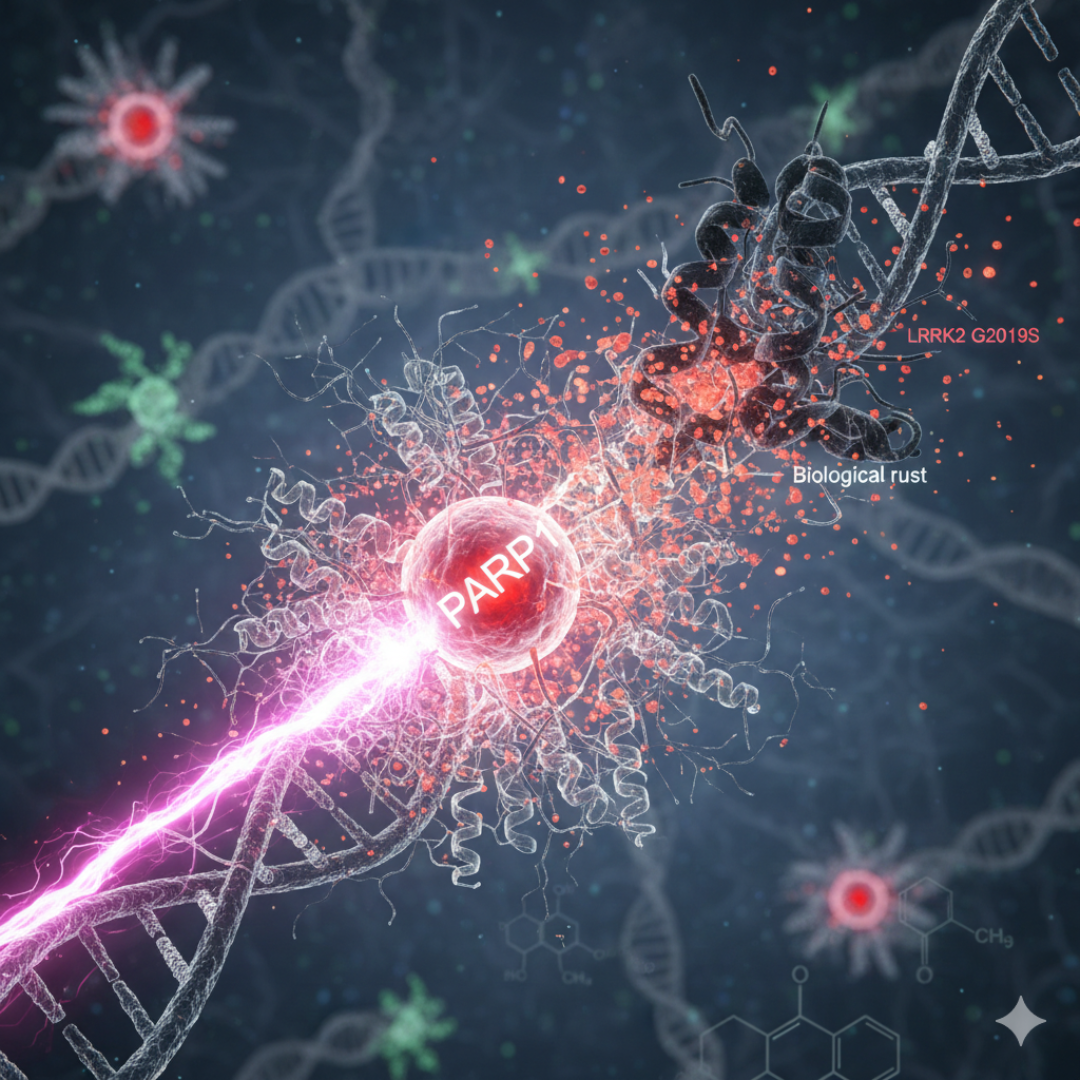
A new study published as a preprint on bioRxiv has uncovered a critical link between the most common genetic cause of Parkinson's and the way our cells repair their own DNA. Researchers focusing on the LRRK2 G2019S mutation—found in both familial and sporadic cases of the condition—have discovered that this genetic glitch causes a chain reaction that damages the "instruction manual" inside our brain cells.
The Broken Alarm System
Inside every cell, there is a dedicated repair crew whose job is to fix DNA when it gets damaged by everyday stress or "oxidative" wear and tear. A key player in this crew is a protein called PARP1. When it detects a break in the DNA, it sounds an alarm to bring in other repair factors.
However, in people with the LRRK2 mutation, this alarm system becomes hyperactive. The study found that the mutation causes a significant increase in oxidative damage to the DNA within the cell's nucleus. While the repair crew (PARP1 and its team) rushes to the scene, they seem to get "trapped" there. Instead of fixing the damage and moving on, the system becomes stuck in a hyperactive loop, which eventually becomes toxic to the cell.
A Whole-Body Connection to Stress
The researchers found that this DNA damage isn't happening in a vacuum. It is closely linked to reactive oxygen species (ROS)—essentially biological "rust" that accumulates in our bodies. When the cells were treated with antioxidants, this harmful hyperactive signaling was silenced. Conversely, when the cells were exposed to common environmental stressors, the damage worsened.
This suggests that the LRRK2 mutation makes our brain cells much more vulnerable to the types of stress we encounter in daily life. It isn't just that the mutation exists; it’s that it weakens the cell's ability to tolerate and repair the natural wear and tear of aging.
New Avenues for Treatment
One of the most promising aspects of this discovery is what it tells us about potential treatments. Because the repair crew gets "trapped" on the damaged DNA, using certain drugs that are already known in cancer research—called PARP inhibitors—could be a double-edged sword. While they are designed to stop hyperactive signaling, they might actually increase the toxicity if they trap the repair crew even more firmly.
Instead, the research points towards a different strategy:
Targeting LRRK2 directly: By stopping the faulty protein at its source, we might be able to prevent the DNA damage from starting.
Reducing Oxidative Stress: Since the damage is driven by biological "rust," finding ways to lower systemic inflammation and oxidative stress could protect the brain's internal wiring.
Supporting Repair Resolution: Finding ways to help the repair crew finish their job and "unlock" themselves from the DNA could keep cells healthy for longer.
This research highlights that the condition is a complex interaction between our genetics and the environment. By understanding these tiny, molecular "traffic jams" in our DNA repair systems, we can move closer to therapies that don't just mask symptoms but actually protect the long-term health of our brain cells.
Comments (0)
Loading comments...