


The 2026 Nobel Prize discovery that could change how we understand Parkinson’s
October 6, 2026
 Beatrice
The 2026 Nobel Prize in Physiology or Medicine has been awarded to three scientists whose work has transformed the way researchers study the brain. Karl Deisseroth of Stanford University, together with Peter Hegemann and Georg Nagel, was recognised for discoveries that led to optogenetics, a technique that allows scientists to switch individual nerve cells on or off using light.
This may sound like a highly technical discovery with little connection to everyday life with Parkinson’s. In fact, it is closely connected to Parkinson’s research and could help shape future treatments.
So what is optogenetics?
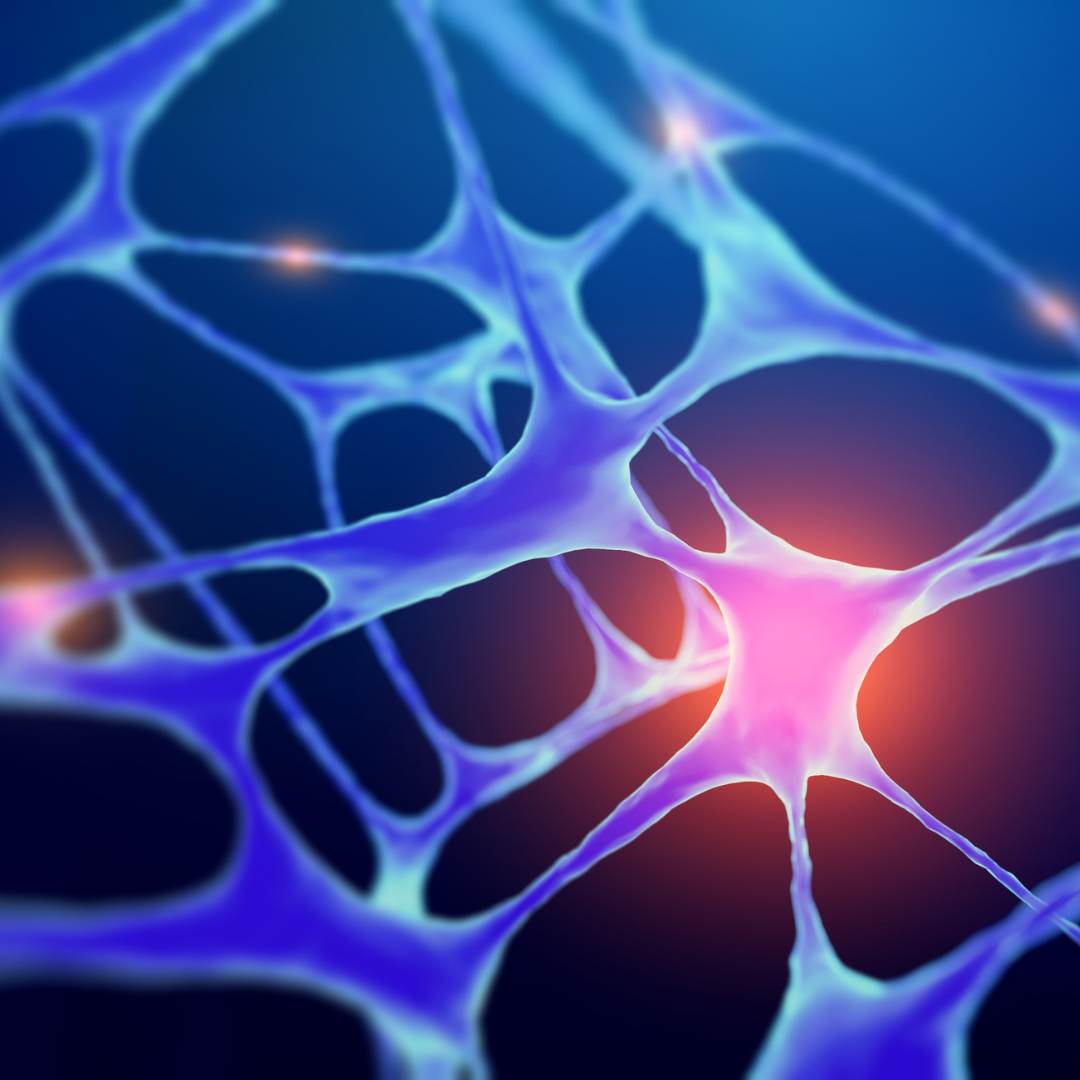
Our brain contains billions of nerve cells, called neurons. These cells communicate with each other using electrical and chemical signals. The difficulty for scientists has always been working out exactly what individual groups of neurons are doing.
Imagine a huge room filled with thousands of light switches. If you switch off the electricity to the whole room, you cannot tell which switch controls which light.
This was a problem in brain research. Drugs can affect many different cells at once. Electrical stimulation can also activate nearby cells and pathways, making it difficult to know exactly what is responsible for a particular effect.
Optogenetics changed this.
Scientists can make a specific group of neurons sensitive to light. They can then shine light on those cells and make them become active, or use another type of light-sensitive protein to reduce their activity. The effect can happen extremely quickly, allowing researchers to see what happens when a very specific group of brain cells is switched on or off.
The remarkable part is that the story began with something very small: algae.
Peter Hegemann and Georg Nagel studied proteins in microscopic algae that respond to light. These proteins, called opsins, can act like tiny gates in a cell membrane. Light makes the gate open or close, allowing electrically charged particles to move through the cell.
Deisseroth and his colleagues found a way to put these light sensitive proteins into selected neurons. They then used very thin optical fibres to deliver light to those cells inside the brains of living animals. This created a completely new way of studying the brain.
Why is this important for Parkinson’s?
Parkinson’s is not simply a problem with one part of the brain. It involves changes across networks of connected brain cells, particularly circuits involved in controlling movement.
One of the biggest questions in Parkinson’s research is how these circuits change when dopamine producing nerve cells are lost.
Optogenetics gave researchers something they had never had before: a way to test individual parts of these circuits almost like turning individual switches on and off.
Deisseroth and colleagues used the technique to study the brain circuits involved in Parkinson’s. In experiments with mice, they were able to identify different pathways involved in movement. When they activated one important pathway, movement increased and Parkinson’s like problems such as slowness and freezing were reduced. In Parkinson’s model mice, activating this pathway was able to restore movement.
This was important because it moved Parkinson’s research beyond simply observing that a particular brain area was behaving differently. Scientists could actually test what happened when a specific circuit was changed.
That difference is crucial.
It is one thing to see that two things happen together. It is another to switch one thing on or off and show that it directly changes the symptom.
It has also helped explain deep brain stimulation
The Nobel winning technology has also helped researchers understand one of the most established advanced treatments for Parkinson’s: deep brain stimulation, or DBS.
DBS uses electrical stimulation delivered through electrodes implanted in the brain. It can significantly improve symptoms for some people with Parkinson’s, but for many years scientists did not completely understand exactly why it worked.
Deisseroth’s team used optogenetics to separate different parts of the brain circuit and test them individually. Their experiments suggested that some of the important effects of DBS may come from stimulating nerve fibres travelling into the targeted area, rather than simply activating the nerve cells sitting directly around the electrode.
That finding matters because understanding which cells and connections actually produce the benefit could eventually help researchers design more precise treatments.
Could this become a treatment for people with Parkinson’s?
This is where it is important to be realistic.
The Nobel Prize does not mean that doctors can currently use light to switch Parkinson’s neurons on and off in people. Most of the work that made these discoveries possible has been carried out in laboratory animals.
Optogenetics normally requires neurons to be made sensitive to light, often using genetic techniques, and researchers then need a way to deliver light to the appropriate cells. Using this approach safely in humans is much more complicated.
But the value of the discovery goes beyond using optogenetics itself as a treatment.
Once scientists understand which cells and circuits are important, they can look for safer ways to influence those same circuits. This could include improved brain stimulation, more targeted medicines, gene therapies or other future technologies.
In other words, optogenetics can be used as a research tool to find the right target, even if another technology is eventually used to treat it. Deisseroth himself has described this as a way of finding which cells are important and then designing other methods to control their activity.
A new way of looking at Parkinson’s
Perhaps the biggest importance of this Nobel Prize is that it represents a change in how scientists can study brain disorders.
For a long time, researchers could look at the brain and see that certain areas or networks were abnormal in Parkinson’s. But seeing a problem is not the same as understanding exactly what causes it.
Optogenetics gives scientists a much more precise tool.
They can ask: What happens if we activate these cells? What happens if we silence those cells? What happens if we change this connection but leave the neighbouring cells alone?
Those questions can reveal how Parkinson’s symptoms actually emerge from changes in brain circuits.
And that could ultimately lead to better treatments.
The journey from a light sensitive protein in a tiny piece of algae to a Nobel Prize and new insights into Parkinson’s is a remarkable example of how basic science can eventually change medicine. The discovery itself is not a Parkinson’s cure, but it has given researchers something extremely valuable: a much clearer way to understand the circuits that go wrong in Parkinson’s and a way to identify more precise targets for future treatments.
Comments (0)
Loading comments...