


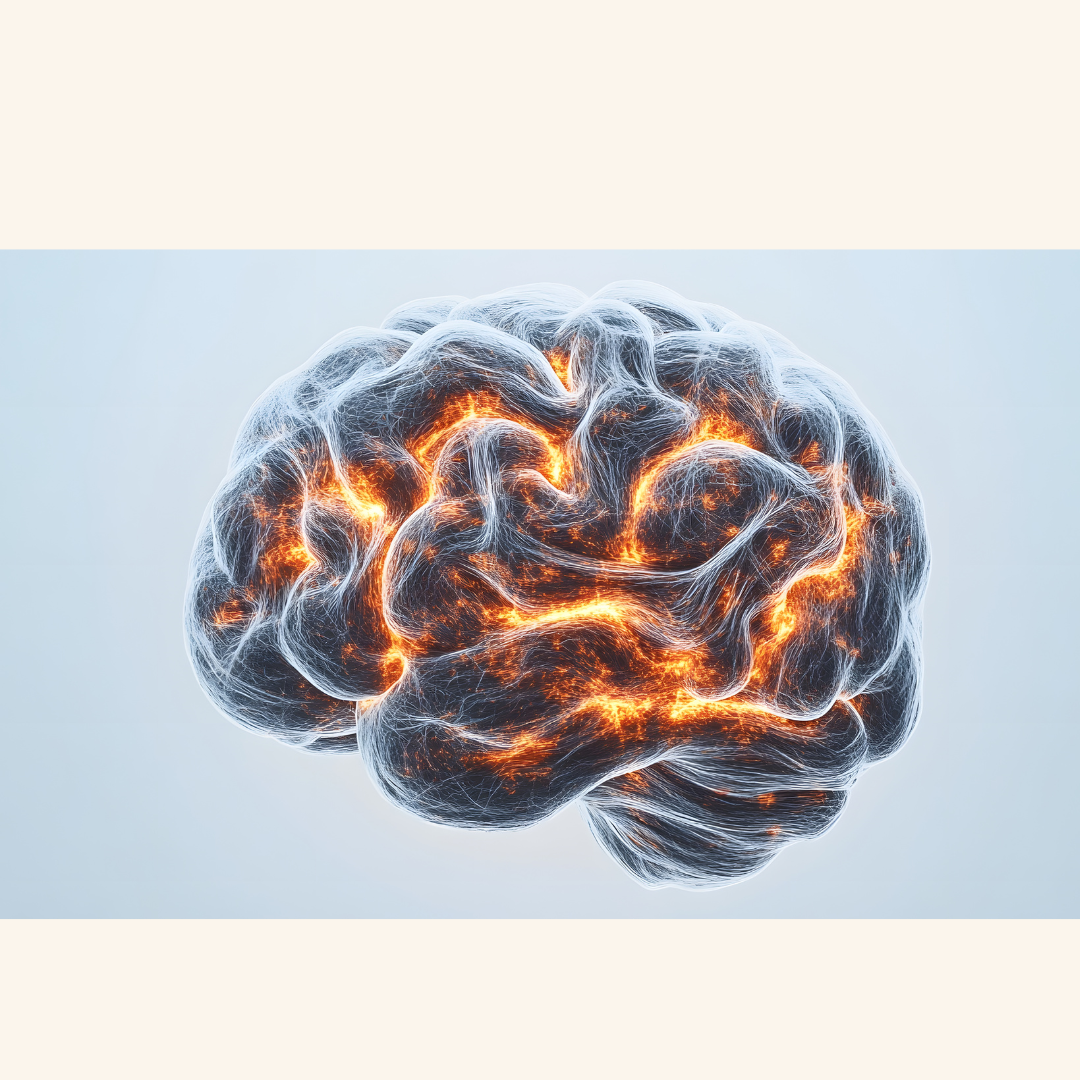
The Burning Fuse: Why Parkinson’s Disease Starts with an Energy Crisis
December 6, 2025
We all know that Parkinson’s disease is triggered when the brain loses its key dopamine-producing cells, leading to movement issues. But for decades, scientists have been stumped by the most basic question: Why do these specific cells die off when most others remain just fine?
New research gives us a surprisingly simple, yet devastating, answer: It looks like these cells are simply running out of gas—they are suffering an ongoing energy crisis that sets them up for failure as we age.
The Most Demanding Job in the Brain
Think of a small group of dopamine neurons in your midbrain, deep inside a region called the substantia nigra, as the power plant for your movement. These cells have an incredibly complex and demanding job. Unlike other brain cells that might only send out one or two short communication lines, these particular neurons have long, winding, and extremely numerous output branches.
Because they have so much territory to cover, they are absolute energy hogs. They need a massive, constant, and uninterrupted supply of fuel—glucose (sugar) from the bloodstream—just to keep the lights on and the signals flowing.
The Cell's Backup Battery System
To deal with this exhausting workload, the researchers found that these neurons have developed a neat trick: they keep an emergency fuel supply, called glycogen, stored right inside themselves. Imagine glycogen as a backup battery. If the regular flow of glucose from the blood is temporarily interrupted, this battery kicks in, allowing the neuron to keep firing for a surprisingly long time. It’s a brilliant way to handle their high-stress, high-demand job.
However, the team then made a critical and worrying discovery about this backup system.
The Vicious Spiral of Decline
The neurons don't just store glycogen randomly; they regulate the size of their backup battery based on how much work they are doing. Specifically, they use a sensor (called the D2 receptor) that listens to the dopamine they are producing.
This creates a self-fulfilling prophecy of decline:
A Slowdown Begins: As a person gets older, or if they have early genetic risk factors for Parkinson's, the dopamine neuron might start to feel tired and slightly less effective. It begins to produce just a little less dopamine.
The Battery Shrinks: Because the sensor detects less dopamine, the neuron assumes it doesn't need to work as hard, and it decides to reduce its glycogen storage. The backup battery shrinks.
Total Vulnerability: Now, whenever there is any tiny interruption in the blood's glucose supply—which happens all the time in the body—the cell has no backup battery to rely on. It immediately shuts down and quickly spirals into dysfunction and, eventually, cell death.
It’s a cruel feedback loop: less function leads to less fuel resilience, which forces more decline.
This groundbreaking finding suggests that Parkinson’s disease isn't necessarily starting with some sudden poison or trauma, but rather with a chronic, self-driven energy famine in the most vulnerable cells of the brain.
The good news is that understanding this energy issue provides a concrete path forward. Instead of focusing solely on replacing the lost dopamine, future treatments could focus on interventions designed to boost that glycogen storage—essentially, inventing a way to chemically supercharge the neuron’s backup battery, making them resilient enough to survive the aging process and interrupt the vicious cycle of decline.
Comments (0)
Loading comments...