


Tokyo Researchers Discover Reversible "Loose Clusters" That Could Halt Alzheimer’s
February 2, 2026
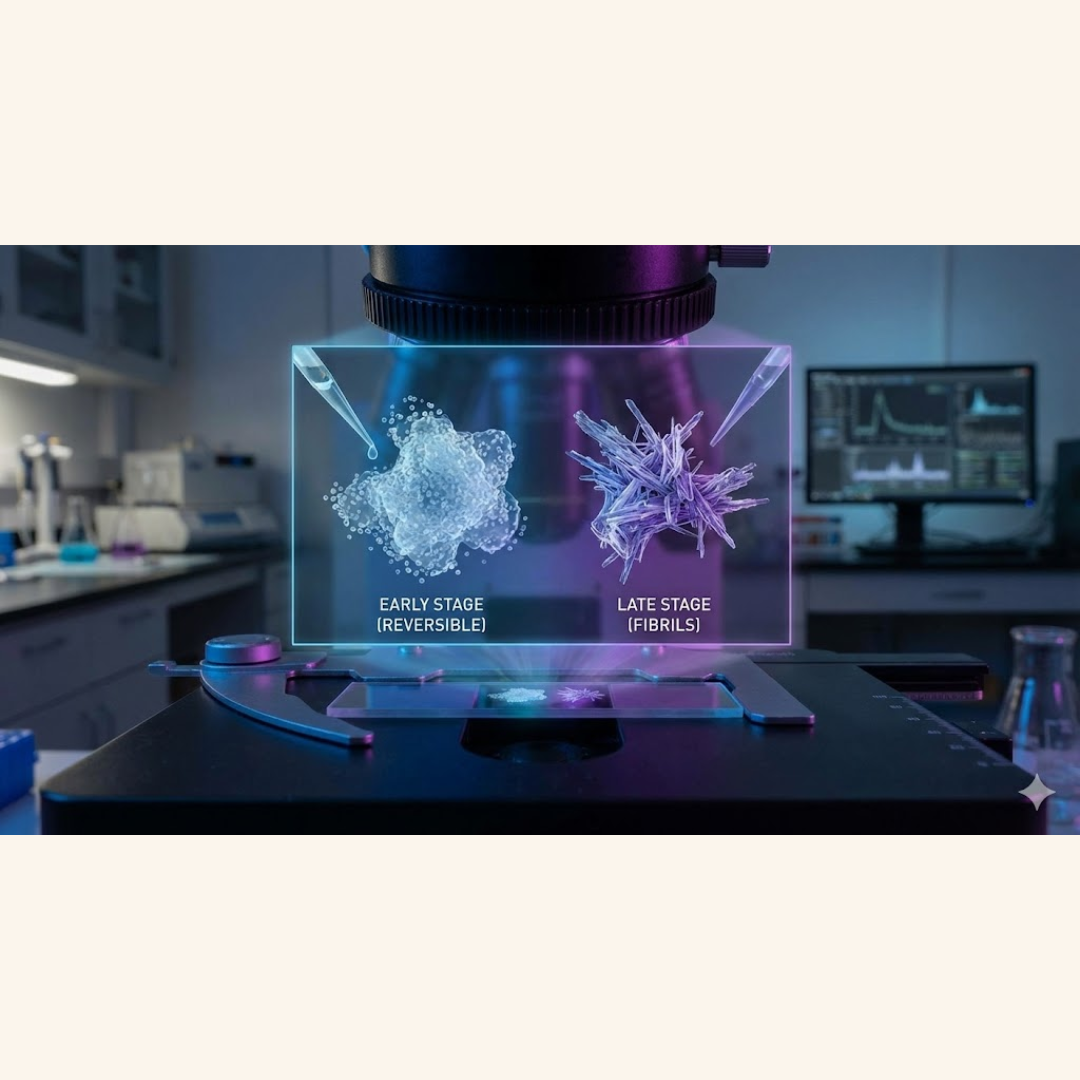
For decades, the search for an Alzheimer’s cure has focused on breaking down the tough, tangle-like fibrils of tau protein that choke brain cells. But a new study from Tokyo Metropolitan University suggests we have been attacking the wrong target. The research, published in Nature, reveals that before these proteins harden into destructive tangles, they pass through a "hidden" intermediate stage—one that is soft, flexible, and crucially, reversible.
The team, led by Professor Rei Kurita, applied principles from polymer physics to understand how these deadly structures form. They discovered that tau proteins do not snap together into fibrils instantly. Instead, they first gather into liquid-like droplets or "loose clusters" measuring tens of nanometers. Think of it like water vapour condensing into a cloud before it freezes into hard ice.
This discovery is a game-changer because these early clusters are not permanent. The researchers found that the clusters are held together by electrostatic forces—essentially, magnets sticking together. By adjusting the environment around them, specifically by altering salt levels or introducing specific ions, the team was able to disrupt these forces. The clusters simply dissolved back into harmless individual proteins, preventing the toxic fibrils from ever forming.
Current Alzheimer’s treatments often try to smash the "ice" after it has formed, which is incredibly difficult and often causes collateral damage. This new data suggests we can simply turn up the heat before the freeze happens. If a drug can be designed to target this specific liquid phase, it could stop the disease process without needing to clear away established damage.
While this study focused on Alzheimer’s, the implications for Parkinson’s are significant. Both conditions are driven by proteins that clump together—tau in Alzheimer’s and alpha-synuclein in Parkinson’s. If the laws of physics allow us to melt tau clusters, it is highly probable that similar "soft" phases exist for the proteins that drive Parkinson’s, opening a new frontier for preventative medicine that stops the damage before it starts.
Comments (0)
Loading comments...