


Brain diseases, hidden metabolic issues, and the benefits of mild stress on cells
September 11, 2024
Neurodegenerative diseases like Alzheimer’s, Parkinson’s, ALS, and Huntington’s are becoming more common, despite decades of research. Alzheimer’s and Parkinson’s are doubling in cases every 20-30 years, and other conditions like ALS and Huntington’s are also on the rise. Some of this increase can be explained by factors like aging and better diagnoses, but environmental issues, like toxins and poor diet, also play a role. This trend threatens to overwhelm healthcare systems if not addressed.
Traditionally, these diseases are classified by their symptoms, but this approach has its limits. While it helps with diagnosis and symptom-based treatments, it doesn’t fully explain the underlying causes or how these diseases affect the whole body, not just the brain.
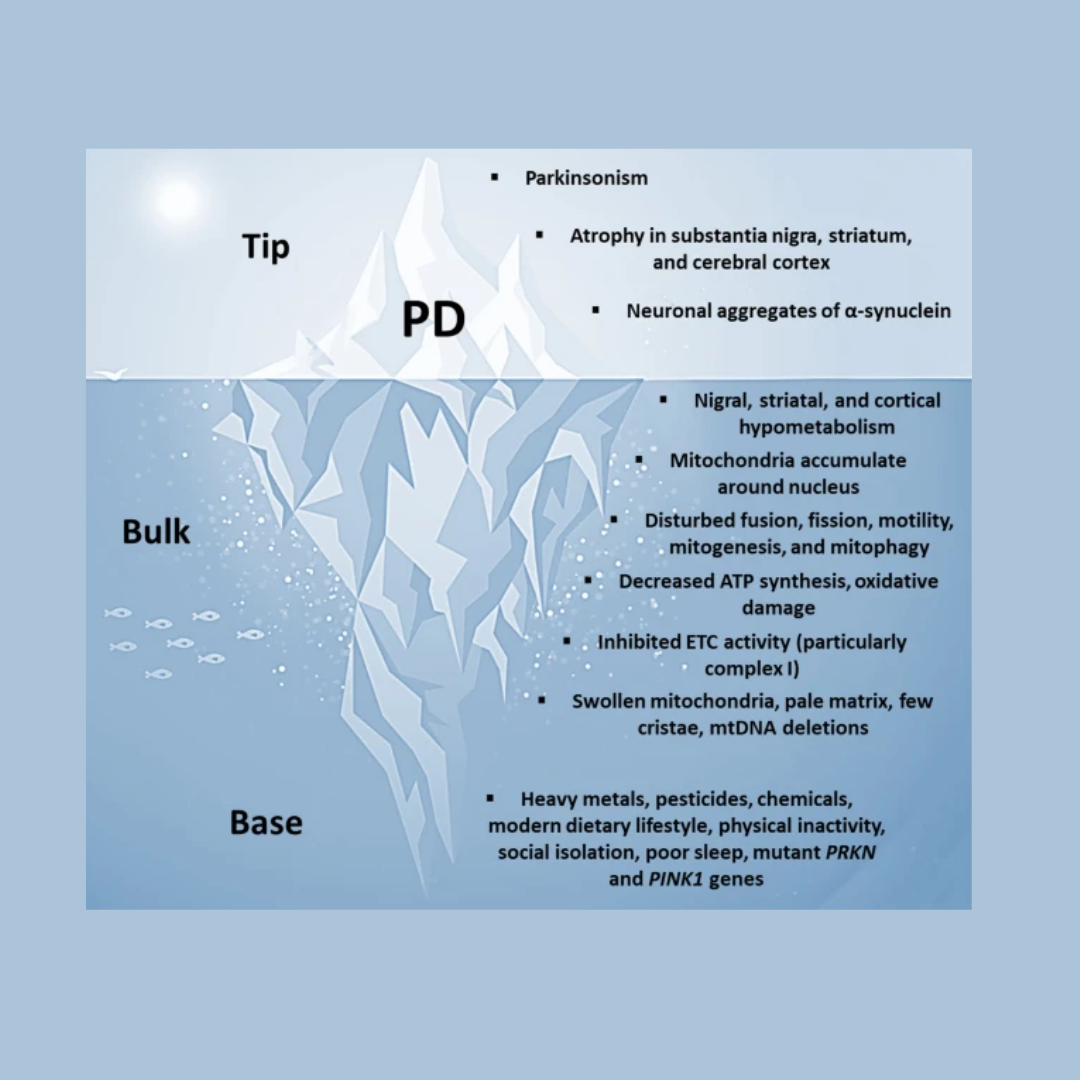
A broader perspective reveals that these disorders share a common issue: malfunctioning mitochondria, the parts of cells that manage energy. Mitochondrial problems affect not just the brain but also other organs like muscles and the heart. Viewing these diseases as “metabolic icebergs” helps connect their visible symptoms with deeper, system-wide issues, especially related to how mitochondria are damaged by environmental and genetic factors.
To treat these conditions more effectively, we need to focus on restoring mitochondrial health, rather than just treating symptoms. By understanding and repairing mitochondrial function, we could develop better ways to prevent and treat neurodegenerative diseases.
Parkinson’s disease (PD) can be understood as a "metabolic iceberg," where visible symptoms like tremors and stiffness are just the tip of a deeper problem. The root issue lies in mitochondrial dysfunction, caused by long-term exposure to environmental toxins (like heavy metals and pesticides) and genetic factors. Mitochondria, which generate energy in cells, become impaired, particularly in brain regions like the substantia nigra, which is critical for movement control.
As these mitochondria fail, energy production drops, and oxidative stress increases, contributing to the buildup of harmful proteins like alpha-synuclein. Over time, this damage results in the classic motor symptoms of PD, as well as non-motor symptoms like loss of smell, digestive issues, sleep problems, and cognitive decline.
The disease starts long before symptoms appear, with impaired mitochondrial function leading to damage across multiple systems, not just the brain.
Comments (0)
Loading comments...