


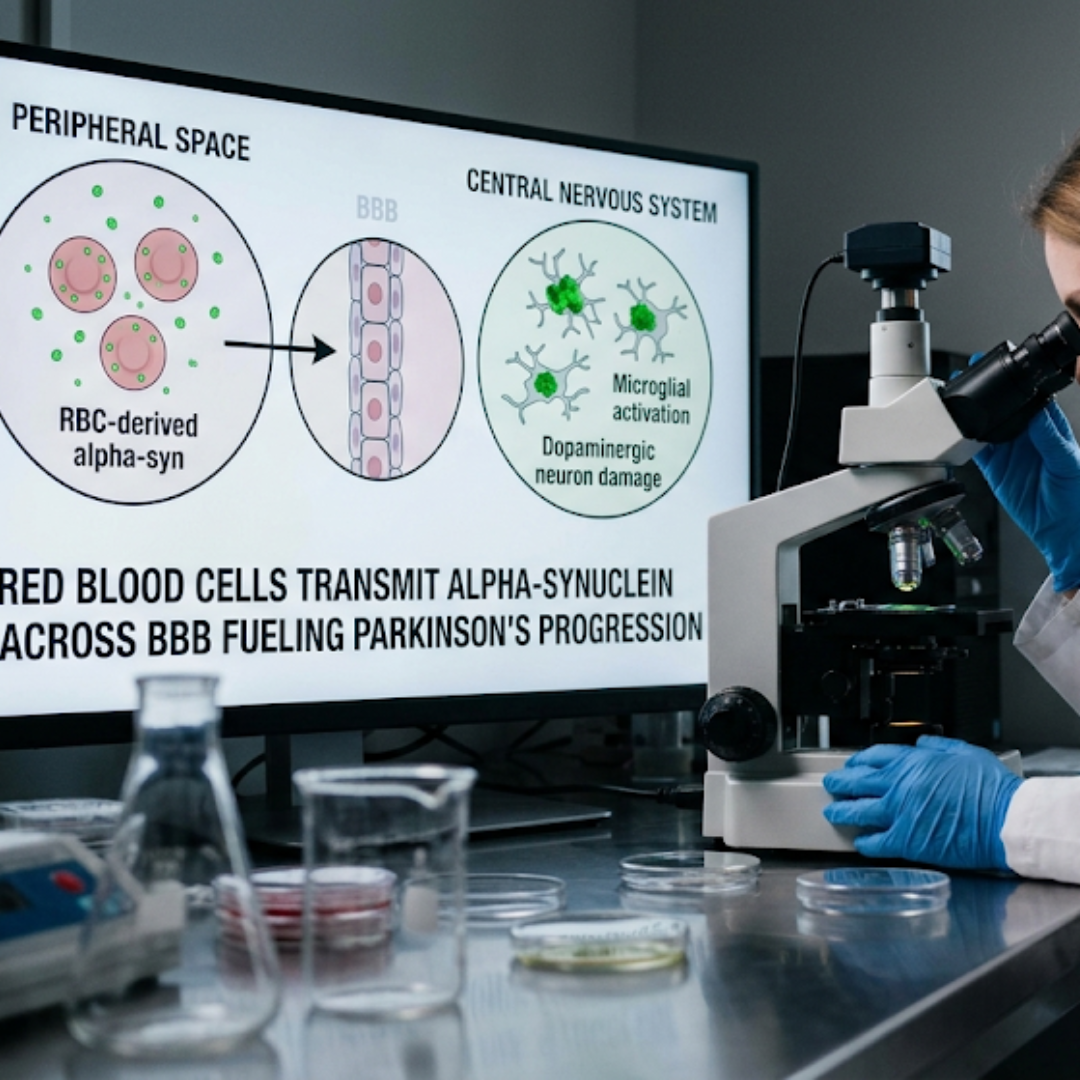
Red blood cells may travel across the blood-brain barrier to fuel the progression of Parkinson's
May 21, 2026
For a long time, research into Parkinson's has focused intensely on what happens inside the brain, particularly looking at how a protein called alpha-synuclein clumps together and damages vital nerve cells. However, a groundbreaking study published in the journal Brain reveals that a major source of this problematic protein actually originates far outside the nervous system, carried by our very own red blood cells. Led by researchers like Ying Yang and Qi Liu, the investigation highlights how these oxygen-carrying cells act as massive storage units for alpha-synuclein, holding levels that rival those found in the brain itself. By tracking these cells in laboratory models, the team discovered that alpha-synuclein derived from bone marrow can travel throughout the body and sneak into the central nervous system, where it is eagerly snapped up by microglia, the brain's resident immune cells.
This unexpected entry triggers a cascade of inflammation and immune activation, which ultimately disrupts dopamine production and leads to mild nerve cell degeneration. What makes this discovery particularly vital is the role played by the blood-brain barrier, the protective shield that normally keeps harmful substances out of our brain tissue. The study demonstrated that when this barrier is perfectly healthy, it manages to keep most of the peripheral alpha-synuclein at bay. However, if the barrier becomes compromised or leaky due to inflammation, injury, or physical disruption, the floodgates open, allowing much larger amounts of the protein to cross over into the brain. Once inside, this extra influx heavily accelerates neurodegeneration and worsens movement symptoms. By revealing that the condition is truly systemic and deeply connected to our vascular health, these findings open up exciting new avenues for treatment, suggesting that protecting or repairing the blood-brain barrier could become a powerful strategy to slow down the progression of Parkinson's.
Comments (0)
Loading comments...