


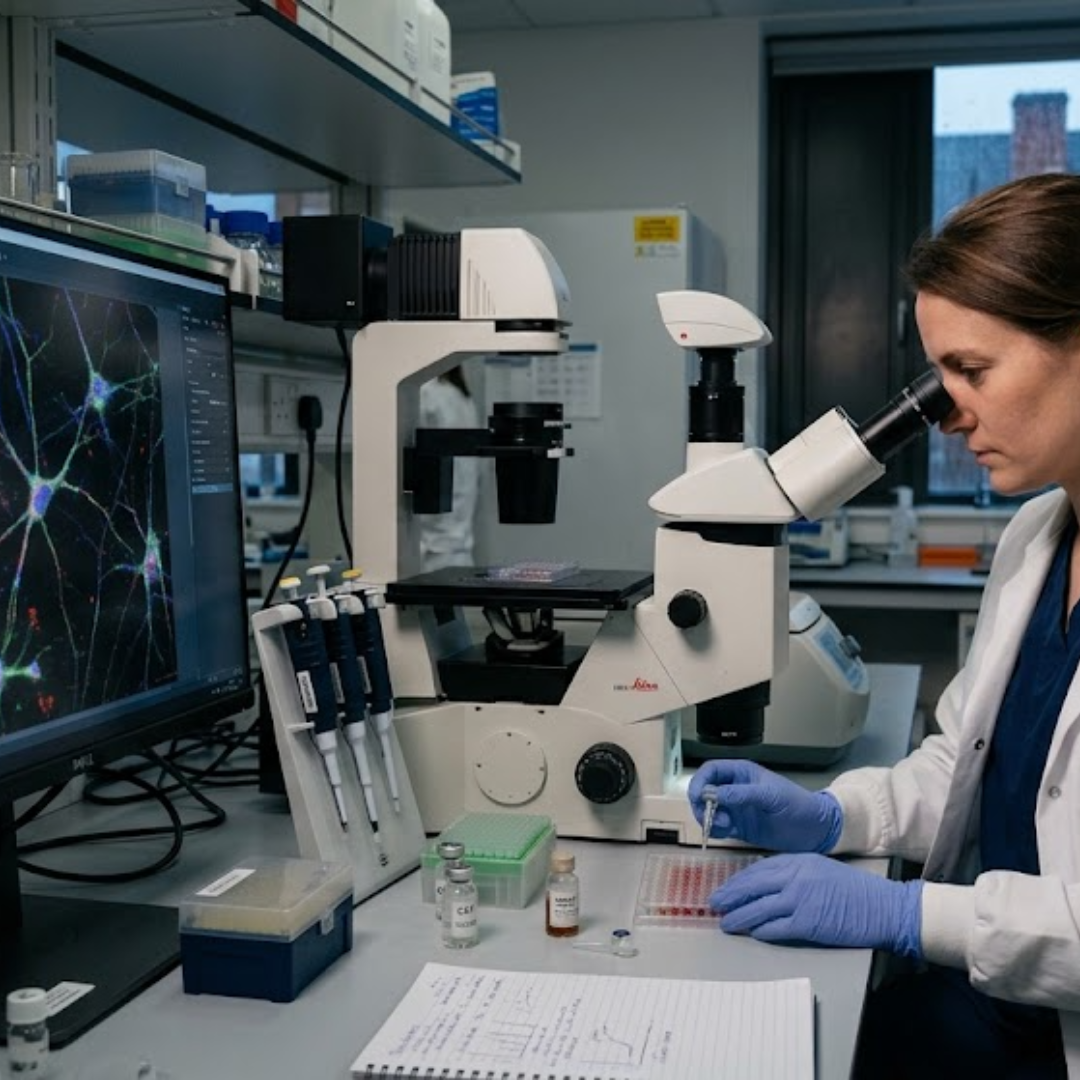
Scientists track how biologically confirmed Parkinson’s changes over five years
September 14, 2026
 Beatrice
Doctors have usually diagnosed Parkinson’s by watching for visible signs, such as a tremor, stiff limbs, or slow movements. The true biological root of the condition, sticky clumps of an abnormal protein called alpha-synuclein, was once something scientists could only confirm under a microscope after death. A major five-year study by the international Parkinson’s Progression Markers Initiative team has now changed this picture by following people whose condition was identified through biological tests rather than outward signs alone.
The breakthrough relies on a laboratory test called a seed amplification assay. When misfolded alpha-synuclein is present in a tiny drop of spinal fluid, it causes normal proteins around it to misfold as well, creating a chain reaction that scientists can measure in real time. By focusing only on participants who tested positive for this protein clump and showed dopamine changes on brain scans, the researchers removed the guesswork caused by lookalike conditions.
For five years, researchers monitored participants from the time of their early diagnosis, checking their physical movement, daily routines, thinking skills, sleep, and dopamine levels. They found that a new biological staging ladder, which classifies the condition by protein markers and dopamine scans rather than just symptoms, accurately predicts how quickly changes unfold over time.
This discovery is a major leap forward for clinical trials. Testing new therapies that protect the brain has always been difficult when trial groups include people with different underlying biology. By pinpointing the condition at a molecular level, scientists can now design smarter trials and test protective therapies much earlier, when treatments have the greatest chance of keeping people well for longer.
Comments (0)
Loading comments...