


Zombosomes: The Anucleated Couriers Spreading Parkinson’s Through the Brain
February 26, 2026
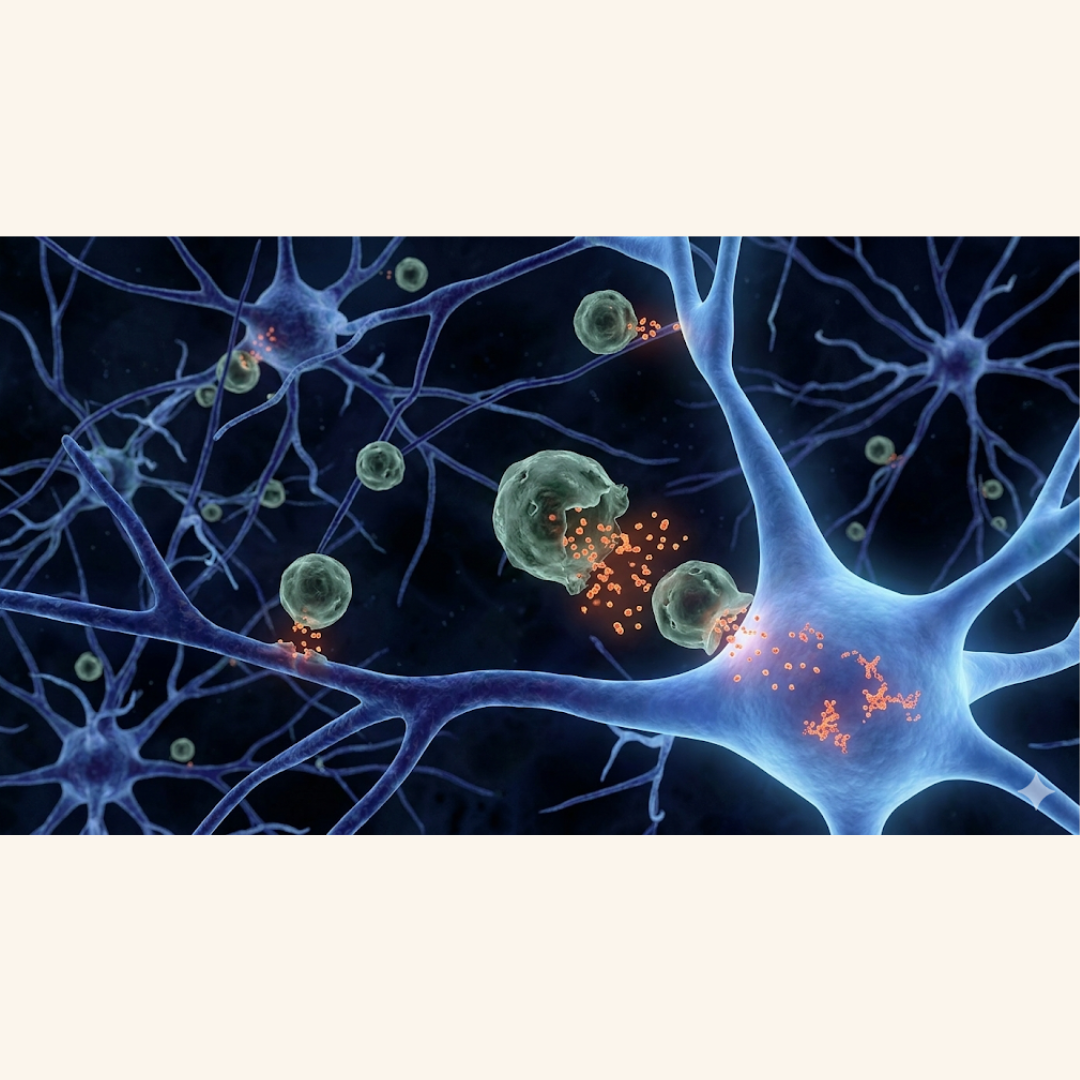
Great find from Mr Green on the mystery of how Parkinson’s spreads from one area of the brain to another has long been a central focus of scientific enquiry. Researchers have recently identified a new and rather eerie participant in this process: "Zombosomes." These are anucleated cell couriers—essentially cellular fragments that lack a nucleus—which appear to act as a transport system for the toxic protein α-synuclein, carrying it across the nervous system and driving the progression of the condition.
For a long time, scientists have understood that the buildup of misfolded α-synuclein proteins into clumps called Lewy bodies is a hallmark of the condition. However, the exact vehicle that allows these toxic proteins to travel between neurons remained elusive. This new research reveals that Zombosomes are formed when certain cells undergo a specific type of stress or damage, resulting in these "living dead" messengers that are devoid of genetic instructions but still capable of movement and interaction within the brain's environment.
The Role of the Anucleated Courier
In the healthy brain, cells use various methods to communicate and transport materials. Zombosomes, however, represent a hijacked version of this system. Because they do not have a nucleus, they cannot replicate or perform complex cellular repairs, yet they retain enough structural integrity to serve as long-distance couriers. They effectively package the toxic α-synuclein and shield it from the body’s natural clearing mechanisms, delivering it directly to healthy neurons.
Once a Zombosome reaches a new target, it releases its toxic cargo. This induces a "domino effect," where the healthy proteins in the recipient neuron begin to misfold and clump together, mirroring the pathology of the source. This discovery provides a concrete explanation for why the condition often follows a predictable anatomical path as it progresses through different regions of the brain.
A New Target for Future Therapies
The identification of Zombosomes opens up a promising new frontier for treatment. Historically, many therapies have focused on trying to clear the toxic protein after it has already accumulated. However, if we can understand the specific biological triggers that cause these anucleated couriers to form, or find a way to intercept them mid-transit, we may be able to halt the spread of the condition entirely.
This research suggests that the movement of Zombosomes is a deliberate biological event rather than a random occurrence. By focusing on the "courier" rather than just the "cargo," scientists hope to develop new "interceptive" therapies. This could involve strengthening the brain's ability to identify and dismantle these fragments before they reach healthy tissue.
The study of Zombosomes adds a significant layer to our understanding of the "living" nature of the condition's progression. It reminds us that Parkinson’s is not just a collection of static symptoms but an active, moving process. Understanding these "zombie-like" couriers brings us one step closer to developing a way to stay one step ahead of the condition, preserving brain health and function for the long term.
Comments (0)
Loading comments...