


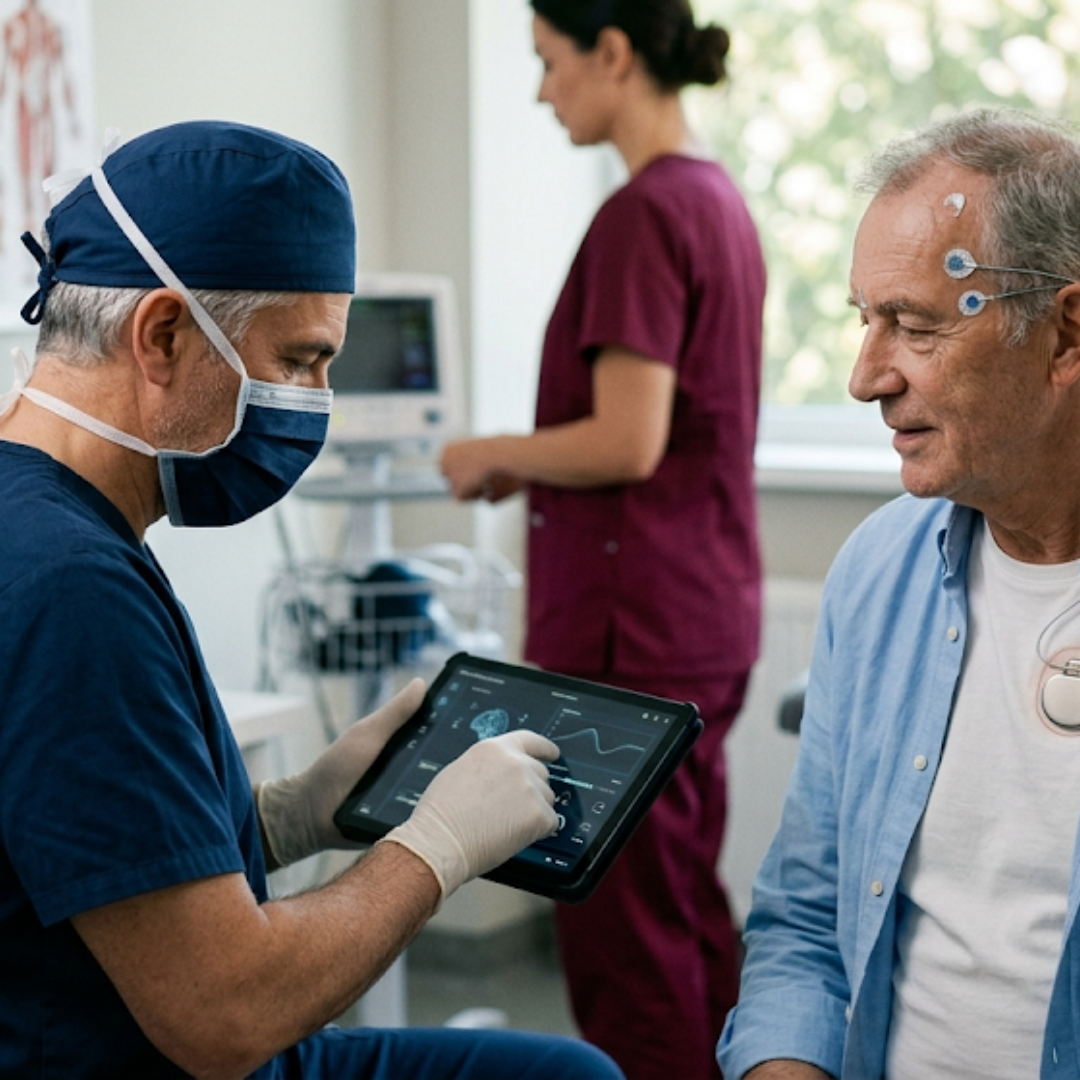
Evolution of brain pacemakers offers greater precision and remote control for Parkinson's management
May 12, 2026
Deep brain stimulation is undergoing a significant transformation, moving far beyond its original role as a simple "on-off" switch for tremors. By delivering precisely timed electrical pulses to the basal ganglia—the brain's command centre for movement—this technology acts as a pacemaker to override the erratic signals that cause stiffness and slowness. While the fundamental concept remains consistent, the hardware and the way it is managed are becoming remarkably more sophisticated.
Steering the current with pinpoint accuracy
One of the most meaningful shifts in recent years is the transition from omnidirectional leads to directional leads. In older systems, the electrical current radiated in all directions, which could sometimes inadvertently stimulate areas of the brain responsible for speech or balance. Modern directional leads allow consultants to steer the current toward specific targets with millimetre precision. This "steering" expands the therapeutic window, meaning people can receive a higher, more effective dose of stimulation without the baggage of unwanted side effects.
The rise of the virtual clinic
The logistics of managing a brain implant are also being revolutionised by digital health integration. Innovations like virtual clinics allow for remote programming, where a specialist can adjust the device settings via a secure video chat and a dedicated app. This is a game-changer for those who live far from major neurological centres, as it ensures that the "fine-tuning" of the device—which is often necessary as the condition progresses—can happen from the comfort of home rather than requiring a tiring journey to a hospital.
Finding the window of opportunity
The clinical thinking regarding when to opt for this procedure has also evolved. Experts now focus on a specific "window of opportunity." This is the period when a person still responds well to levodopa but begins to experience "off" periods or bothersome dyskinesia—those involuntary, jerky movements that often occur after years of medication use. Rather than being seen as a last resort, earlier referral is increasingly considered a way to preserve quality of life and reduce the heavy burden of complex medication schedules.
A collaborative future for treatment
Looking ahead, the role of these devices is shifting from a standalone treatment to a collaborative one. As new infusion-based therapies and potential disease-modifying treatments move through the clinical pipeline, the goal is to use them in tandem. While future therapies may aim to slow the progression of the condition at a cellular level, deep brain stimulation provides the immediate, robust motor control needed to stay active and independent. This integrated approach ensures that as the brain environment changes, the stimulation can be adjusted to match, providing a truly personalised way to live well with Parkinson's.
Comments (0)
Loading comments...