


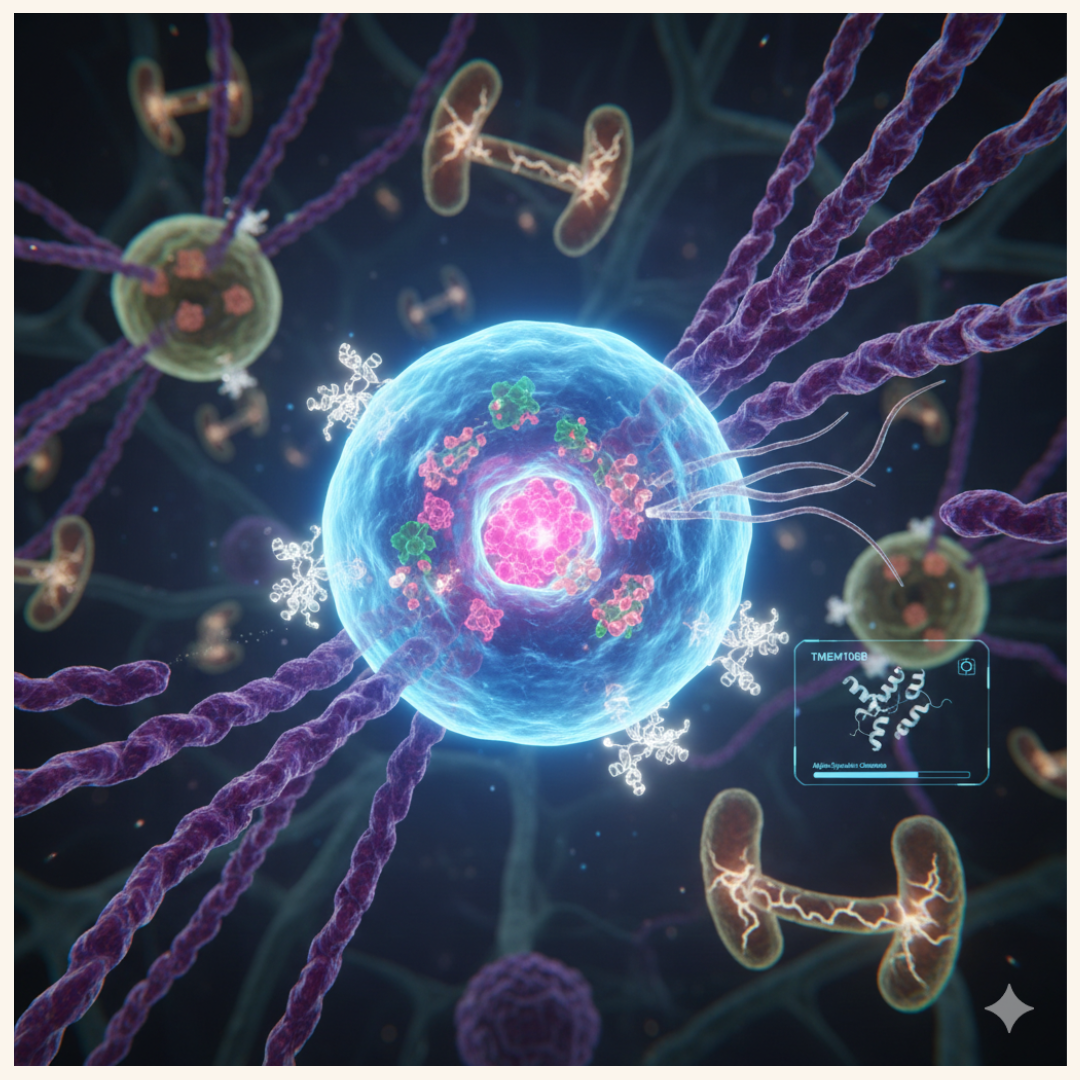
The Cleanup Crew: How a Tiny Protein Defends the Brain Against Parkinson’s
February 19, 2026
The hallmark of Parkinson’s is the clumping of a protein called alpha-synuclein. For years, scientists have been trying to understand why this protein suddenly starts to aggregate into toxic fibrils that damage neurons. A fascinating new study published in the journal Brain on February 17, 2026, has identified a key player in this process: a lysosomal protein called TMEM106B.
This protein acts as a vital part of the brain's "cleanup crew," and its deficiency may be a major driver behind the progression of the condition.
The Lysosome: The Brain’s Recycling Centre
To understand why TMEM106B matters, we first have to look at the lysosome. Think of the lysosome as the stomach or the recycling bin of a brain cell. Its job is to break down old proteins, fats, and cellular waste so the cell stays clean and healthy.
TMEM106B is a protein that lives on the membrane of these lysosomes. It helps them stay acidic and functional. If the lysosomes aren't acidic enough, they can't "digest" waste properly, and trash begins to pile up inside the cell.
What the Research Found
The research team, led by scientists at Wuhan University, discovered that levels of TMEM106B are significantly reduced in the brains of people with the condition. When they simulated this deficiency in mice and primary neurons, the results were striking:
Impaired "Digestion": Without enough TMEM106B, the lysosomes could not maintain their acidity. This meant they couldn't activate the enzymes—specifically one called cathepsin D—needed to break down alpha-synuclein.
Lipid (Fat) Imbalance: The study found that a lack of this protein leads to a buildup of "lipid droplets" inside neurons. These are essentially tiny pockets of fat that shouldn't be there in such high quantities.
Turbo-Charged Clumping: Most importantly, the researchers found that these fat droplets act like a magnet for alpha-synuclein. When alpha-synuclein meets these lipid droplets, it clumps together much faster, forming "fibrils" that are even more toxic and better at spreading from cell to cell than normal aggregates.
In short, a deficiency in TMEM106B creates a "perfect storm": it stops the brain from cleaning up toxic proteins while simultaneously creating an environment (the fat droplets) that encourages those proteins to clump together and cause damage.
Why This Matters for the Future
This research is incredibly exciting because it points to a new target for treatment. If we can find ways to boost TMEM106B or restore the acidity of the lysosomes, we might be able to help the brain's cleanup crew get back to work.
It also reinforces why lifestyle factors that support cellular health—such as exercise and a healthy diet—are so important. These activities help maintain the efficiency of our mitochondria and lysosomes, ensuring our "recycling centres" stay active.
Comments (0)
Loading comments...