


Shades of Grey: Rethinking PD Therapies with a Credibility Spectrum
August 10, 2025
 Moumou
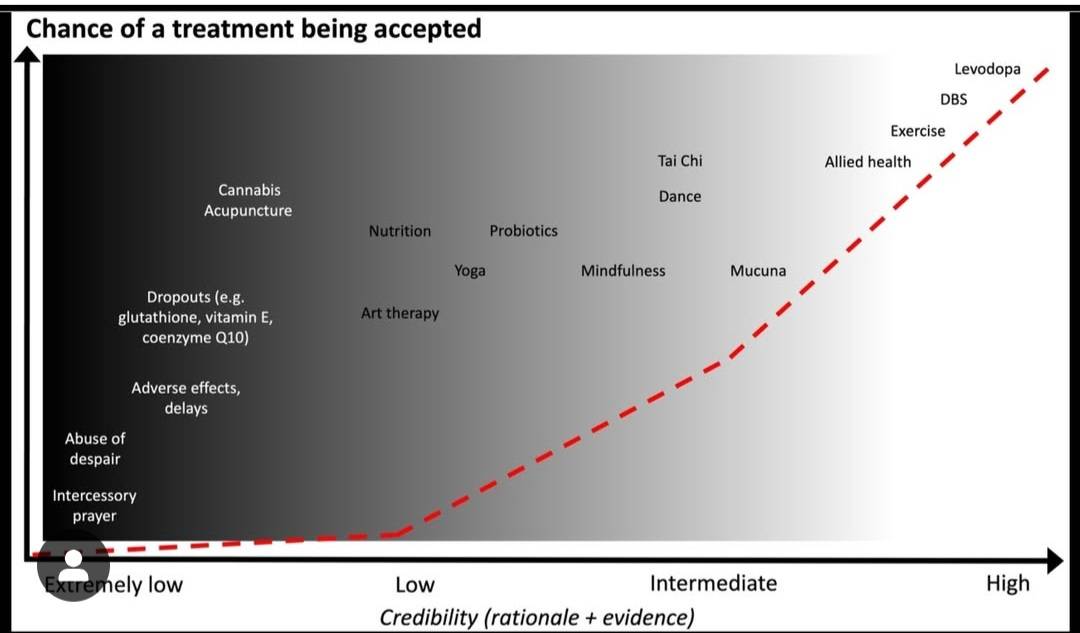
The authors propose a shift away from the binary "approved vs. alternative" mindset to a spectrum of credibility for therapeutic approaches. This framework evaluates treatments across three key dimensions:
1. Underlying rationale: Is there a plausible mechanism or theory supporting the therapy?
2. Scientific rigor: What kind of evidence exists—clinical trials, observational data, anecdotal?
3. Patient perceptions: How do patients value or perceive the therapy’s impact?
This approach doesn’t promote unproven treatments; instead, it supports nuanced, informed discussions grounded in rationale, evidence, and values.
Therapy Families Placed on the Spectrum
Therapy Family Credibility Level
Medications & Devices (e.g., levodopa, DBS) High – Well-established in clinical practice
Rehabilitation & Exercise (e.g., PT, LSVT) Moderate–High – Strong evidence for motor benefits
Diet & Lifestyle (e.g., Mediterranean, IF, keto) Moderate – Emerging evidence with potential
Supplements & Nutraceuticals (e.g., CoQ10, Mucuna) Low–Moderate – Mechanistic rationale; mixed trial data
Complementary Therapies (e.g., acupuncture, photobiomodulation) Low – Limited or preliminary research
Advanced Experimental Approaches (e.g., gene therapy) Emerging – High rationale; evidence pending
Palliative & Supportive Care (e.g., caregiver support) High – Proven to improve quality of life
Why It Matters
Encourages balanced decision-making—weighing scientific evidence and patient experience
Helps determine which therapies need further research, which are ready for clinical discussion, and which require cautious use
Promotes clarity and communication between patients, caregivers, and clinicians
Comments (0)
Loading comments...