


New Research Reveals the Parkinson’s Brain 'Gasps' for Oxygen as Symptoms Progress
January 19, 2026
A groundbreaking study published this week in Scientific Reports has uncovered a critical link between how the brain consumes oxygen and the severity of Parkinson’s symptoms. Led by researchers Huseyin Enes Candan and Dr HyungJoon Cho from the Ulsan National Institute of Science and Technology (UNIST), the team found that in people with Parkinson’s, the brain is forced to extract significantly more oxygen from the blood than usual—a sign that the organ is under metabolic stress. Crucially, they discovered that the harder the brain has to work to pull this oxygen out, the more severe the person’s motor difficulties become.
For years, scientists have focused heavily on dopamine levels or the accumulation of toxic proteins. However, this new research shifts the spotlight to the brain’s "plumbing" and fuel efficiency. Under normal conditions, our brains are relatively efficient engines, taking just enough oxygen from the bloodstream to function. This measurement is known as the Oxygen Extraction Fraction (OEF). In a healthy brain, there is plenty of oxygen left over in the blood as it flows away.
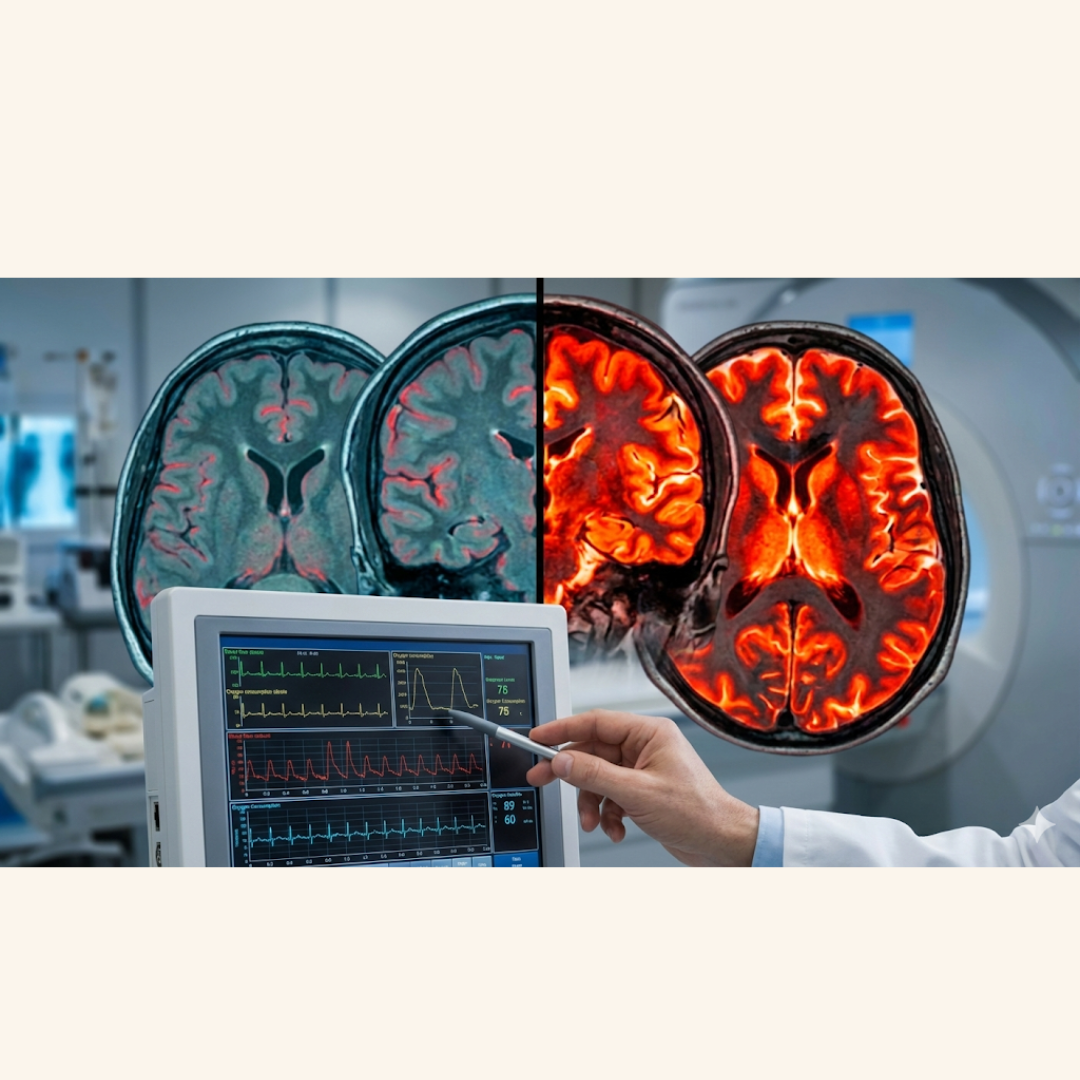
The UNIST team discovered that this balance is disrupted in Parkinson’s. Using advanced MRI scanning techniques, they observed that the brains of people with the condition were extracting oxygen at a much higher rate. It is akin to a dry sponge frantically trying to soak up every last drop of water. This suggests that the brain cells are either not receiving enough blood flow to begin with, or they are metabolically inefficient and require far more fuel just to perform basic tasks.
The most compelling finding was the direct correlation with physical symptoms. The study showed that this "oxygen hunger" was not random; it tracked perfectly with the severity of motor impairment. Participants who struggled most with stiffness, slowness, or tremor had the highest rates of oxygen extraction. This implies that as the condition progresses, the brain is working overtime to compensate for failing circuits, essentially running a marathon just to stand still.
This discovery is particularly exciting because it offers a potential new way to track the condition objectively. Currently, doctors largely rely on observing physical movements to judge how Parkinson’s is progressing. If an MRI scan can measure this "oxygen stress" directly, it could serve as an early warning system, identifying when the brain is struggling metabolically long before the physical symptoms spiral out of control. It suggests that keeping the brain well-oxygenated—perhaps through cardiovascular exercise or vascular therapies—might be more important than we previously thought.
Comments (0)
Loading comments...