


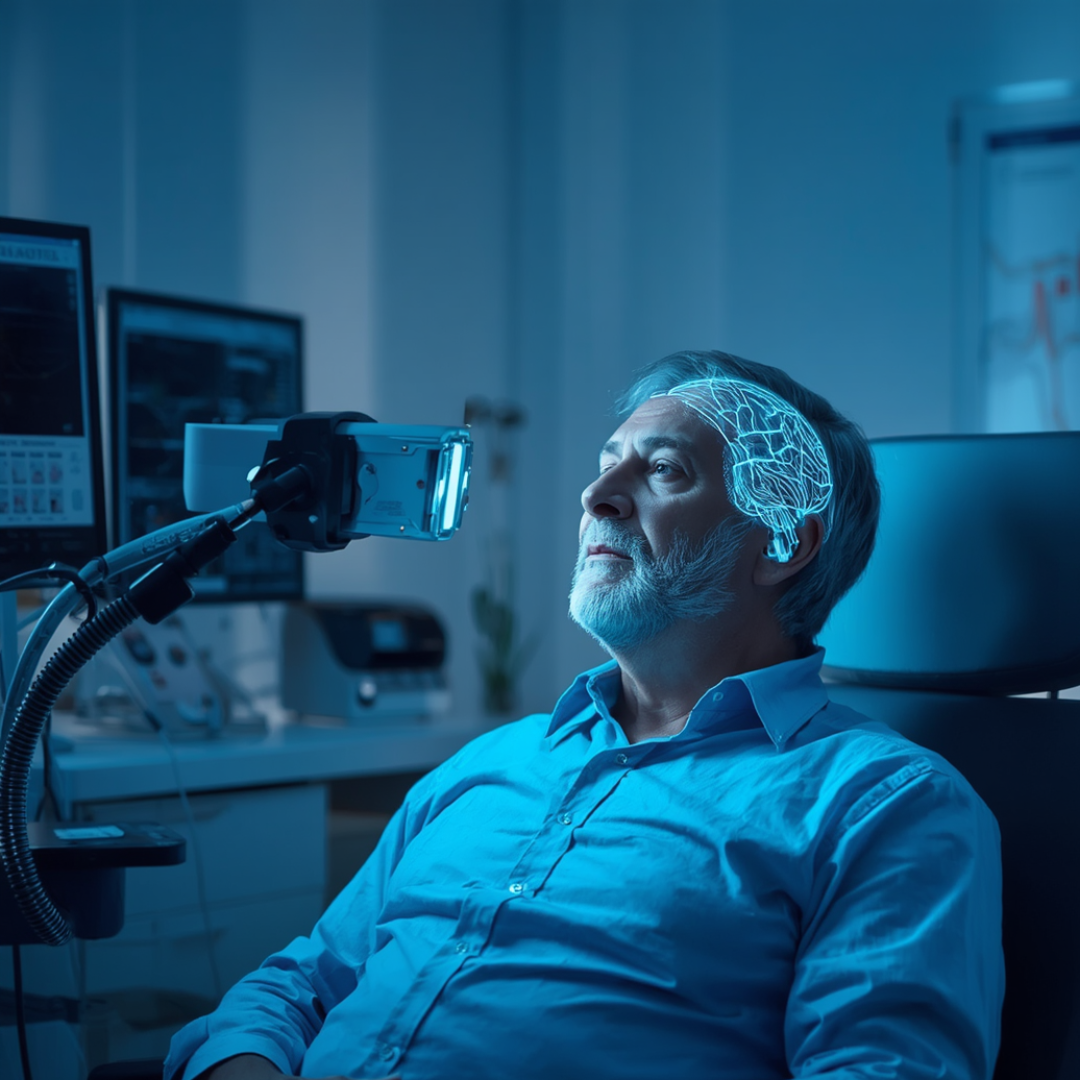
Non invasive brain stimulation techniques show clear benefits for physical movement in Parkinson's
October 23, 2026
 Beatrice
Tailoring non-invasive brain stimulation to specific motor hubs in the brain offers significant physical benefits for people with Parkinson’s, with precise target and frequency choices dictating overall effectiveness.
Traditional medications remain the cornerstone of managing the condition, yet long-term use often brings unwanted side effects and unpredictable fluctuations in how well the treatment works. Surgical options like deep brain stimulation offer another route, but the invasive nature of surgery leaves many people searching for safer, non-surgical alternatives. Non-invasive brain stimulation has emerged as a promising avenue, using magnetic or electrical impulses applied to the scalp to gently rouse or calm specific areas of the brain without an incision or a hospital stay.
By pooling data from 45 clinical trials encompassing 2,354 participants, researchers evaluated 17 distinct stimulation protocols to see how various techniques and locations compare.
The technology encompasses several primary methods, each interacting with brain cells through different physical mechanisms:
Repetitive transcranial magnetic stimulation (rTMS): Delivers magnetic pulses through the scalp. High-frequency versions act as an accelerator by waking up and exciting neural activity, while low-frequency versions act as a brake to calm overactive circuits.
Theta-burst stimulation (TBS): A modern, highly condensed form of magnetic stimulation that fires rapid bursts mimicking natural brain rhythms. Continuous theta-burst stimulation depresses or reorganises local activity, whereas intermittent bursts excite it.
Transcranial direct current stimulation (tDCS): Applies a very weak electrical current via scalp electrodes. Anodal stimulation boosts the resting state of neurons to make them fire more readily, and cathodal stimulation reduces their excitability.
Transcranial ultrasound stimulation (TUS): An emerging technique using low-intensity sound waves to reach deeper brain structures with high precision.
These approaches are directed at critical neural regions, including the primary motor cortex as the main command centre for voluntary movement, the supplementary motor area for planning and initiating complex movement sequences, and the dorsolateral prefrontal cortex for higher-level thinking and mood regulation.
When evaluating the 17 protocols across the trials, specific combinations proved most potent for physical movement scores:
Continuous theta-burst stimulation over the supplementary motor area (cTBS-SMA): Ranked first for short-term motor improvements, delivering a notable reduction in movement impairment scores compared to placebo stimulation.
High-frequency magnetic stimulation over the supplementary motor area (HF-rTMS-SMA): Followed closely behind for short-term motor gains and also showed strong results.
High-frequency magnetic stimulation over the primary motor cortex (HF-rTMS-M1): Proved effective for short-term motor tuning and featured prominently across top-performing protocols.
Combined high-frequency stimulation over both the primary motor cortex and the supplementary motor area (HF-rTMS-M1 + SMA): Achieved the highest ranking for sustained, long-term physical benefits over time.
Low-frequency stimulation over the dorsolateral prefrontal cortex (LF-rTMS-DLPFC): Appeared among the higher-ranking protocols for managing broader neural patterns.
When researchers shifted focus to broader quality of life questionnaires, protocols such as high-frequency stimulation of the supplementary motor area and low-frequency stimulation of the primary motor cortex showed positive trends, but their scores did not reach definitive statistical superiority over placebo treatments. This indicates that while physical movement metrics see sharp, measurable tuning from precise brain stimulation, translating those neural changes into an everyday sense of well-being involves a broader mix of physical and emotional factors.
These findings highlight that precision matters enormously in physical therapies, pointing clinicians toward exact combinations of brain targets and stimulation frequencies that offer the most reliable physical support for people living with Parkinson's.
Comments (0)
Loading comments...