


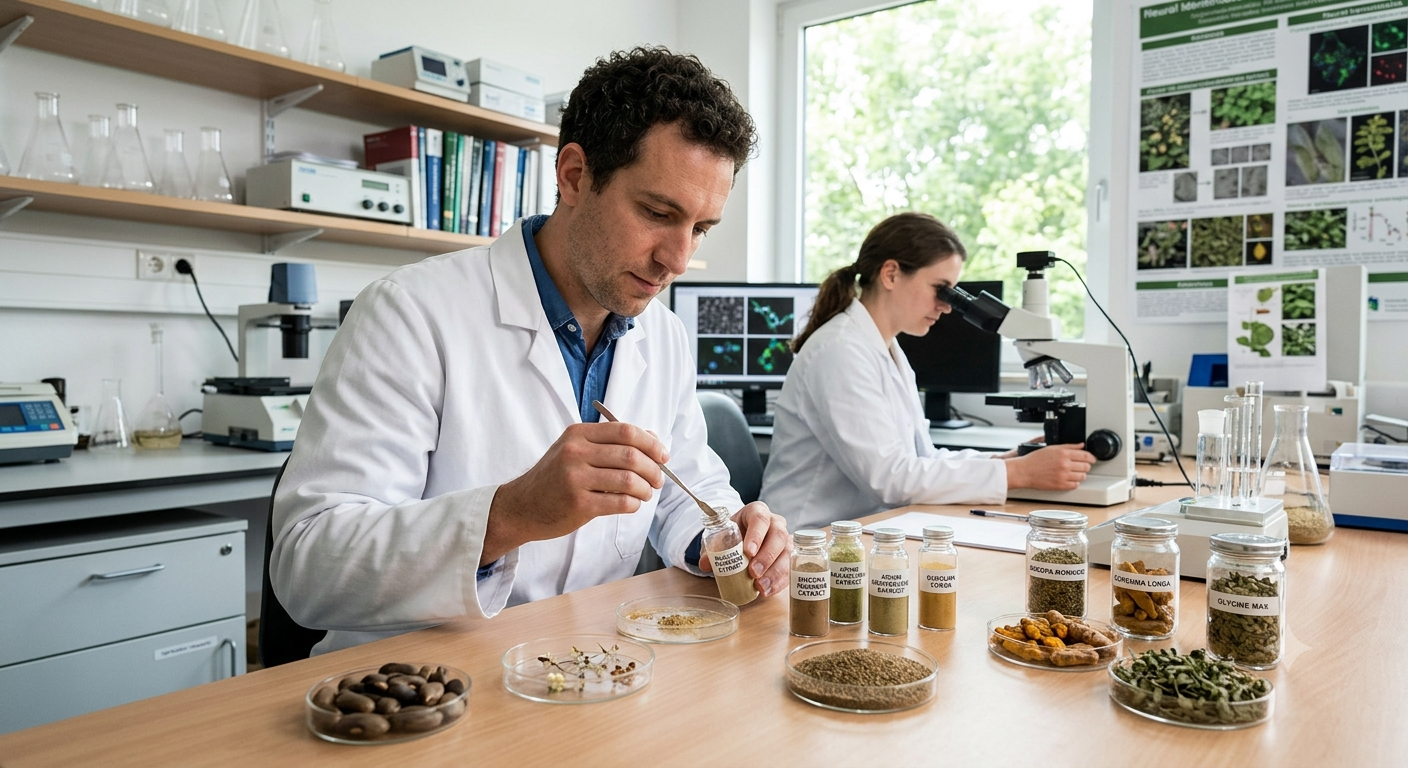
Systematic review assesses clinical evidence for plant-based therapies in Parkinson's
July 26, 2026
 Beatrice
A systematic review published in the Journal of Neural Transmission has brought together clinical trial data to explore how plant-based remedies measure up as support options alongside standard medical care. While levodopa remains the cornerstone for managing movement, relying on it over many years often brings tricky motor fluctuations and involuntary movements. This reality has spurred researchers to take a closer look at what nature might offer, examining specific plants under a rigorous scientific lens.
After combing through twenty-three clinical trials covering six prominent plants, the research team found varying degrees of solid proof. Mucuna pruriens stood out with the strongest clinical backing, offering movement benefits on par with standard levodopa, expanding good "ON" time without aggravating dyskinesia, and even helping ease involuntary movements. Apium graveolens (celery seed extract) earned solid marks for boosting movement, improving sleep, and lifting overall quality of life, while Bacopa monnieri showed real promise for supporting emotional well-being.
Other plants demonstrated more specific or preliminary benefits across non-movement symptoms. Curcuma longa (turmeric extract) offered encouraging support for autonomic functions and general non-motor symptoms, and Glycine max (soybean extract) helped extend active periods while softening dyskinesia. On the other hand, Cannabis sativa showed no actual benefit for movement in high-quality trials, leaving its effects on non-motor symptoms largely inconclusive.
Even with these intriguing findings, the researchers caution that the current body of evidence is still in its early stages. The trial grades reflect the layout of the studies rather than a guaranteed result for everyone, meaning these findings are best viewed with measured curiosity. Larger, rigorously designed trials are still essential to confirm long-term safety and true effectiveness before any plant therapy can reliably join standard care routines.
Comments (0)
Loading comments...